
RJW Electrical
What does an electrical installation certificate confirm?
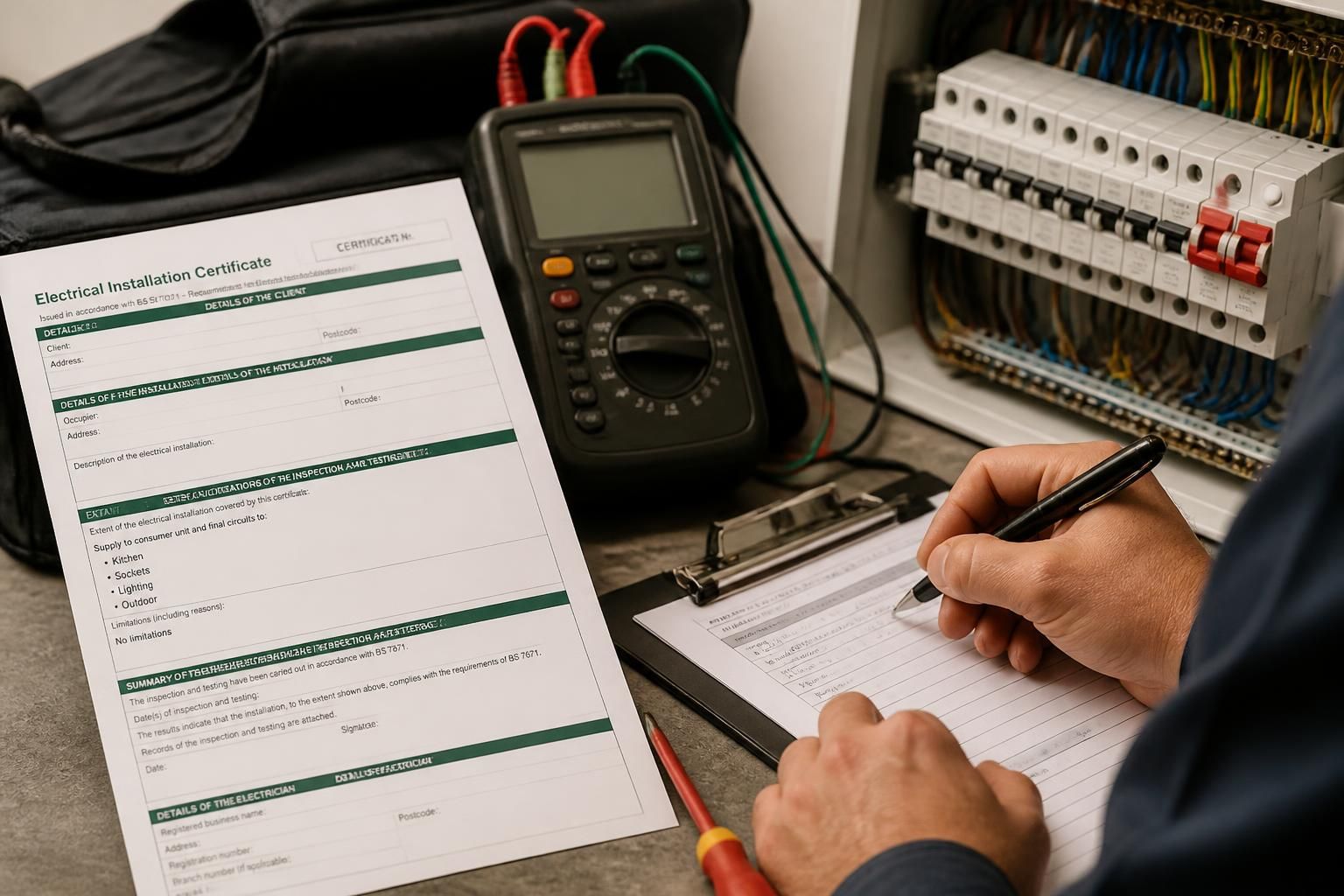
An Electrical Installation Certificate confirms that newly installed, altered or extended electrical work has been inspected and tested by a competent electrician. It records the work completed, the test results and whether the installation complies with the requirements of BS 7671 at the time it was assessed.
An Electrical Installation Certificate (EIC) confirms that the specified new electrical installation, alteration or extension was assessed by the electrician responsible for the work and was satisfactory when inspected and tested. It applies to the work identified on the certificate, rather than automatically confirming the condition of every electrical circuit or accessory in the property.
It identifies what work was covered. The certificate should describe the installation or alteration, its location and the extent of the work. This may include a new circuit, a new consumer unit, an extension to an existing circuit or electrical work carried out as part of a refurbishment. A clear description helps establish which parts of the installation the certificate relates to.
It records the inspection and test results. Depending on the work, the supporting information can include results for continuity, insulation resistance, polarity, earth fault loop impedance and operation of protective devices. These tests provide evidence that the relevant conductors, protective measures and equipment were checked rather than relying on a visual assessment alone.
The certificate also records important technical information, such as the earthing and bonding arrangements, circuit details, protective devices and the maximum demand where relevant. The electrician completes the certificate using the results obtained during the assessment and signs to confirm responsibility for the work covered.
It confirms compliance at the time of completion. The certificate indicates whether the work met the requirements of BS 7671 applicable when it was assessed. This is evidence of the standard reached at that point; it is not a guarantee that the installation will remain safe indefinitely. Alterations, damage, deterioration, overloading or changes in use can affect an installation after a certificate has been issued.
An EIC does not usually amount to a full inspection of the entire property. Existing circuits that were outside the scope of the project may not have been tested, and the certificate should not be treated as an Electrical Installation Condition Report (EICR). An EICR is a separate, periodic assessment of the condition of an existing installation and reports on any defects or potentially dangerous conditions found.
An EIC is normally appropriate when:
- a new circuit has been installed;
- an existing circuit has been extended or substantially altered;
- a new electrical installation has been provided as part of building work; or
- the scale of the work means a Minor Electrical Installation Works Certificate would not be suitable.
For smaller additions or alterations, the correct document may instead be a Minor Electrical Installation Works Certificate. That certificate still records the work and relevant test results, but the choice of certification depends on the nature and extent of the work. Where electrical work is associated with building-regulation requirements, separate notification or compliance documentation may also be relevant.
The property owner should keep the certificate with other electrical records, particularly where future alterations, an EICR, a sale or a tenancy may require evidence of previous work. If the document is missing, incomplete or does not describe the work undertaken, an electrician may need to inspect the installation and determine what further certification or testing is appropriate.
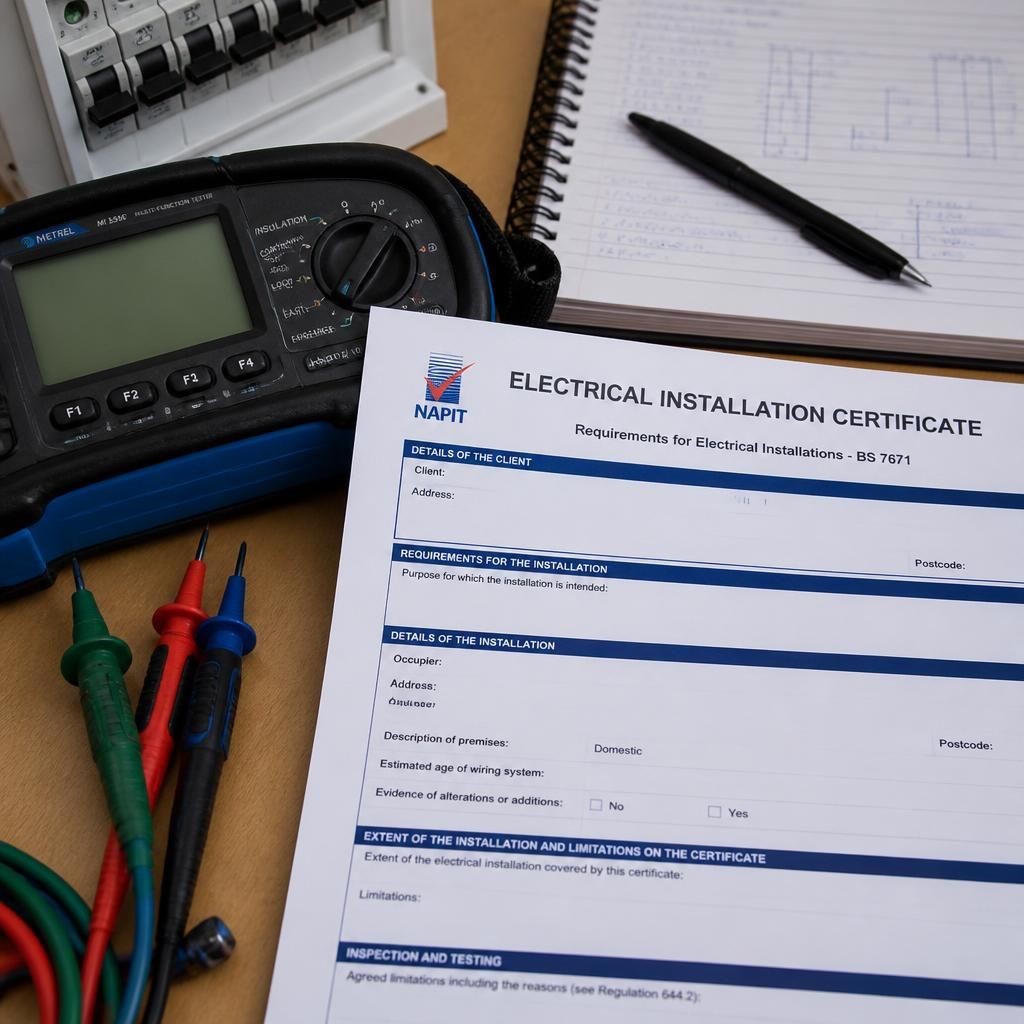
An Electrical Installation Certificate confirms the electrical standard of the work described, but it is not the same as building-regulations approval. Where the project is subject to separate building-regulation notification, such as certain domestic alterations, evidence of that notification or compliance may need to be obtained separately from the electrical certificate.
This distinction matters when checking property records. The EIC demonstrates that the specified electrical work was inspected and tested against BS 7671 when completed; it does not, by itself, confirm that every permission, inspection or certification connected with the wider building project has been completed. Keeping the EIC alongside any relevant building-regulation documentation gives a more complete record of the work.
Ask About Your Electrical Installation Certificate
Contact RJW Electrical to discuss an existing certificate, clarify whether it covers the work carried out, or arrange the appropriate inspection where documentation is missing or unclear. You can request a no-call-out-fee quote for the next step.