
RJW Electrical
How often should fixed wiring be inspected?
Fixed wiring should be inspected at an interval suited to the installation’s age, condition and how it is used. A qualified electrician can recommend the next inspection date and record it on the electrical installation condition report.
Fixed wiring should generally be inspected at least every 10 years in an owner-occupied home, every five years in a rented property, and at intervals determined by risk in commercial premises. The correct period can be shorter where the installation is old, heavily used, exposed to damage or affected by a change in occupancy, use or condition.
Domestic properties
For an owner-occupied home, a periodic inspection is commonly recommended at intervals of no more than 10 years. An inspection should also be considered sooner if the property has undergone electrical alterations, an extension or renovation, or if the wiring has not been assessed for many years.
In rented accommodation, electrical installations must normally be inspected and tested at least every five years, with the electrical installation condition report retained and made available as required. A new inspection may also be needed when the report specifies an earlier review date or when significant electrical work has been completed.
Commercial and industrial premises
There is no single inspection interval that applies to every business. The appropriate period depends on the type of installation, the environment and the way the premises are used. Offices, workshops, retail units, communal areas and premises with public access can have different risks. Electrical installations exposed to moisture, dust, heat, vibration, mechanical impact or continuous operation may require more frequent assessment than a lightly used office.
The responsible person should use the previous report, the installation’s maintenance history and the advice of a competent electrical professional to set the next inspection date. A shorter interval may be appropriate where defects have previously been found, equipment is regularly moved or the installation is subject to demanding conditions.
Situations requiring an earlier inspection
- Before or after a change of ownership, tenancy or use, particularly where responsibility for the installation is changing.
- Following alterations, extensions, rewiring or the installation of substantial new equipment.
- After flooding, fire, water ingress, impact or other damage that could have affected cables, accessories or protective devices.
- Where there are signs of overheating, burning, damaged sockets, loose accessories, exposed conductors or deteriorating cables.
- When circuit breakers or RCDs operate repeatedly without an obvious cause.
- If users experience electric shocks, tingling from equipment or unexplained interruptions to the supply.
An inspection is also sensible before buying or letting a property when the available electrical records are missing, incomplete or no longer representative of the installation.
What the inspection involves
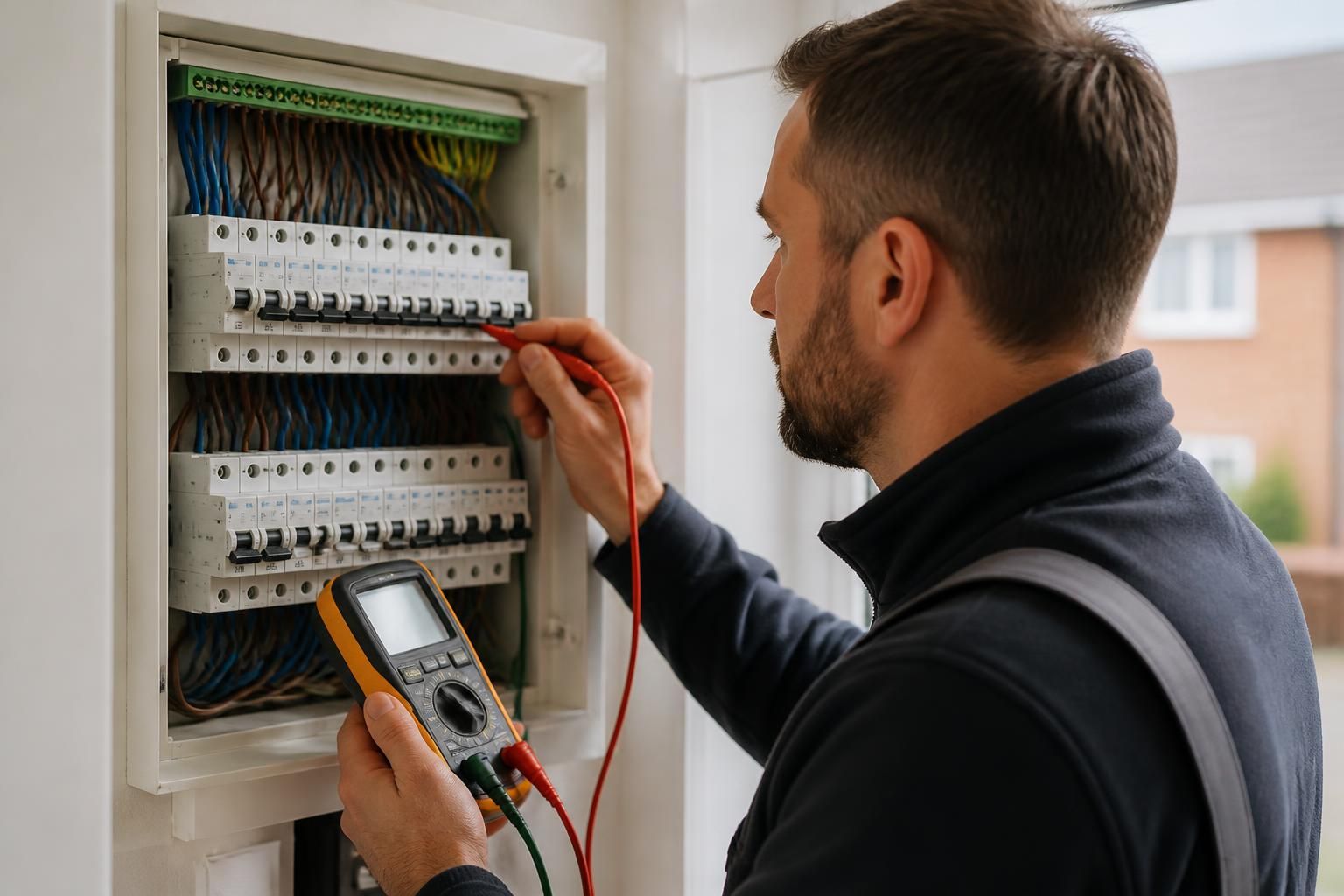
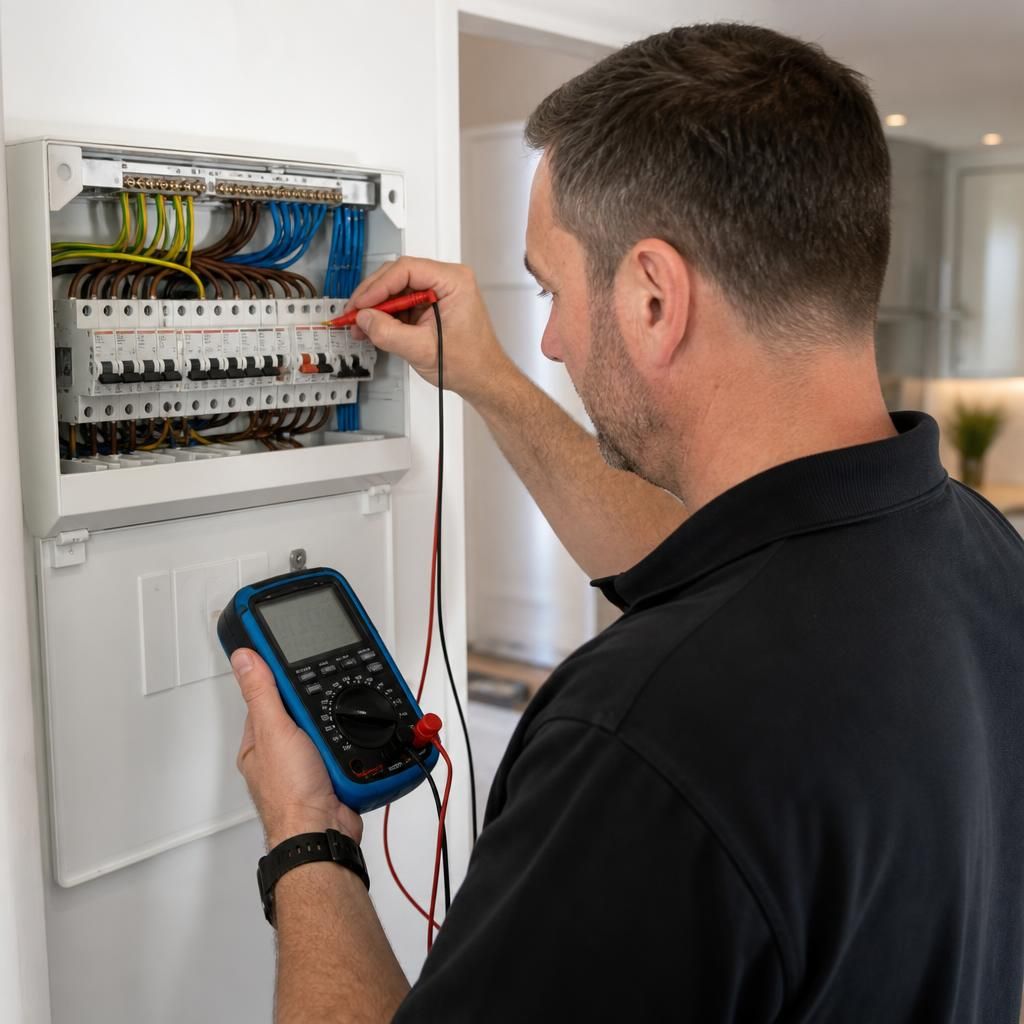
A fixed-wiring inspection assesses the condition and safety of the permanent electrical installation, including the consumer unit, distribution boards, wiring, switches, sockets, lighting points, earthing and protective bonding. The electrician carries out a visual examination and appropriate tests, which can require circuits to be isolated. Testing may include continuity, insulation resistance, polarity, earth fault loop impedance and operation of protective devices, depending on the installation and the scope of the inspection.
The findings are recorded in an electrical installation condition report. Defects are classified according to their level of danger or potential risk, and the report states whether the installation is satisfactory for continued use. Any recommended inspection interval should be followed rather than relying only on a general 5-year or 10-year rule.
Inspection is not the same as routine maintenance
A periodic inspection provides a condition assessment at a particular point in time. It does not replace repairs, visual checks by property managers or users, testing of portable appliances, or the manufacturer’s maintenance requirements for electrical equipment. Keeping accessories unobstructed, avoiding damaged leads and reporting faults promptly can help identify problems between formal inspections, but suspected faults should be assessed by a qualified electrician.
A qualified electrician working to the current requirements of BS 7671 can review the installation and its use, carry out the necessary tests and recommend a proportionate next inspection date. RJW Electrical undertakes electrical inspections and testing for domestic and commercial clients across the Midlands, including Sutton Coldfield, Streetly, Walmley, Erdington, Lichfield, Aldridge, Walsall and Shenstone.
An inspection interval is a review date, not an expiry date that automatically makes an installation unsafe. The next assessment should consider the previous report’s findings, any remedial work completed and whether the property’s electrical demands have changed. Keeping reports, certificates and repair records together gives the electrician evidence to compare the installation’s condition over time and decide whether the existing interval remains appropriate.
Discuss your fixed wiring inspection requirements
If you need to establish an appropriate inspection interval for a property, discuss the installation’s history, use and current condition with RJW Electrical. We can advise on the scope of fixed-wiring testing needed and provide a quote with no call-out fee.