
RJW Electrical
How are electrical inspection defects classified?
Electrical inspection defects are classified by codes that indicate their level of danger and the action required. C1 means danger is present, C2 indicates potentially dangerous conditions, C3 identifies an improvement recommended, and FI means further investigation is required.
Electrical inspection defects are classified according to the risk they present and the next step needed to deal with them. An inspector records each observation using a classification code in the inspection report, applying professional judgement with reference to the condition of the installation and the requirements of BS 7671.
C1 – danger present
A C1 observation means there is an immediate risk of injury, fire or electric shock. The danger may arise from exposed live parts, severely damaged equipment, accessible conductors or another condition that makes the installation unsafe to use. Immediate action is normally needed, which may include making the affected circuit or item safe before permanent repairs are arranged.
The inspector should explain the danger and identify the affected part of the installation. A C1 is not simply a record of old equipment or poor appearance; it is used where the condition presents a current and significant hazard.
C2 – potentially dangerous
A C2 observation identifies a serious defect that could become dangerous under foreseeable conditions. Examples may include inadequate protection against electric shock, a serious earthing or bonding deficiency, damaged accessories, or an installation method that leaves people at significant risk.
The condition may not be causing an immediate incident at the time of inspection, but it requires remedial work because normal use, a fault or a change in circumstances could expose someone to danger. The inspector will record the reason for the classification rather than treating every non-compliance as a C2.
C3 – improvement recommended
A C3 observation indicates that an improvement is recommended, but the inspector has not judged the condition to present a level of risk requiring a C1 or C2 code. It can be used for an older arrangement that remains functional and safe enough in its present condition but would benefit from upgrading, or for a departure from current good practice that does not create a significant immediate hazard.
A C3 is not the same as a failed installation. On an Electrical Installation Condition Report, an installation can still receive a satisfactory outcome where the recorded observations are limited to C3 items. Nevertheless, the recommendations should be considered, particularly if alterations or other electrical work are planned.
FI – further investigation required
An FI code is used when the inspector finds evidence suggesting a potentially dangerous defect but cannot establish its full extent during the inspection. Further investigation is needed to determine the condition of concealed, inaccessible or interconnected parts of the installation.
FI does not mean that the installation has been confirmed as safe. It means that the available inspection and test results are insufficient for the inspector to classify the suspected issue conclusively. The report should state what was found and why additional investigation is necessary. Once the investigation is completed, the condition may receive a different classification and may require remedial work.
How the classification is decided
- The inspector examines the installation, including accessible equipment, accessories, wiring systems and protective devices.
- Electrical tests are carried out where appropriate, such as checks of continuity, insulation resistance, polarity, earth fault loop impedance and RCD operation.
- Defects, damage, test results and departures from the applicable requirements are assessed together rather than in isolation.
- Each observation is assigned the code that best reflects the actual risk and the action required.
- Limitations affecting the inspection or testing are recorded, including areas or equipment that could not be accessed or tested.
The same physical issue can receive different classifications depending on its location, accessibility, severity and effect on protection. For example, damaged insulation in an inaccessible enclosure may require further investigation, while exposed live parts that can be touched may warrant a C1. The code therefore depends on the circumstances recorded by the competent inspector, not solely on the age or type of component.
How codes affect the report outcome
For an EICR, the presence of one or more C1, C2 or FI observations normally results in an unsatisfactory outcome because the report has identified danger, potential danger or unresolved safety concerns. C3 observations alone do not normally make the report unsatisfactory. The report should list each observation, its location, the classification applied and any relevant recommendation.
A satisfactory report does not mean that every component is new or that no improvement is possible. It means that the inspection has not identified defects requiring a C1, C2 or FI classification within the scope and limitations of that inspection. Conversely, an unsatisfactory report does not necessarily mean that the entire installation must be replaced; remedial work is generally directed at the specific defects identified, subject to the findings of any further investigation.
What should happen after defects are recorded?
- For a C1, the immediate danger should be controlled without delay, which may involve isolation or making the affected equipment inaccessible.
- For a C2, suitable remedial work should be arranged to remove the serious risk.
- For a C3, the recommendation can be reviewed and incorporated into planned improvement work.
- For an FI, the required investigation should be completed before the installation is treated as fully assessed.
After repairs or additional investigation, the work should be checked and the relevant test results recorded. Depending on the scope of the work, this may require an amended report, a further inspection or electrical installation certification. The classification codes should always be read alongside the inspector's observations, limitations and recommendations, as those details explain precisely what was found and what action is appropriate.
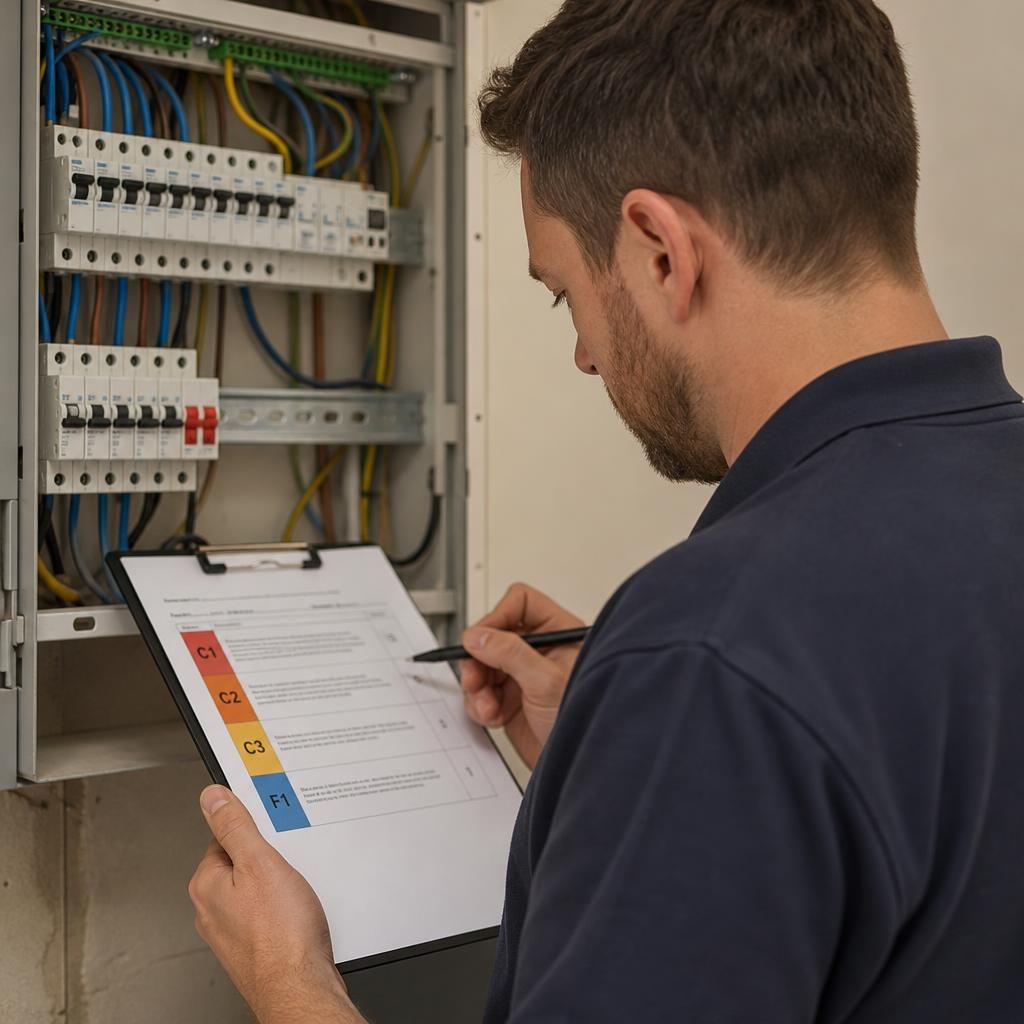
An electrical inspection defect code describes the safety significance of a condition, not its repair cost, age or visual appearance. A costly replacement is not automatically a higher classification, while an inexpensive repair may still relate to a serious safety risk.
Classification also applies to the specific observation recorded, rather than labelling the entire installation. When reviewing a report, consider the location, evidence, access limitations and recommended action alongside the code. This provides a more accurate understanding of why the inspector reached that classification.
Need help understanding your electrical inspection defects?
If you need help interpreting an electrical inspection report, contact RJW Electrical Ltd to discuss the recorded observations and request a no call out fee quote where remedial work is required.