
RJW Electrical
What happens during a domestic EV charger installation?
A domestic EV charger installation begins with a property and electrical assessment, followed by planning the cable route, confirming the charger position and checking any requirements for the electricity supply. The charger is then securely fitted, connected, tested and documented so the installation complies with current electrical safety requirements.
A domestic EV charger installation is a planned electrical project that combines a property survey, charger design, physical fitting, electrical connection, testing and handover. The installer must confirm that the proposed equipment is suitable for the vehicle and property, that the electricity supply can support it, and that the completed work is safe to use.
- Information is gathered before the visit. The installer may need details of the vehicle or vehicles, the preferred charger location, the position of the consumer unit, the parking arrangements and any existing solar PV, battery storage or other high-demand electrical equipment. Photographs or plans can help identify likely cable routes and access requirements.
- The property is assessed. At the survey, the engineer considers the condition and capacity of the electrical installation, the earthing arrangement, the consumer unit and the distance between the supply equipment and the proposed charger. They also look at the building construction, external walls, parking surface and any practical constraints that could affect the installation.
- The charger position and cable route are agreed. The charger needs to be accessible without creating a trip hazard or obstructing doors, pathways and vehicles. The route may be internal, external, concealed or surface-mounted, depending on the property. The engineer should explain where the cable will run, where penetrations may be required and how visible sections will be protected.
- Protection and supply requirements are checked. An EV charging point requires suitable circuit protection and may require changes to the consumer unit or additional protective equipment. The installer also considers the effect of the charging load alongside the home's other demand. Where the proposed connection affects the electricity network, a Distribution Network Operator application or notification may be needed before the work proceeds.
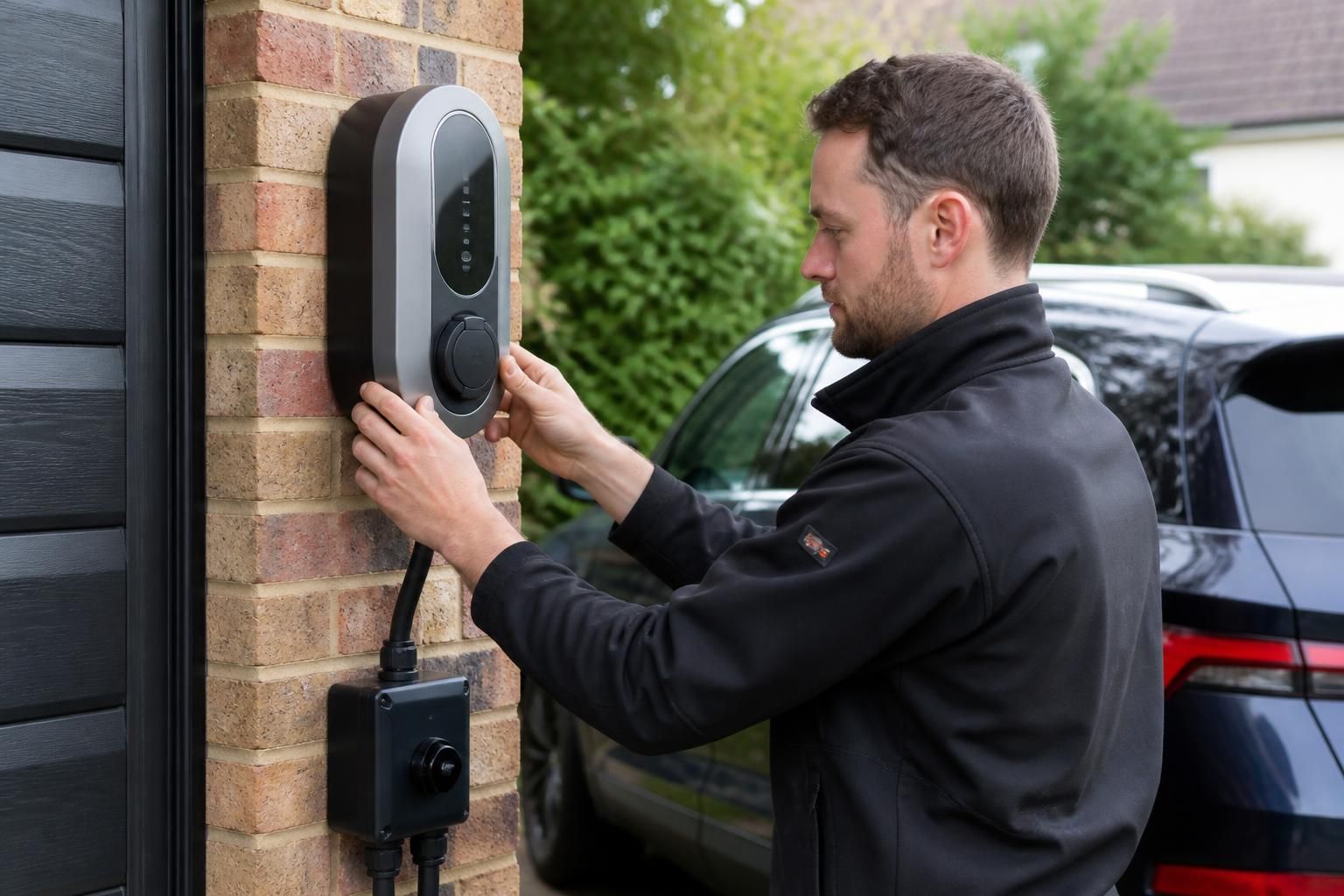
- The equipment is installed. The mounting surface is prepared, the charger is fixed securely and the supply cable is installed along the agreed route. Cable entries, glands and external sections are finished to protect the wiring from mechanical damage and weather. Any work to the consumer unit is completed as part of the designed circuit rather than treating the charger as an ordinary socket connection.
- The charger is configured. Once connected, the installer sets up the equipment's relevant operating features. Depending on the model and the property, this can include connection to a home network, user access controls, charging schedules, load management or coordination with solar generation. The exact functions available depend on the charger and the wider electrical system.
- Testing and commissioning take place. Electrical tests verify the circuit, protective measures, connections and operation of the charging point. The charger is then commissioned so that it can communicate correctly with the vehicle and any associated control system. Fault indications or unexpected results should be investigated before the installation is put into normal use.
- The installation is documented. The handover should include information about operating the charger, resetting it after a fault and using any app or control functions provided with the equipment. Electrical test results and relevant certification should also be supplied, along with details of any notification or registration required for the installation.
The exact work varies between properties. A short cable route beside a suitable consumer unit may need little alteration, whereas a detached garage, long external route, older consumer unit or limited electricity supply can require additional design work. Asking for the proposed route, protective arrangements, testing documents and any network requirements in writing makes it easier to understand what the installation includes before work starts.
RJW Electrical carries out domestic EV charging work for properties across the Midlands, including Sutton Coldfield, Streetly, Walmley, Erdington, Lichfield, Aldridge, Walsall and Shenstone. Its qualified, insured and DBS-checked engineers provide a no call out fee quote and work within the NAPIT, TrustMark and Electrical Safety Register frameworks.
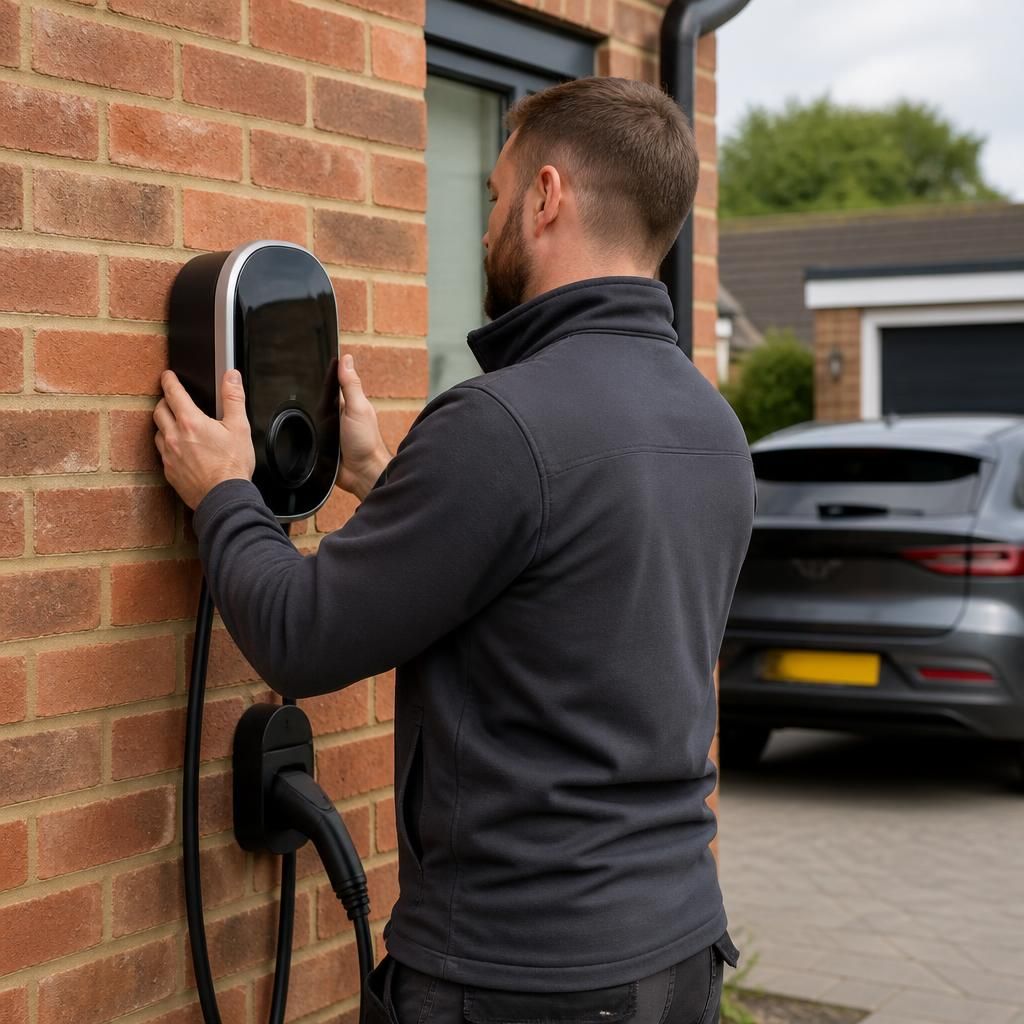
Before a domestic EV charger installation can proceed, the installer may need confirmation that the proposed equipment, wall and parking position can be used. This is particularly relevant for rented homes, leasehold properties, flats, shared drives and properties where the parking space or external wall is jointly owned.
- Check whether the landlord, freeholder, management company or other property owner needs to approve the installation.
- Confirm that the intended parking space is suitable for regular charging and that the cable route will not cross land or access areas belonging to someone else.
- Make any relevant permissions or property information available to the installer before the work is designed.
Resolving these points early helps ensure that the agreed charger position and cable route are practical as well as electrically suitable. It also reduces the risk of changes being needed after the installation has been planned.
Discuss your domestic EV charger installation
Contact RJW Electrical to discuss your property, proposed charger position and any installation questions before deciding how to proceed.