
RJW Electrical
What affects the cost of installing an EV charger at home?
Home EV charger installation cost is mainly affected by the charger type and power rating, the length and route of the cabling, and the condition and capacity of the property’s existing electrical supply. Additional work, such as consumer unit upgrades, outdoor cable protection, groundworks or a required DNO application, can also increase the overall cost.
The cost of a home EV charger installation depends on how the charger needs to operate at the property, how much installation work is involved and whether the existing electrical arrangements need adjustment. Two homes with the same charger can therefore receive different quotations because their parking arrangements, cable routes, electrical equipment and connection requirements are not the same.
Charger specification and functionality
The equipment itself is priced according to its specification rather than simply its charging speed. A basic untethered unit may cost less than a model with a permanently attached lead, integrated access control, advanced scheduling or energy-management functions. Features such as load balancing can also affect the installation because they may require additional monitoring equipment and configuration.
Load balancing is particularly relevant where the property has several high-demand appliances. It allows the charging system to manage its power draw in relation to the rest of the property, subject to the capabilities of the chosen charger and the installation design. Selecting features that are not needed can increase the price, while choosing a charger without a required function may lead to extra work later.
The position of the charger
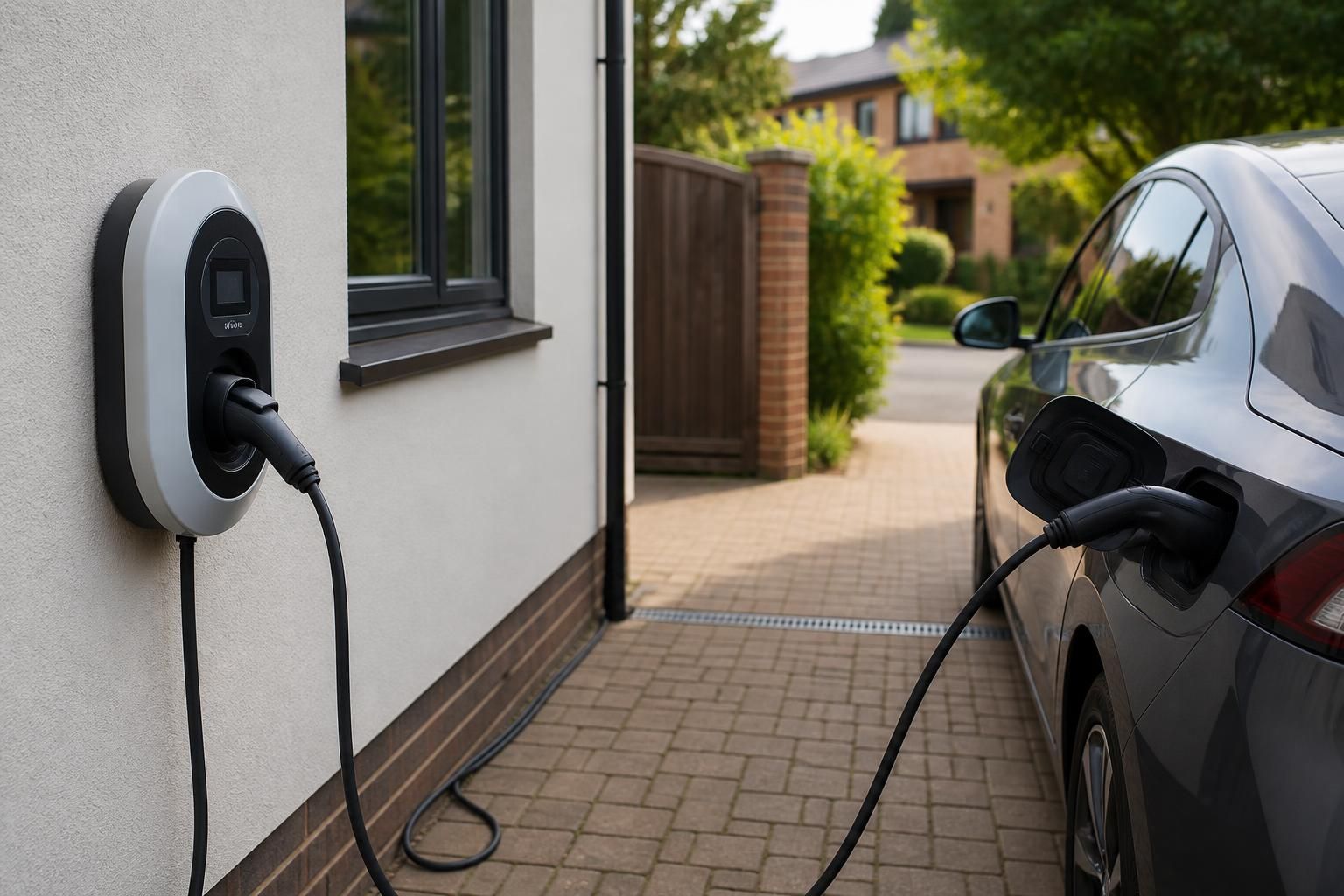
A charger mounted close to the suitable electrical connection is usually less complex to install than one positioned a long distance away. The location of the parking space also matters. A driveway, integral garage, detached garage or shared parking area can each require a different approach to mounting, protection and access.
Installers will consider whether the charger can be fixed securely, whether the cable can be protected from impact and weather, and whether its position allows the vehicle to be connected without creating a trip hazard. If the preferred location is not practical, moving the charger may be more cost-effective than altering the property extensively.
Installation route and building construction
The construction of the building affects the amount of labour involved. Brickwork, rendered walls, external insulation, suspended floors and other finishes can all influence how an installation is planned. A neat concealed route may take more time than a surface-mounted route, while a visible route may require suitable containment to protect the cable and maintain a tidy appearance.
Access to the relevant parts of the property is another consideration. Restricted access, multiple floors, outbuildings or a route through occupied areas can increase the time needed for preparation and installation. These details should be discussed during the survey rather than assumed from the charger model alone.
Condition of the existing electrical installation
An electrician must establish whether the installation can safely support the proposed charger and whether the protective arrangements are appropriate. This may involve checking the consumer unit, earthing and bonding, protective devices, spare capacity and the condition of existing wiring. Remedial work is only identified once the installation has been assessed, so it should not be assumed that a standard installation price includes every possible alteration.
Where work is needed, the quotation should distinguish between the charger installation and any improvements required to make the wider electrical installation suitable. This makes it clearer which costs relate to the EV charging equipment and which relate to bringing existing equipment up to the required standard.
Connection approval and technical design
Some installations require information to be provided to the distribution network operator. Whether this applies depends on factors such as the charger’s electrical characteristics, the property’s supply and the network operator’s requirements. If an application or approval process is needed, it can affect the project administration and timescale as well as the overall price.
Technical decisions made during the survey can also influence the quotation. These include the selected charging current, the protective equipment, the method of isolation and how the charger will be integrated safely with the rest of the property.
Solar panels and energy-management equipment
Where a home has solar generation, the owner may want the charger to use surplus electricity or to coordinate charging with other household demand. This can require a compatible charger, monitoring equipment or a control system. Solar compatibility should therefore be considered before the charger is selected, rather than treated as an automatic feature of every unit.
The cost will depend on what the existing solar and energy-monitoring system can support. A survey can identify whether the proposed arrangement is technically suitable and whether additional equipment is required.
What a useful quotation should include
A clear quotation should set out the charger model or specification, the proposed mounting position, the installation method, cable protection, testing and certification. It should also identify any exclusions, such as remedial electrical work, alterations to building finishes or network-operator requirements.
- Ask whether the quotation includes configuration of smart functions and connection to any relevant app.
- Check whether testing, certification and customer handover are included.
- Confirm what happens if the survey identifies an issue with the existing installation.
- Compare quotations by their scope of work, not just by the headline equipment price.
RJW Electrical can assess the property-specific factors before providing a no call out fee quote. As a NAPIT member and member of the TrustMark scheme and Electrical Safety Register, the company uses qualified engineers to plan installations in line with current electrical safety requirements.
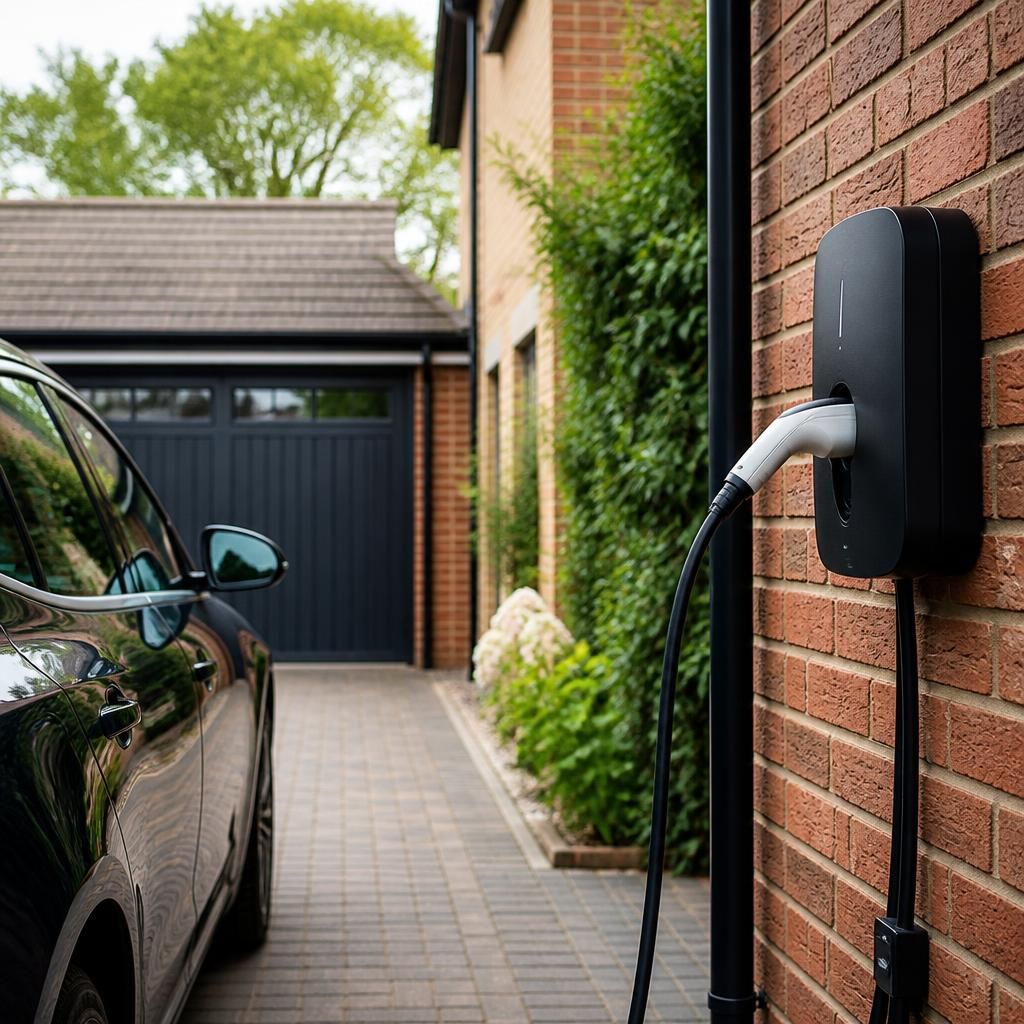
Property ownership and parking arrangements can affect the cost of a home EV charger installation, particularly where the proposed charger or cable route involves shared areas. A detached home with private parking is usually more straightforward than a property with communal parking, a shared accessway or a cable route across land managed by someone else.
Permission may be needed from a landlord, freeholder or property management company before work begins. The installation may also require additional containment, protection or making good if the cable passes through a communal area. These administrative and reinstatement costs should be identified separately, so the quotation shows which items are included in the installation price and which depend on approval or the final agreed route.
If parking is not directly beside the property, provide details of who owns or manages the route when requesting a quotation. This allows the installer to consider practical restrictions before recommending equipment or fixing positions.
Request a home EV charger installation quote
Request a home EV charger installation quote from RJW Electrical so the proposed equipment, installation scope and any additional work can be assessed for your property.