
RJW Electrical
Is my home suitable for solar-powered EV charging?
Most homes can support solar-powered EV charging if they have a suitable solar PV system, enough generation to charge the vehicle, and an electrical installation capable of accommodating a compatible EV charger. A professional assessment can confirm whether your roof, solar inverter, consumer unit and available electrical capacity are suitable.
A home is suitable for solar-powered EV charging when its solar PV system, electrical installation, parking arrangement and chosen EV charger can work together safely. The assessment is not limited to the roof: the inverter, consumer unit, cable route, charging controls and available electrical capacity all affect whether surplus solar energy can be used effectively.
Solar PV and inverter compatibility
Existing solar panels do not automatically make a property suitable for solar EV charging. The inverter must be compatible with the proposed charger or with an energy management system that can measure generation and household consumption. This allows the charger to identify surplus electricity and direct it towards the vehicle rather than relying entirely on power from the grid.
Some systems can blend solar generation with grid electricity, while others use surplus solar only. The difference affects how consistently the vehicle charges. Solar generation changes with daylight, weather, shading and household demand, so a system designed to charge only from surplus energy may pause or charge at a lower rate when there is not enough generation. A system that can supplement solar power from the grid may provide a more predictable charging process.
The condition and output of the solar system
The panels should be in suitable condition and the inverter should be operating correctly. A professional assessment may consider the system's design, current performance, monitoring arrangements and whether the inverter has the necessary communications or metering connections.
Roof direction and shading influence how much electricity is available during the day. The size of the vehicle's battery and the amount of energy used elsewhere in the home also matter. Solar power may be sufficient for some charging sessions but not others, particularly when household demand is high or generation is limited. A battery storage system can change how electricity is distributed, so its controls need to be considered alongside the EV charger.
Electrical installation requirements
The property's electrical installation must be suitable for the additional demand from an EV charger. This normally includes checking the consumer unit, earthing and bonding, protective devices, cable routes and the condition of existing wiring. There must also be a safe way to install the charger cable between the electrical equipment and the vehicle's parking position.
A charger may require dedicated protection and suitable residual-current protection. The exact arrangement depends on the charger, the existing installation and the way the solar equipment is connected. If the consumer unit or wiring is not suitable, remedial electrical work may be needed before the charger can be installed.
Parking position and charger location
The vehicle must be able to park close enough to the charger for the charging cable to reach without creating a trip hazard or obstructing access. The proposed location should also provide suitable protection from weather and accidental damage. Cable routing through walls, garages or external areas needs to be planned so that it is mechanically protected and does not interfere with doors, driveways or other services.
For flats, shared driveways and properties with communal parking, the installation may involve additional permissions, access arrangements or restrictions on how equipment and cables can be routed. These considerations should be resolved before selecting the charger.
Smart charging controls
A solar-compatible charger normally relies on an energy meter or current sensor to monitor electricity flowing between the property, the solar system and the grid. The controls can then adjust charging in response to surplus generation and household demand. The location of the meter, the distance between the equipment and the charger, and the compatibility of the control system should all be checked during the survey.
It is also important to confirm how the system behaves when solar generation falls. Some homeowners want the vehicle to charge only from surplus solar electricity, while others prefer the charger to continue using grid electricity when necessary. This is a system-design choice rather than a question of whether the home can have an EV charger at all.
Grid connection and export considerations
The solar installation and EV charger must be considered as one electrical system. Changes to generation, export behaviour or the property's maximum demand may require technical checks and, depending on the existing arrangement, communication with the distribution network operator. The installer can establish whether the proposed equipment and connection require any further approval.
What a suitability assessment should cover
- The condition, capacity and compatibility of the solar PV system and inverter.
- Whether the proposed charger can measure and use surplus solar generation.
- The condition and capacity of the consumer unit, wiring, earthing and protective equipment.
- The distance and cable route between the electrical equipment and the parking position.
- The effect of shading, household electricity demand, battery storage and expected vehicle use.
- Any requirements relating to the grid connection, property ownership or shared access.
A home may still be suitable if it cannot provide all of the vehicle's charging energy from solar alone. In that case, a properly configured charger can use available solar generation and draw from the grid when solar output is insufficient, subject to the equipment and installation being designed for that arrangement. An electrical assessment is the appropriate way to confirm the options for a particular property and identify any work needed before installation.
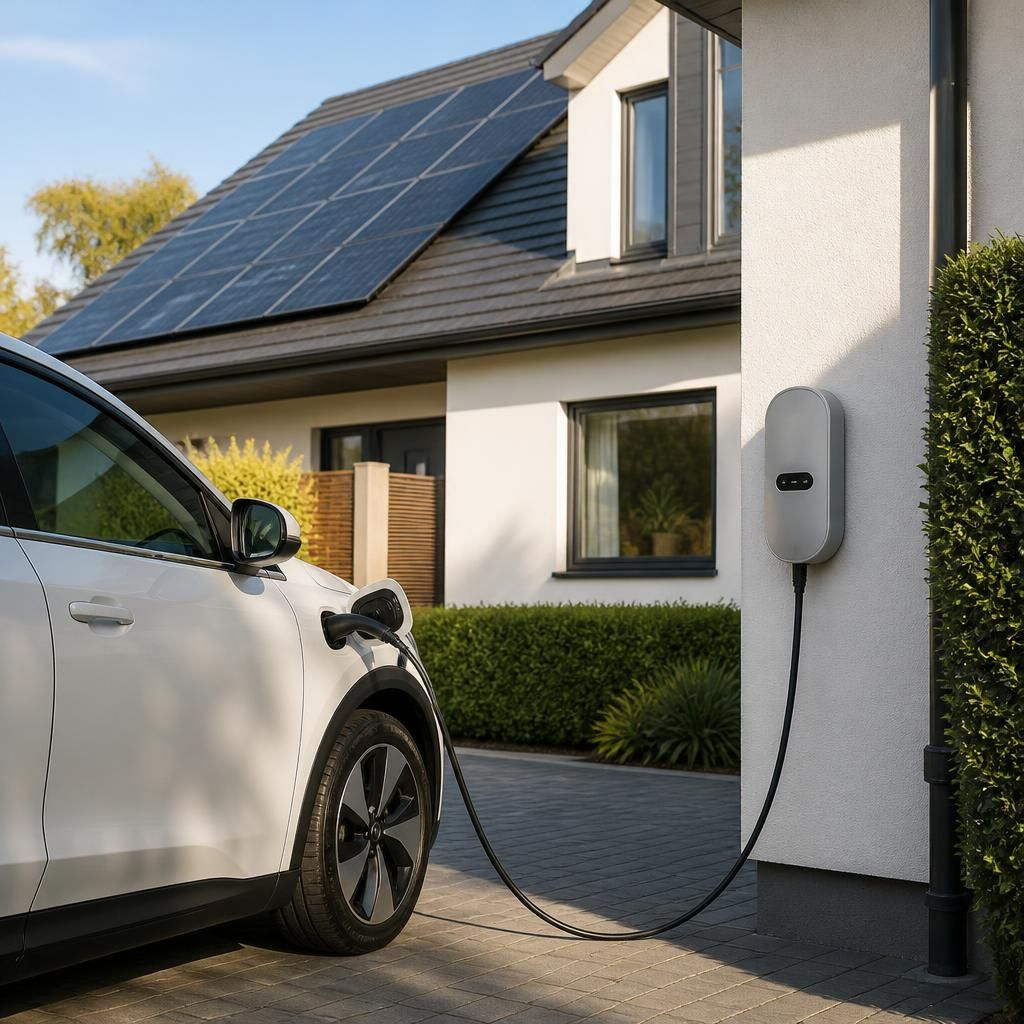
Correct commissioning is essential for solar-powered EV charging to operate as intended. After installation, the energy meter or current sensor should be configured so the charger can distinguish between electricity generated by the solar system, electricity being used in the home and electricity imported from the grid.
The installer should then check the charger’s operating mode and confirm that its response matches the homeowner’s preference. For example, a solar-priority setting may wait for available surplus generation, while a solar-and-grid setting may continue charging when solar output is insufficient. Testing these functions during commissioning can identify incorrect meter readings, unsuitable settings or communication faults before the system is relied upon.
Check whether your home is suitable for solar-powered EV charging
If you are unsure whether your existing solar and electrical systems can support EV charging, contact RJW Electrical for a professional suitability assessment and no-call-out-fee quote.