
RJW Electrical
Is a DNO application needed for an EV charger installation?
A DNO (Distribution Network Operator) application may be needed before an EV charger is installed, depending on the charger’s power rating and the capacity of the property’s electrical supply. The installer assesses these requirements and can submit the relevant notification or approval request to the DNO where necessary.
Yes, a DNO notification or application may be required for an EV charger installation. The exact route depends on the charger’s maximum demand, whether the property has a single-phase or three-phase supply, the number of chargers being installed and the available capacity of the local electricity network.
The DNO is the Distribution Network Operator responsible for the cables, equipment and electricity supply infrastructure serving the property. It is separate from the electricity supplier named on the energy bill. Its role is to confirm that a proposed EV charger can be connected safely without adversely affecting the local network or the property’s incoming supply.
Notification and approval are not the same thing. Some lower-demand installations can be notified to the DNO by an authorised installer after the work has been assessed and completed. Other installations require approval before installation begins. This is more likely where the charger has a higher power rating, where more than one charger is proposed, or where the existing supply has limited capacity.
An electrician should establish which process applies rather than relying solely on the charger’s advertised output. The assessment normally considers:
- the charger’s maximum current and power rating;
- whether the installation is single-phase or three-phase;
- the capacity and condition of the incoming electrical supply;
- the rating of the main fuse and the existing maximum demand at the property;
- other substantial loads, such as electric heating, heat pumps, solar equipment or battery storage;
- whether one or several EV charge points will operate at the same time; and
- whether the charger or installation includes a suitable load-management system.
Load management can reduce the demand placed on the supply by adjusting the charger’s output when other equipment is using electricity. It may allow a connection to operate within the available capacity, but it does not automatically remove the need for DNO notification or approval. The installer still needs to confirm that the proposed arrangement meets the relevant requirements.
For a typical domestic installation, the process is usually as follows:
- The installer surveys the proposed charger location and assesses the property’s electrical supply.
- The charger specification and expected electrical demand are checked against the applicable DNO requirements.
- The installer identifies whether a notification is sufficient or whether an application must be submitted for approval.
- Where required, the installer sends the relevant technical information to the DNO and waits for its decision before proceeding.
- The installation is completed in accordance with the approved design and current wiring requirements.
- The required completion details are provided to the DNO and the client receives the relevant electrical certification.
If the DNO identifies insufficient capacity, that does not necessarily mean an EV charger cannot be installed. Possible solutions may include reducing the charger’s configured output, using dynamic load management, changing the connection arrangement or requesting an alteration to the electricity supply. The appropriate option depends on the DNO’s assessment and the characteristics of the property. Any network reinforcement or supply alteration should be discussed before installation work is committed to.
A DNO application can also be relevant when an existing charger is replaced with a higher-powered model, when a second charge point is added or when the property’s electrical demand changes significantly. An earlier notification for one charger should not be assumed to cover a different charger or a later expansion.
The homeowner or business should provide the installer with accurate information about existing electrical equipment and any planned additions. Inaccurate information about the property’s demand can lead to an unsuitable design or cause difficulties when the installation is notified. The installer should also verify the earthing arrangement and incorporate the protection required for the particular supply and charger.
RJW Electrical can assess the proposed EV charging installation, identify the relevant DNO process and submit the required notification or application where appropriate. A no-call-out-fee quote is available, allowing the electrical requirements and any potential supply considerations to be discussed before the installation is specified.
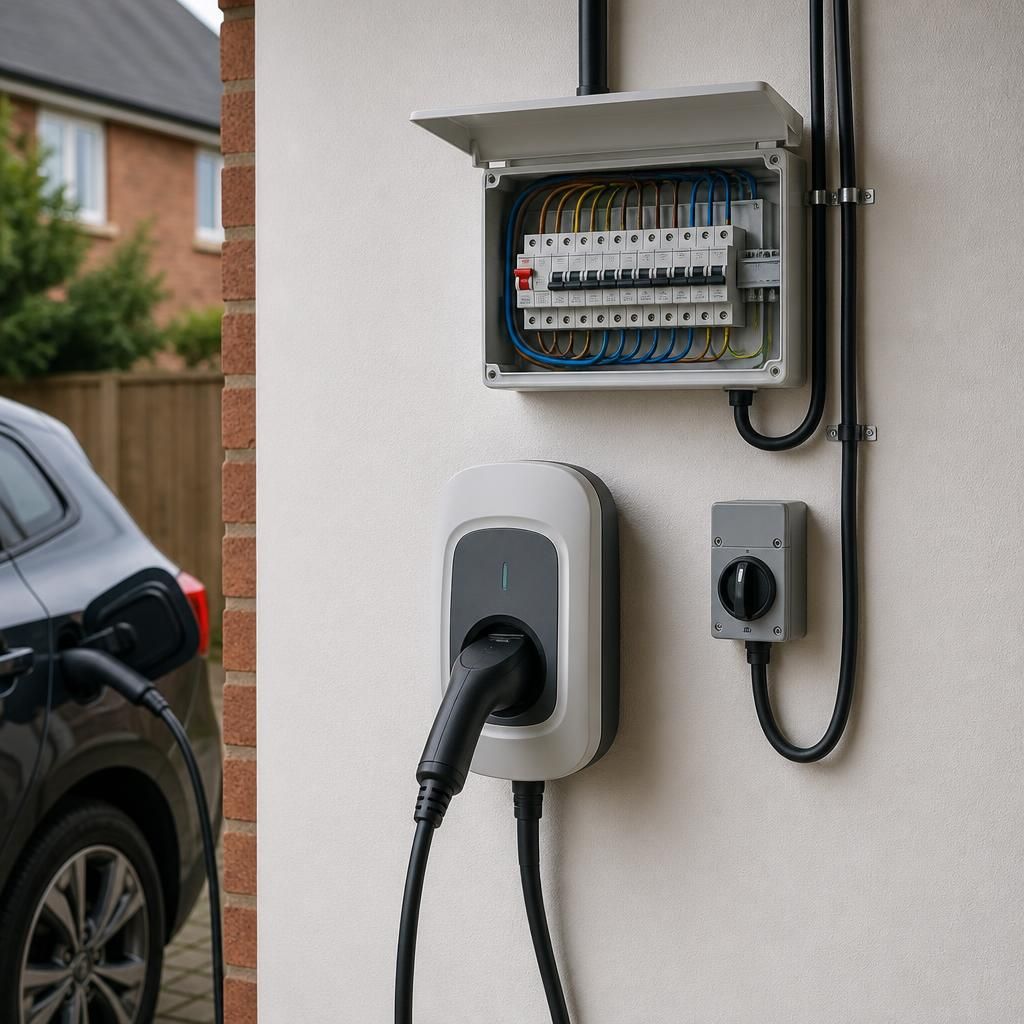
DNO requirements are determined by the electricity network serving the property, so general advice about EV chargers cannot confirm the correct process for a particular installation. The relevant DNO’s connection rules, the property’s supply arrangement and the proposed charger design all need to be considered together. This is why an installer should check the current DNO requirements for the address before finalising the installation specification, rather than treating every domestic charger installation in the same way.
Discuss your EV charger’s DNO requirements
Ask RJW Electrical to review your proposed EV charger installation and confirm the appropriate DNO process for your property. Request a no-call-out-fee quote before finalising the specification.