
RJW Electrical
What should I prepare before arranging lighting and power work?
Before arranging lighting and power work, note which rooms, circuits, switches, sockets or light fittings are involved, and identify any access restrictions or known electrical issues. Gather your preferred fitting details, relevant plans and information about previous alterations so the electrician can assess the work and advise on the required safety checks.
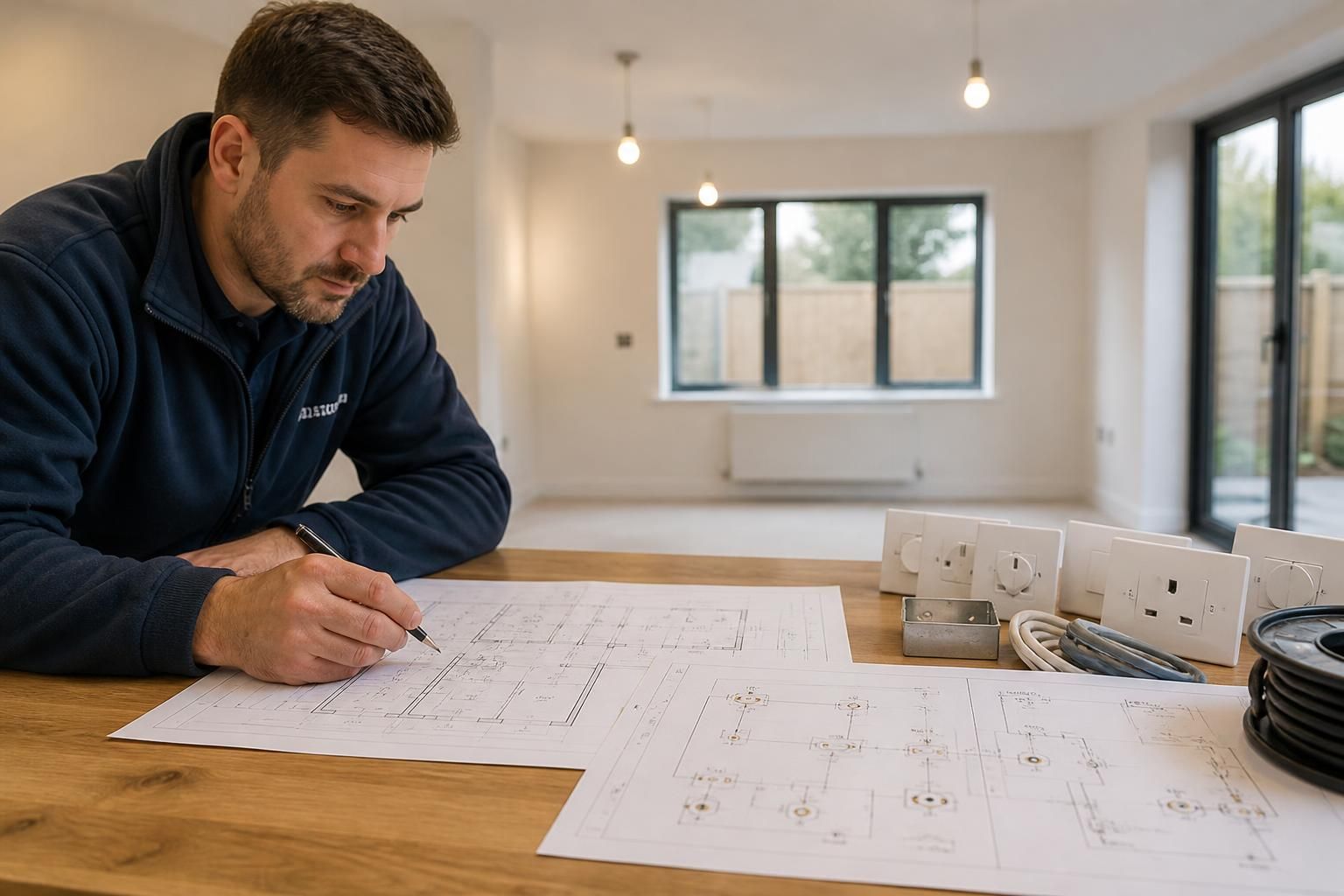
Before arranging lighting and power work, prepare the decisions, property information and permissions that will affect the design, installation method and price. A clear brief helps the electrician distinguish essential electrical work from preferences, identify compliance requirements and allow suitable materials and controls to be considered before the installation starts.
Define how you want the space to function. Consider where light is needed for general illumination, task lighting, accent lighting or security, and how sockets will be used once furniture, appliances or equipment are in place. For commercial premises, note the activities carried out in each area, any equipment with a high electrical load and whether the installation must support staff, customers or specialist operations. This is more useful than choosing fittings in isolation because the position and type of electrical points should suit the way the room is used.
Make the key design choices in advance where possible. Prepare examples or specifications for the type of fitting, finish, colour temperature, control method and level of automation you prefer. Decide whether you need features such as dimming, timer controls, two-way switching, separate switching for different lighting zones or dedicated supplies for fixed appliances. Check that your preferred fittings are suitable for their intended location; bathrooms, kitchens, external areas and other conditions may require equipment with appropriate protection against moisture or damage.
Check who is responsible for approving the work. If you rent the property, obtain the landlord’s written permission before arranging alterations. Leasehold properties, managed buildings, commercial units and premises within a larger development may also have requirements covering penetrations, shared areas, fire compartments, noise, reinstatement or contractor insurance. Where planning, building control, landlord or managing-agent approval may apply, clarify this before work is booked rather than assuming the electrical contractor can provide every permission.
Prepare information about the building and its use. Tell the electrician about intended changes to walls, ceilings, flooring, kitchens, bathrooms, extensions or partitions, particularly if other trades will be working at the same time. Identify areas where drilling, chasing or lifting finishes could affect decorative surfaces, insulation, fire-stopping or concealed services. In older buildings, mention any known asbestos-containing materials or other hazards and arrange specialist assessment where appropriate; electrical work should not proceed through suspected hazardous materials without suitable controls.
Decide how the work should be coordinated. If decorating, building, kitchen fitting or shopfitting is also planned, agree which work needs to happen first and who will make good openings or redecorate after cables and accessories are installed. Confirm whether furniture, stored goods, stock or equipment will need to be moved by the client and whether the property can remain occupied safely during the work. For business premises, prepare any requirements relating to customer areas, staff access, machinery, alarms, data equipment or business-critical circuits.
Have the following information ready for the quotation or assessment:
- the property type and whether it is domestic, rented, leasehold or commercial;
- the intended use of each affected area and any equipment that will be connected;
- your preferred controls, finishes and fitting specifications, if already selected;
- details of permissions required from a landlord, managing agent, freeholder or building owner;
- information about other trades, refurbishment work or changes to the building structure;
- any requirements for fire integrity, emergency lighting, access control or business continuity that apply to the premises; and
- the records you expect at completion, such as test results, certificates, product information or updated circuit details where relevant.
Do not remove accessories, alter wiring or attempt to investigate faults before the electrician assesses the installation. A proposed socket or light position may be affected by the existing circuit capacity, protective devices, cable routes, earthing and bonding arrangements, or the condition of the installation. These matters need competent assessment rather than being inferred from the visible fitting.
For domestic and commercial projects in the Midlands, RJW Electrical can use the prepared brief to assess the proposed scope and identify any further information needed before providing a no-call-out-fee quote. The assessment should establish what is included, which parts are provisional, what preparation the client must complete and what electrical testing or certification will be appropriate when the work is finished.
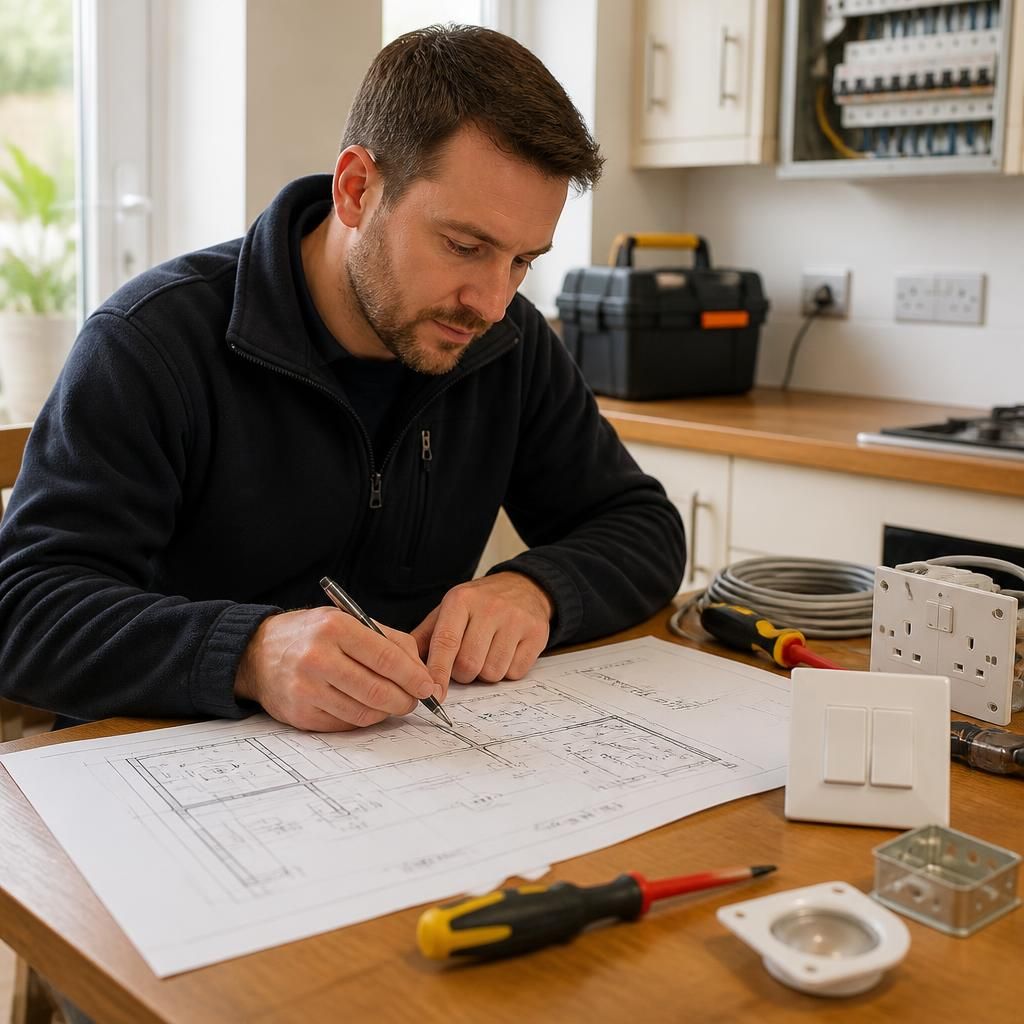
Prepare a safe, practical route for the electrician to inspect the installation before arranging lighting and power work. This may include access to the consumer unit, meter position, loft spaces, floor voids, external walls or other areas where cable routes and existing protective measures need to be assessed.
Before the visit, remove stored items that block these areas and identify anything that must remain protected, such as fragile finishes, sensitive equipment or confidential business materials. Tell the electrician about occupants, pets, customers, staff or operational activities that could affect safe access. Do not open electrical enclosures or move fixed equipment yourself; the condition and suitability of the installation should be checked by a competent person.
Discuss your lighting and power work requirements
Discuss your proposed lighting and power work with RJW Electrical so the scope, practical requirements and appropriate safety checks can be assessed before installation begins. Request a no-call-out-fee quote based on the information you have prepared.