
RJW Electrical
What documentation will I receive after domestic electrical installation work?
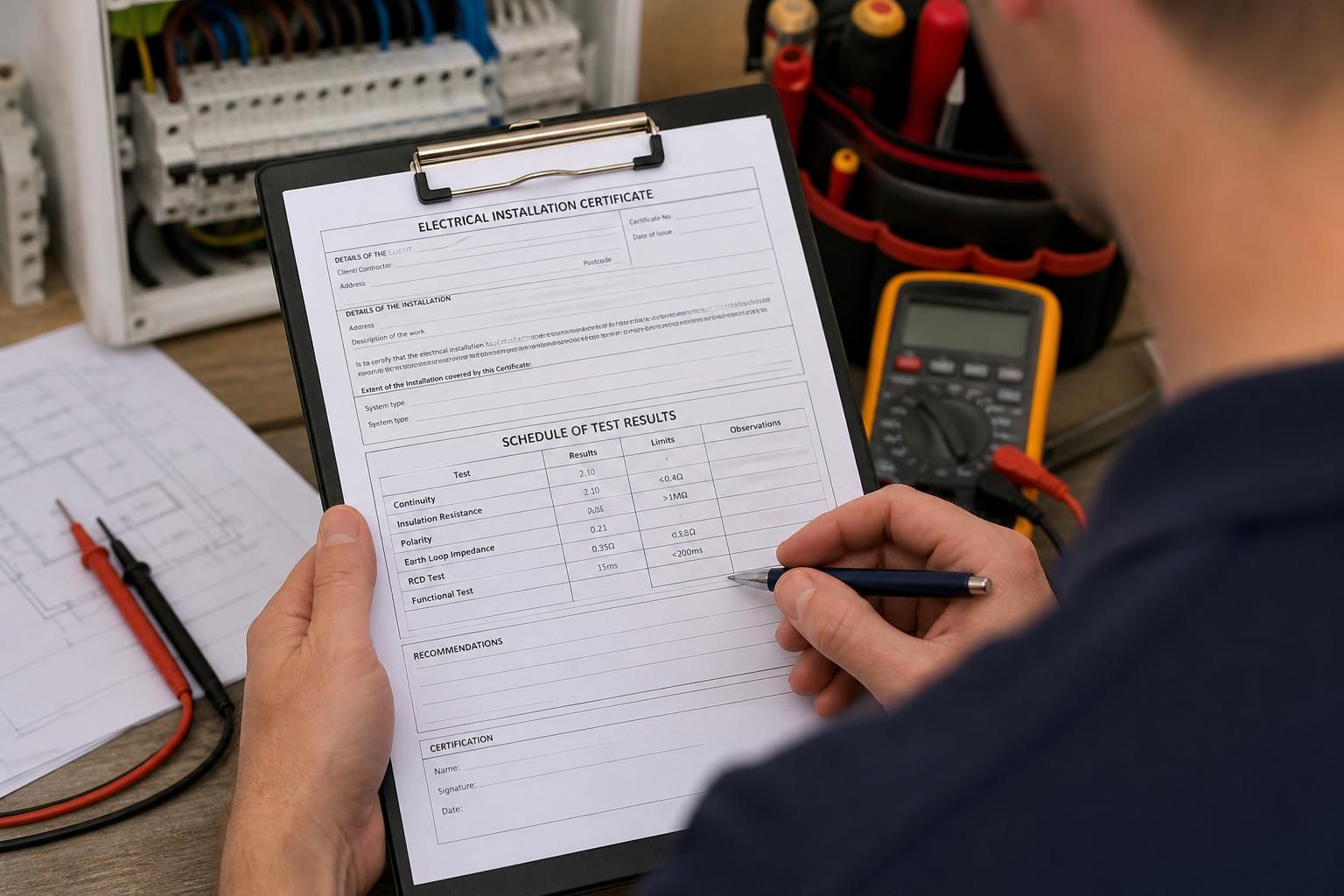
After domestic electrical installation work, you should receive the relevant electrical certificate, such as an Electrical Installation Certificate or Minor Works Certificate, together with test results or schedules where applicable. For notifiable work, documentation confirming Building Regulations compliance may also be provided.
The documentation is the permanent record of what was installed, how the work was inspected and which tests were completed. It should allow a future electrician, building owner or prospective buyer to understand the work without relying solely on visual inspection.
For a full installation or substantial alteration, an Electrical Installation Certificate (EIC) normally records:
- the address and description of the installation or alteration;
- the extent of the work covered by the certificate;
- the person or organisation responsible for the design, construction and inspection;
- the results of inspection and electrical testing; and
- any limitations or exclusions that affected the work.
The certificate is supported by schedules. A schedule of inspections records the checks carried out during the work, while a schedule of test results records measurements such as continuity, insulation resistance, polarity and protective-device performance where applicable. These results provide technical evidence that the relevant parts of the installation were assessed, rather than simply confirming that the work was visually completed.
For a smaller addition or alteration, the appropriate document may instead be a Minor Electrical Installation Works Certificate. This is used where the work does not involve the design of a complete new installation or a substantial alteration. It still identifies the work and records the inspection and testing relevant to it. The certificate type should reflect the actual scope of the job; a minor works certificate is not a substitute for an Electrical Installation Certificate where a new circuit or more extensive installation has been created.
Where the work is notifiable under the Building Regulations, there may also be separate confirmation that the work has been notified and that the relevant compliance requirements have been addressed. Keep this with the electrical certificate. The electrical certificate describes the electrical inspection and testing, whereas Building Regulations confirmation relates to the statutory compliance process.
Other records may be included when they are relevant to the work, for example:
- an updated circuit schedule or distribution-board identification;
- information about the location and rating of protective devices;
- operating, testing or maintenance instructions for installed equipment;
- manufacturer documentation supplied with specialist equipment; and
- details of any agreed departures, restrictions or remedial work that remains outstanding.
Not every domestic project produces every item in this list. For example, replacing a switch will not usually create the same level of documentation as installing a new circuit, consumer unit or complete rewire. Equipment manuals and maintenance information are more likely where the installation includes dedicated electrical equipment or controls.
Check the paperwork before filing it. Confirm that the property address, date, description of work and installer details are accurate, and make sure any limitations are understood. If the certificate refers to schedules, ensure those schedules are included. Ask for clarification if a test result is marked as unsatisfactory, a recommendation is listed, or part of the installation has been excluded from the certification.
Store the documents with other property records and retain electronic copies if they are provided. They can help with future alterations, fault diagnosis, periodic inspections and queries during a sale or insurance review. An invoice or receipt proves that work was carried out and paid for, but it does not replace the technical certificate and test documentation.
RJW Electrical can explain the documents produced for the particular installation and identify which records relate to new circuits, alterations, lighting, security equipment or other domestic electrical work.

If the expected certificate or supporting records have not been provided, ask the installer to confirm exactly which document applies to the work and whether any part of the installation remains uncertified. An Electrical Installation Condition Report (EICR) may assess the condition of an existing installation, but it does not normally replace the installation certificate for newly completed work.
Where the original paperwork cannot be obtained, keep a written record of the steps taken to trace it. A future electrician may need to inspect and test the relevant circuits before carrying out further alterations, particularly if there is no reliable record of what was installed or which parts were tested. This creates a clearer evidence trail than treating an invoice, estimate or verbal assurance as proof of compliance.
Ask about your domestic electrical installation documentation
Before arranging domestic electrical installation work, contact RJW Electrical to discuss the scope and confirm which certificates and supporting records will apply. You can request a no-call-out-fee quote based on the proposed work.