

RJW Electrical
How disruptive is domestic electrical installation work?
Domestic electrical installation work can range from minimally disruptive, such as replacing existing fittings, to more involved work requiring access to walls, ceilings or floor spaces. The extent of disruption depends on the installation’s scope, the condition of the existing wiring and whether power must be isolated during the work.
Domestic electrical installation work is usually manageable when the work is planned around the home, but the level of disruption varies according to the access required, the installation method and the condition of the property. The main effects can include temporary loss of power, noise from drilling or chasing, dust, moved furniture and restricted access to particular rooms.
What causes the most disruption? Work is more intrusive where cables need to be routed through walls, ceilings, loft spaces or beneath floors. An electrician may need to lift floorboards, create small access openings, drill through joists or chase channels into masonry so cables can be concealed. New circuits, additional sockets, alterations to lighting arrangements and larger electrical upgrades may therefore involve more preparation than work using existing cable routes.
Surface-mounted containment can sometimes reduce cutting into walls and ceilings, although its appearance and suitability must be considered. The best installation method depends on the building's construction, the position of the existing wiring and the required finish. A site assessment should establish whether cables can be routed through accessible voids or whether some disturbance to the building fabric is unavoidable.
How the work may affect the household
- Furniture may need to be moved away from walls, sockets, light fittings or access points.
- Some rooms, hallways, loft areas or parts of the garden may need to remain clear while work is in progress.
- Drilling, cutting and access through plasterboard or masonry can create noise and dust.
- Circuits may need to be switched off while connections are made or tested, affecting lighting, sockets or specific appliances.
- Floorboards, carpets, ceiling panels or decorative finishes may need to be lifted or temporarily removed to reach cable routes.
The electrician should identify which areas and circuits are affected before starting. This allows householders to protect furnishings, move valuable or fragile items and make arrangements for appliances that should not be disconnected without preparation. Where essential equipment depends on a particular circuit, this should be discussed before the work begins rather than assumed.
Keeping disruption under control Clear planning is the most effective way to reduce unnecessary disturbance. The electrician can review the drawings or proposed layout, agree socket and switch positions, confirm access points and identify any areas where finishes are especially important. Completing related work during the same visit can also avoid repeatedly disturbing the same room, provided the installation remains safe and properly tested.
Good site practice also matters. Work areas should be kept defined, tools and materials should be organised, and exposed cables or temporary connections should not be left accessible to children or pets. Dust protection and careful handling of flooring, furniture and fittings can limit the effect on the rest of the property. Where walls or ceilings must be opened, the electrician should explain what access is needed and whether making good will be required afterwards. Electrical contractors do not automatically provide plastering, decorating or flooring repairs unless this has been specifically agreed.
Will the power need to be switched off? Electrical connections must be isolated when necessary to protect people carrying out the work. The isolation may apply to an individual circuit or to the wider installation, depending on the task. Power should only be restored once the relevant work has been completed and the installation has been checked. A household should not reconnect a circuit if an electrician has left it isolated or identified a safety concern.
Once the installation is complete, inspection and testing confirm that the new or altered work is safe and operates as intended. Any issues found during these checks should be explained before the installation is put into normal use. The resulting electrical documentation is also important for showing what work was carried out and recording the test results.
For a home occupied during the installation, the practical aim is to agree the affected areas, protect the property, isolate only what is necessary and return each part of the installation to safe use in a controlled manner. RJW Electrical can assess the proposed work at the property and explain the likely access, preparation and disruption before installation begins, helping domestic clients make informed decisions about the installation method.
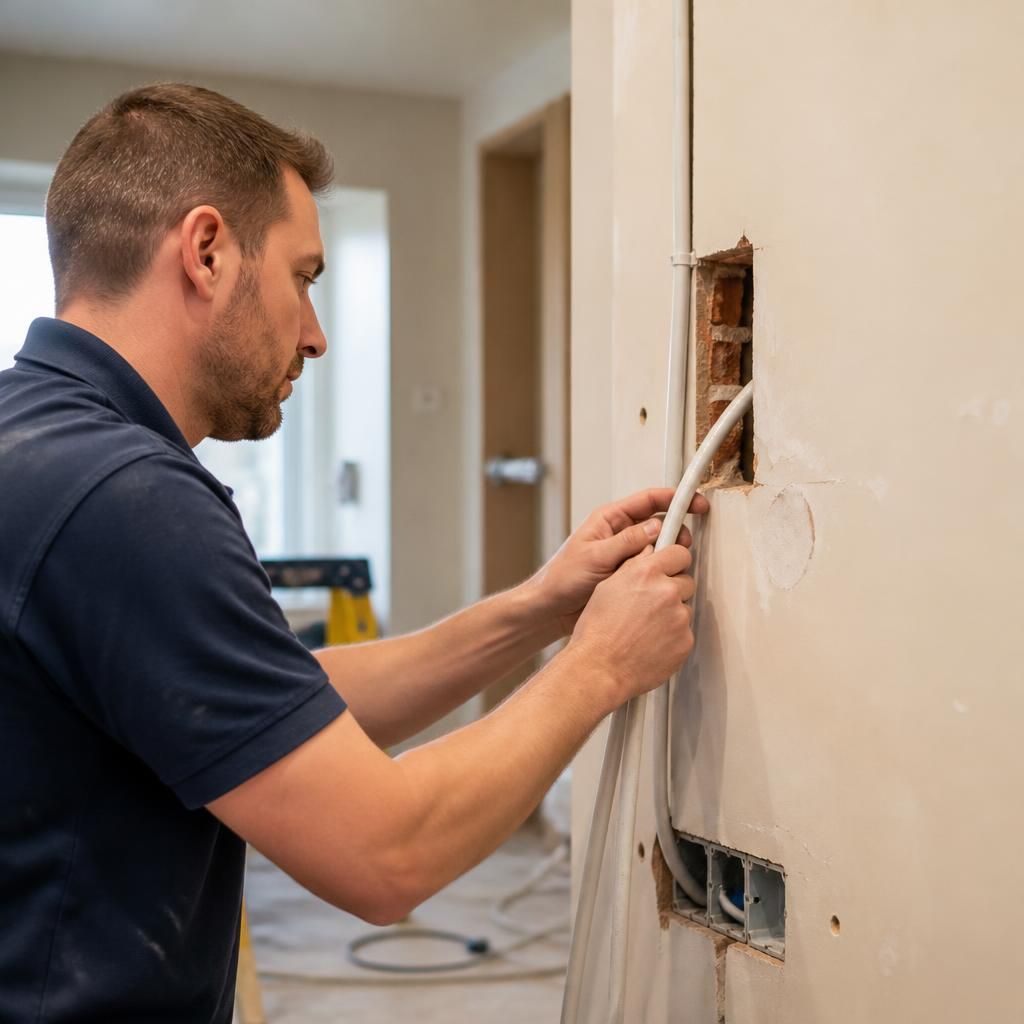
The most disruptive stage is usually the first fix, when cables, back boxes and containment are installed before walls or ceilings are finished. This may involve access to several parts of the property, particularly where a new circuit or reconfigured lighting arrangement is required. The second fix, which includes connecting sockets, switches, light fittings and other accessories, is generally more localised because the cable routes and connection points are already in place.
For larger domestic installations, separating these stages can help the work follow the property’s wider schedule. For example, cable routes may be installed before plastering or decorating, with visible accessories fitted afterwards. This avoids removing newly finished fittings and makes it easier to coordinate electrical work with building alterations. The electrician should explain which stage is being completed and what access will be needed at each point, so the household understands when particular rooms may be affected.
Discuss your domestic electrical installation requirements
Discuss your proposed domestic electrical installation with RJW Electrical and request a quote with no call-out fee.