
RJW Electrical
How should I choose between wired and wireless home security systems?
Wired home security systems are generally suited to permanent installations where dependable connections and discreet cabling are priorities, while wireless systems are often preferable when you want a less disruptive installation or greater flexibility over device placement. The right choice depends on your property’s construction, layout, power arrangements, security requirements and whether the system may need to be expanded or relocated later.
Neither wired nor wireless is automatically the better choice. The most suitable home security system is the one that provides reliable detection, secure communication and practical control for the property’s risks, occupants and future needs. A well-designed wireless system can outperform a poorly planned wired installation, and a wired system may be the more dependable option where there are suitable cable routes and a long-term installation is required.
Wired systems connect sensors, keypads, sirens and other devices to the control panel using physical cable. This can provide a stable connection that is not affected by radio congestion in the same way as a wireless system. Wired devices also do not normally rely on replaceable batteries for their primary connection, which can reduce the number of routine battery checks required.
A wired installation may be particularly appropriate for a new-build property, a substantial refurbishment or a building where cable routes can be incorporated neatly. It can also suit larger or more complex systems, provided the control panel and wiring are planned correctly. However, the installation needs careful design: cable must be protected from accidental damage and potential tampering, and any exposed or accessible routes should be assessed as part of the security design.
Wireless systems communicate between the devices and the control panel using radio signals. They can be useful where running cable would involve significant alterations to finished walls, ceilings or floors, or where devices need to be positioned without extensive building work. Wireless equipment may also make it simpler to add or move certain devices, subject to the system’s design and the signal conditions within the property.
Wireless does not mean maintenance-free. Sensors and other battery-powered components need battery condition monitoring and eventual replacement. Radio performance can also be influenced by building materials, distance, competing signals and the position of the control panel. A professional survey should confirm that each device has a reliable connection rather than assuming that a signal will pass equally well through every wall or floor.
Security should be considered as well as convenience. Ask how the system protects radio communication, how it identifies communication failures and what happens if a device loses contact with the control panel. The control panel should be positioned securely, with suitable protection against unauthorised access. For systems connected to an app or other online service, check how user accounts are protected, whether software and firmware can be updated, and how access is managed if a phone is lost or a user no longer needs control.
Power arrangements are important for both types. A professionally installed system should be assessed for what happens during a mains power interruption. This includes the control panel, external or internal sounders, communications equipment and any connected cameras. Wireless sensors may continue to communicate using their batteries, but the central equipment and internet connection may still depend on their own power arrangements. A wired system is not automatically unaffected by a power cut, so backup provision and system behaviour should be discussed before installation.
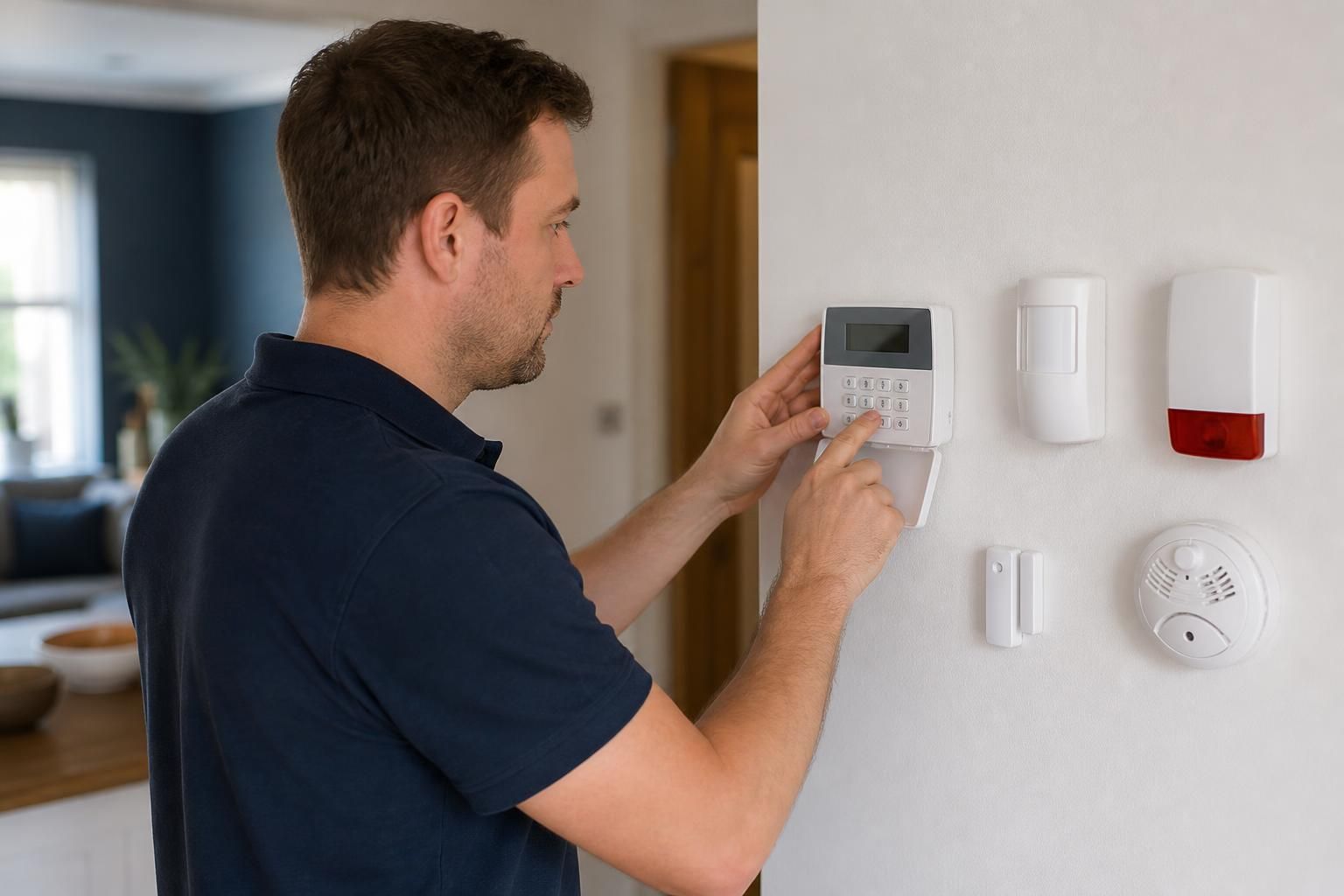
Consider the devices required, rather than choosing a system based only on its connection method. Door and window contacts, movement detectors, panic controls, internal sounders, external warning devices, smoke or heat detection and security cameras each have different positioning and power requirements. Movement detectors must be located to detect the intended routes without creating unnecessary false alarms, while cameras need a suitable view, lighting conditions and privacy assessment. A wired or wireless connection may be preferable for one device but not another, making a hybrid system a practical option.
A hybrid security system combines wired and wireless components through one control arrangement. For example, fixed devices in accessible cable routes may be wired, while additional sensors in finished areas may use wireless communication. This approach can balance connection stability with installation practicality, but compatibility must be confirmed. Not every wireless device can be added to every control panel, and a system should not be described as expandable unless the relevant panel, software and communications equipment support the proposed additions.
When comparing quotations, look beyond the initial equipment list. Check whether the price includes the control panel, power supplies, batteries, sounders, programming, user setup and testing. Establish which areas are covered, how many users can operate the system, whether remote control depends on an internet connection, and what ongoing costs or maintenance responsibilities apply. A lower equipment price may not represent better value if it omits essential devices or leaves important areas without suitable detection.
The installation method should also reflect how the property is used. Homes with young children, pets, tenants, elderly occupants or several regular users may need different detector types, access arrangements and operating controls. Discuss how the system will be armed when people remain inside, how entry and exit delays work, and how authorised users are added or removed. Clear instructions are important because an alarm that is difficult to operate may not be used consistently.
The best decision normally follows a site survey rather than a choice made from a product description. The installer should assess access points, internal movement routes, likely signal paths, cable routes, equipment locations, mains supplies and any existing security equipment. They should then explain why each device is proposed and identify any limitations, including areas that cannot be covered effectively or equipment that requires regular user maintenance.
RJW Electrical can advise on wired, wireless and hybrid options as part of a professionally planned security installation. Its qualified, insured and DBS-checked engineers work to the 18th edition wiring regulations, with NAPIT membership and TrustMark and Electrical Safety Register membership providing relevant professional credentials. A clear quotation, including the proposed design and any exclusions, allows you to compare the options on security performance, installation impact, maintenance and long-term suitability rather than connection type alone.
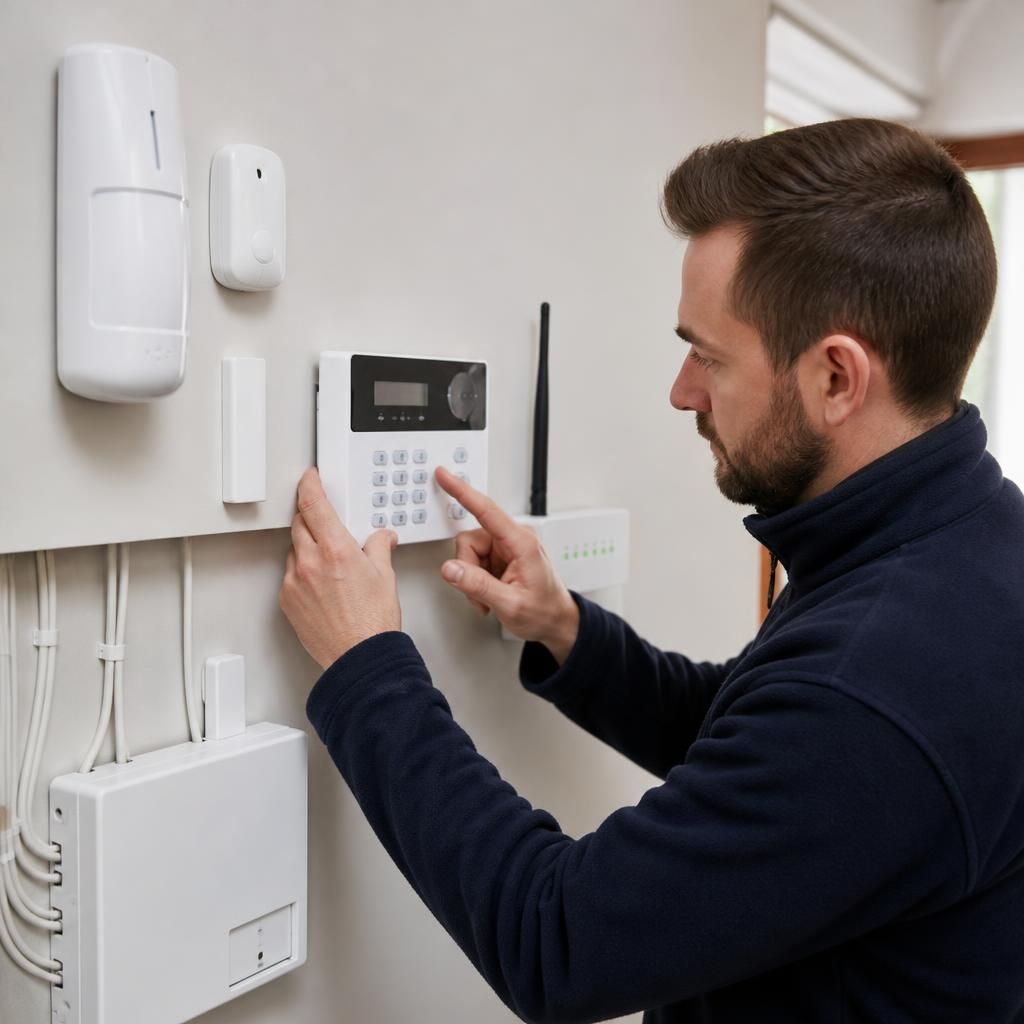
Do not confuse a wireless alarm system with an internet-dependent system. “Wireless” usually describes how detectors communicate with the control panel, while remote app control and notifications use a separate communications path, such as broadband or a mobile connection. A system can therefore have wireless sensors but still require wired power and a separate route for remote access.
When comparing options, ask what happens if the broadband connection fails, the mobile signal is unavailable or the communications service is interrupted. Confirm whether the alarm continues to detect and sound locally, which features depend on the connection, and how communication faults are reported. This distinction helps you compare the system’s everyday operation separately from its remote-control features.
Discuss Your Wired or Wireless Home Security Options
Contact RJW Electrical to discuss your property’s requirements and request a clear quote for a suitable wired, wireless or hybrid security system. A site assessment can help confirm the most practical equipment locations and installation approach.