
RJW Electrical
When does a tripping circuit breaker need professional repair?
A tripping circuit breaker needs professional repair when it repeatedly trips, will not reset, or trips again after the apparent cause has been removed. An electrician should investigate promptly where there is burning, heat, buzzing, visible damage or unexplained loss of power, as the fault may involve an appliance, wiring or the consumer unit.
A tripping circuit breaker needs professional repair when the problem is repeated, cannot be traced to a straightforward temporary overload, or continues after connected equipment has been isolated. The breaker may be responding correctly to a fault elsewhere in the circuit, so replacing it without testing can leave a dangerous wiring or appliance defect unresolved.
Not every trip means the breaker itself is defective. A circuit can disconnect because too many high-load appliances are being used together, because an appliance has developed an internal fault, or because the fixed wiring has deteriorated. Moisture, loose connections, damaged cable insulation and faults within the consumer unit can also cause repeated operation.
Professional investigation is particularly appropriate where:
- the breaker trips as soon as a particular appliance is switched on;
- it trips when sockets, lights or other equipment on the same circuit are used;
- the circuit trips even when appliances have been unplugged or switched off;
- the breaker will not remain in the on position;
- the same fault returns after the breaker has been reset;
- there has been recent electrical work, water ingress, building work or damage to a cable; or
- the affected circuit supplies essential equipment and its cause is not clear.
A single trip caused by a known temporary overload may not require a repair. The load can be reduced by switching off or unplugging equipment before resetting the breaker once. If it trips again, repeatedly resetting it is not a repair and may obscure the underlying fault. Do not remove the consumer unit cover or attempt to tighten connections inside it; parts can remain hazardous even when an individual circuit is switched off.
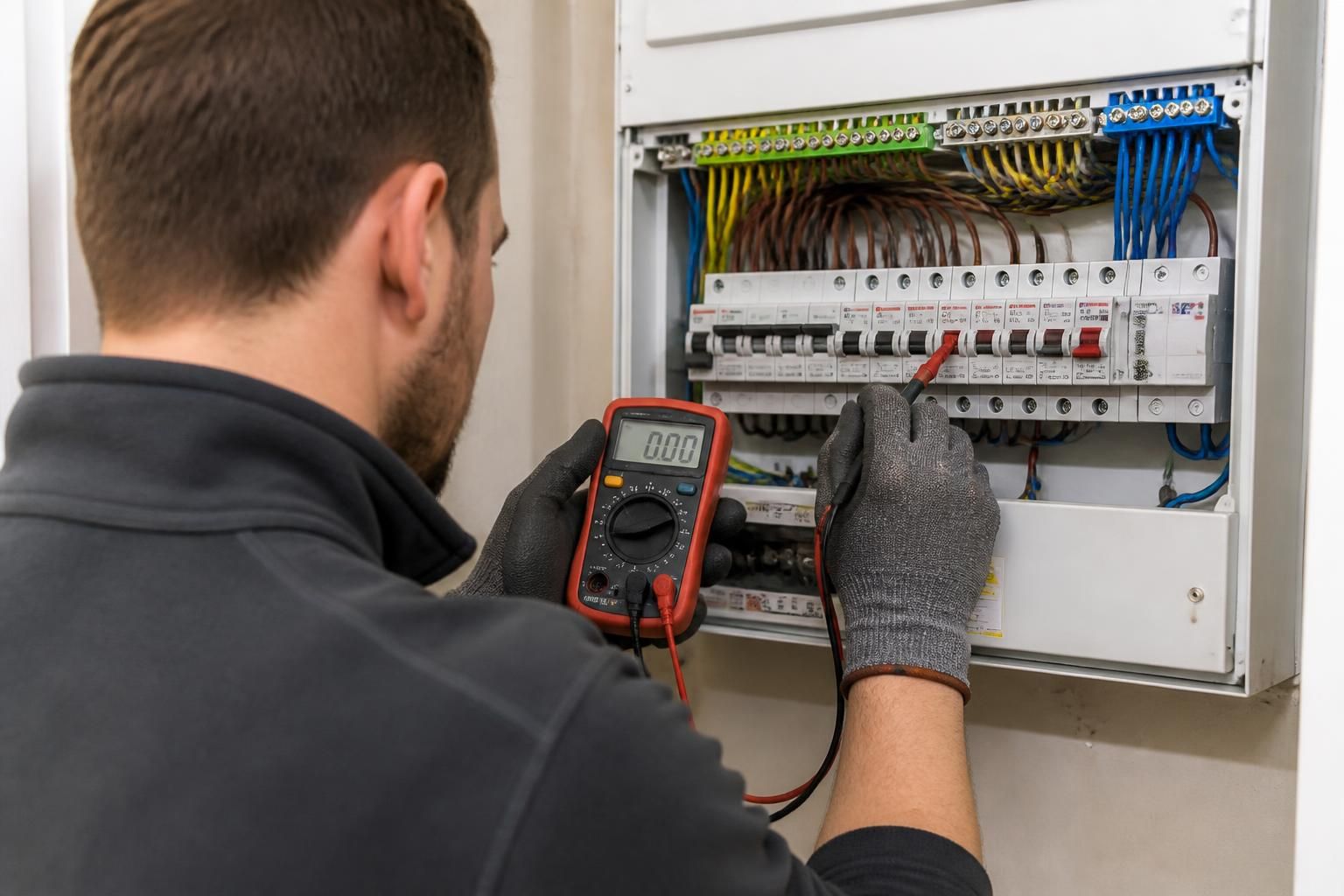
An electrician normally begins by identifying whether the device is an MCB, RCD or another protective device, then establishes which circuit is affected. The circuit may be separated from its appliances and tested in sections. Depending on the symptoms, checks can include insulation resistance, continuity, polarity, earth fault protection and the condition of terminals, accessories and cables. Appliances may need to be tested separately so that an equipment fault is not mistaken for a wiring fault.
If testing shows that the breaker itself is worn, damaged or no longer operating within its intended characteristics, it should be replaced with a suitable device. If the breaker is functioning correctly, the repair may instead involve replacing damaged cable or accessories, correcting a loose connection, resolving moisture ingress or dealing with the defective appliance. The protective device should not be uprated simply to prevent nuisance tripping, because its rating must remain appropriate for the cable and circuit design.
After the repair, the circuit should be retested and the cause explained clearly. Where an electrical fault affects a domestic or commercial installation, a suitably qualified electrician can carry out fault finding and repair in accordance with the relevant wiring requirements. RJW Electrical provides inspection, testing and repair work for properties in Sutton Coldfield, Streetly, Walmley, Erdington, Lichfield, Aldridge, Walsall, Shenstone and surrounding Midlands areas, with a no call out fee quote available.
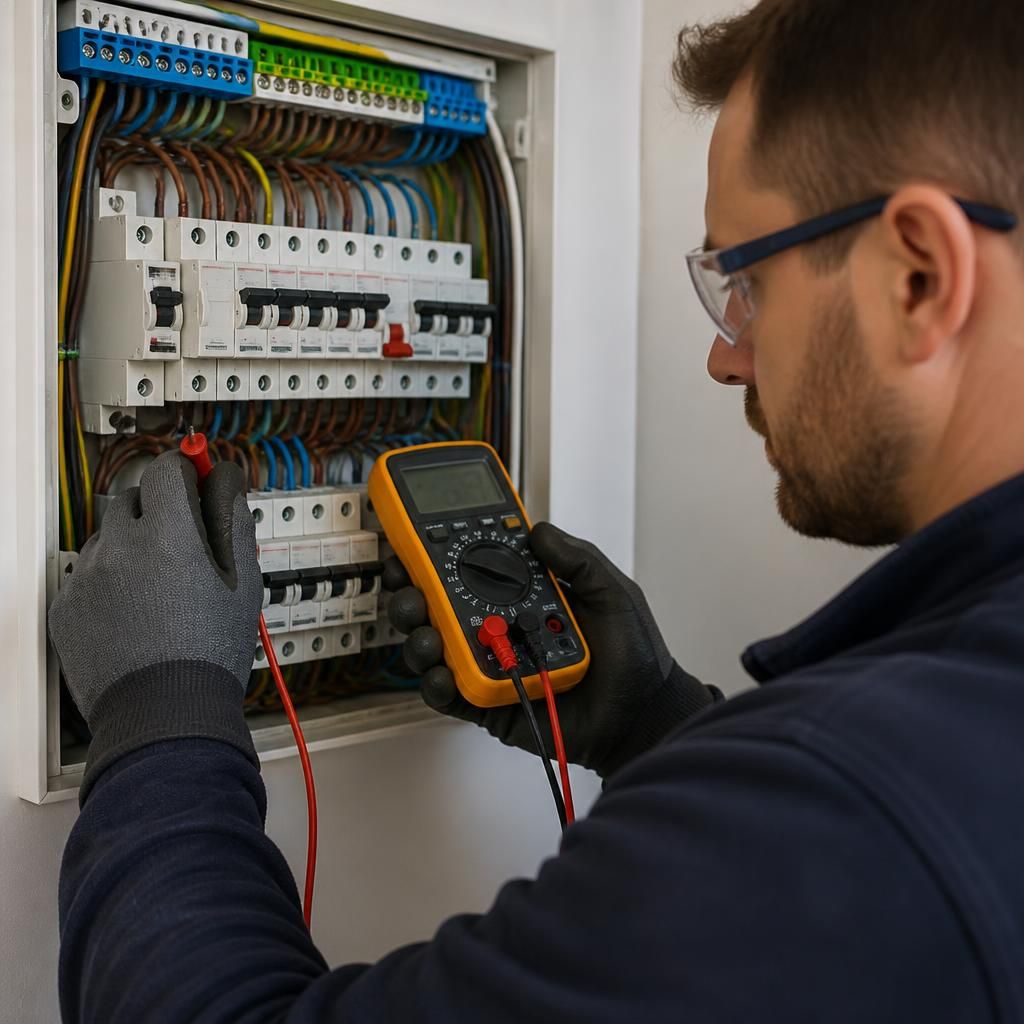
The type of protective device that trips can indicate the kind of fault requiring investigation. An MCB generally disconnects a circuit because of excessive current, such as an overload or short circuit. An RCD responds to current flowing to earth, which may be associated with damaged insulation, moisture or a faulty appliance. An RCBO combines both functions, so its operation can have either cause.
This distinction matters because repeatedly resetting the device does not address the source of the problem. A professional repair should establish whether the issue is limited to one appliance, affects the fixed wiring or relates to the protective device itself. The circuit can then be repaired and tested using equipment appropriate to the fault, rather than relying on a replacement breaker as a precaution.
Need a tripping circuit breaker investigated?
If your circuit breaker continues to trip or its cause is uncertain, contact RJW Electrical to arrange professional fault finding and establish the appropriate repair.