
RJW Electrical
How is an electrical fault diagnosed before a repair is carried out?
Electrical fault diagnosis involves inspecting the installation and carrying out appropriate tests to identify where and why the fault has occurred. The circuit is then isolated as necessary, the results are assessed, and the repair is specified only once the underlying cause has been confirmed.
Electrical fault diagnosis is a structured process used to identify the location, cause and extent of an electrical problem before deciding what repair is appropriate. It combines information from the person reporting the fault, a visual examination and electrical testing, rather than relying on a circuit breaker reset or replacing the first component that appears suspect.
The diagnostic process usually includes the following stages:
- Establishing the symptoms: The electrician will ask what happened, which lights, sockets or appliances are affected, whether the problem is constant or intermittent, and whether anything changed before the fault appeared. Recent alterations, water ingress, physical damage, unusual smells, buzzing, flickering or heat around an accessory can all provide useful clues.
- Inspecting the installation: The consumer unit, protective devices, switches, sockets, light fittings, visible cables and relevant accessories are checked for scorching, loose connections, cracked enclosures, damaged insulation, corrosion, signs of overheating or moisture. The condition of the installation can indicate whether the problem is likely to be a failed accessory, a wiring defect, an overloaded circuit or a connected appliance.
- Identifying the affected circuit: The electrician determines which protective device supplies the problem area and checks whether the circuit has been labelled correctly. This helps separate a fault on the fixed wiring from a fault affecting one item connected to it. A tripping device may be responding to an overload, a short circuit, an earth leakage problem or a fault in an appliance, and each possibility requires a different approach.
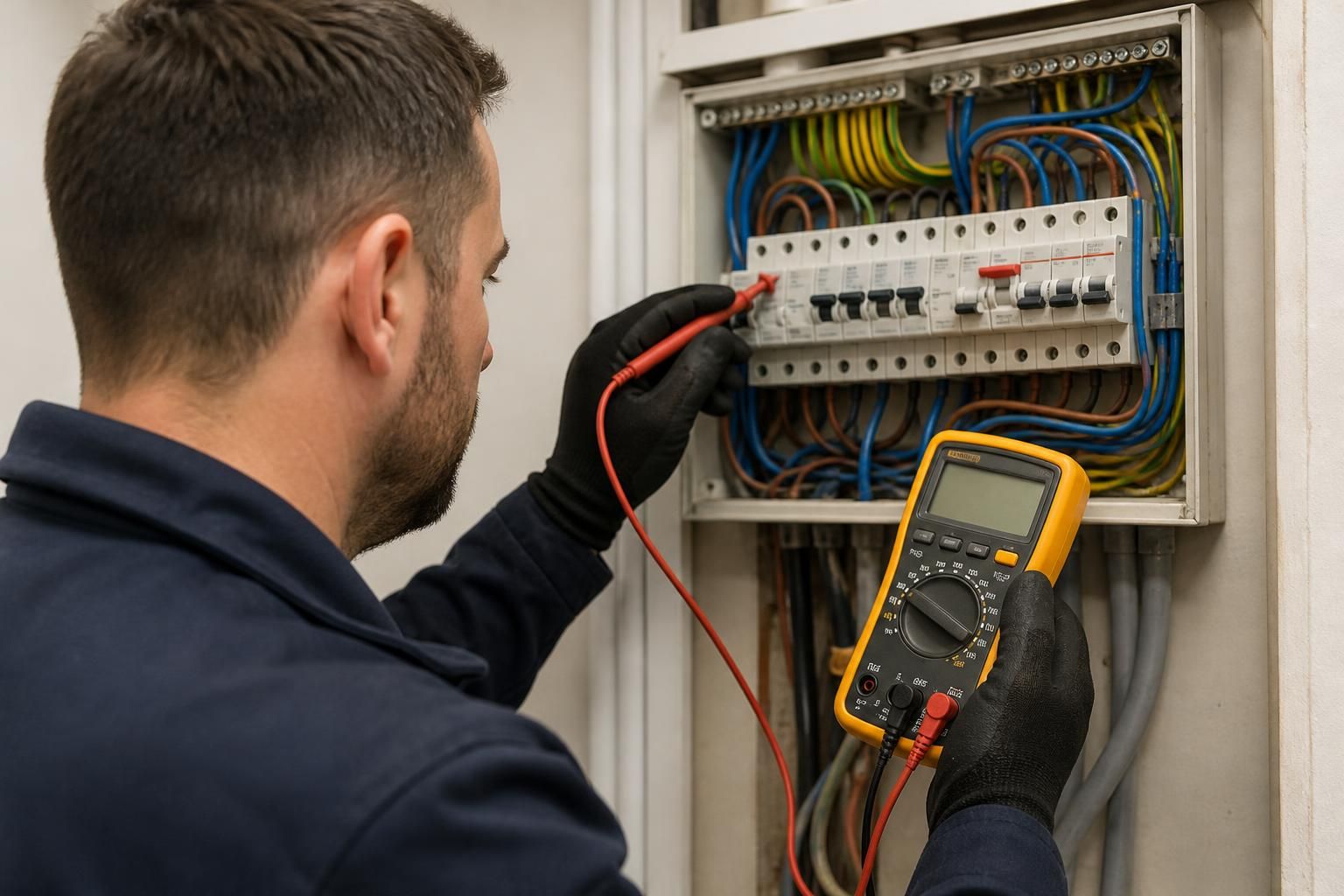
- Making the circuit safe for testing: Where testing requires access to wiring or terminals, the relevant supply is switched off and the circuit is proved to be dead using suitable procedures and equipment. This prevents work being carried out on energised conductors and reduces the risk of electric shock or further damage. Other parts of an installation may remain live, so safe isolation is specific to the circuit or equipment being examined.
Once the installation has been made safe, the tests selected will depend on the symptoms and the type of circuit. Common diagnostic checks include:
- Continuity testing: This checks whether conductors, including protective conductors, form the expected complete paths. An unexpected open circuit or an abnormal result can indicate a break, loose termination or damaged connection.
- Insulation resistance testing: This assesses whether insulation is preventing unwanted current flow between conductors and to earth. Poor results can be associated with damaged cables, moisture, deterioration or a connected item that should be separated from the fixed wiring for further investigation.
- Polarity checks: These confirm that line, neutral and earth conductors are connected to the correct terminals. Incorrect polarity can create a serious safety risk even when an accessory appears to operate normally.
- Earth fault loop impedance testing: This helps establish whether the protective device can disconnect the supply quickly enough if a fault connects a live conductor to earth. The result must be considered alongside the type and rating of the protective device.
- Residual current device testing: Where an RCD is involved, its operation can be checked with appropriate test equipment. This helps distinguish a device that is operating as intended from one that may be defective or responding to leakage elsewhere.
- Voltage and operational checks: Measurements may be taken at relevant points, sometimes under load, to identify a supply issue, a high-resistance connection or a fault that only appears when equipment is operating.
Testing is normally narrowed down progressively. For example, an electrician may divide a circuit into sections, disconnect individual loads or examine connections at particular points to establish where the abnormal result begins. This is especially important when a fault is intermittent: a satisfactory reading at one moment does not necessarily rule out a loose connection, heat-related failure, moisture problem or damaged cable that only shows itself under particular conditions.
The test results are interpreted together rather than in isolation. A single low reading may not identify the failed part by itself, and some connected equipment must be disconnected before the fixed wiring can be assessed accurately. The electrician also considers the age and condition of the installation, previous alterations, the protective arrangements and whether the reported symptoms match the test results. This prevents an apparent symptom, such as a tripping breaker, being treated as the underlying cause without checking what made it operate.
Once the fault has been located, the proposed repair should reflect the confirmed cause. This may involve replacing a damaged accessory, correcting a termination, repairing or renewing a section of cable, addressing moisture or heat damage, or dealing with a faulty connected item. If the defect is more extensive than initially expected, the electrician should explain the additional work needed and distinguish an immediate repair from wider remedial improvements.
After a repair, relevant tests are repeated to confirm that the affected circuit is safe and that the protective measures remain effective. Findings and recommendations can then be recorded so that the owner or responsible person understands what was checked, what caused the fault and whether any further work is advisable. RJW Electrical's qualified, insured and DBS-checked engineers apply this type of systematic approach to domestic and commercial fault investigations, with quotations based on the condition and scope of the work identified.
Do not remove covers, handle exposed conductors or repeatedly reset a tripping device to see whether the problem clears. Burning smells, smoke, visible damage, heat, sparking or water near electrical equipment should be treated as warning signs: keep clear, switch off the affected supply only if it can be done safely, and arrange assessment by a qualified electrician.
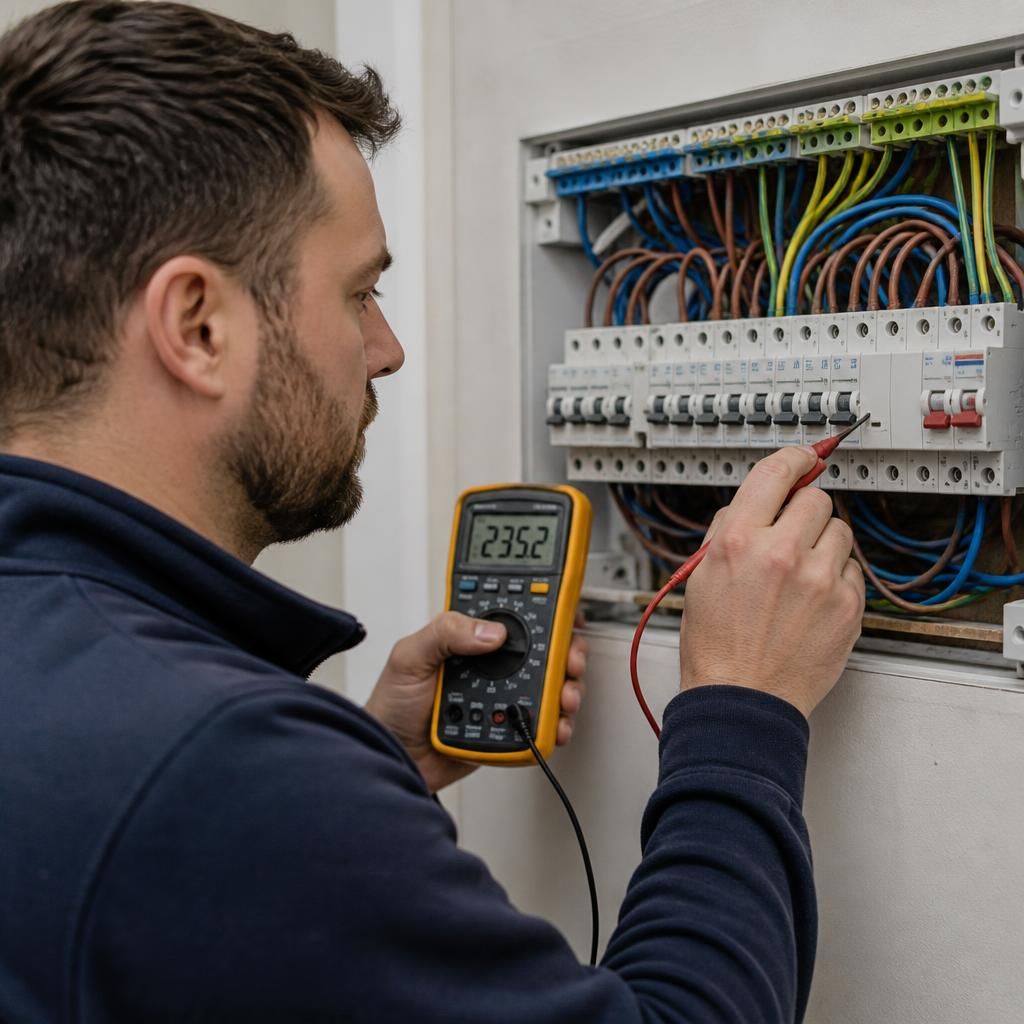
A diagnosis should establish the cause, not just identify the symptom. A tripped protective device, failed socket or flickering light shows where the problem has become noticeable, but it does not necessarily identify the defective component. The electrician uses the inspection and test results to determine whether the issue is confined to one accessory, affects part of the circuit or indicates a wider installation defect.
This distinction matters because replacing the visible component may leave the underlying fault in place. The repair recommendation should therefore follow the evidence gathered during testing, with any wider corrective work explained separately from the immediate repair.
Arrange an Electrical Fault Diagnosis
Contact RJW Electrical to arrange an electrical fault diagnosis. The findings can then be used to discuss the appropriate repair and provide a quote based on the work required.