

RJW Electrical
How long is a domestic EICR valid?
A domestic EICR does not have one universal expiry date; its recommended validity period is set by the qualified inspector according to the installation’s condition, age and use. The report will state when the next inspection is recommended, while rented properties may also be subject to specific legal inspection requirements.
A domestic EICR does not have a fixed expiry date that applies to every property. Its effective validity is determined by the recommended inspection date shown on the report, together with any changes to the electrical installation or the way the property is used.
For a typical owner-occupied home, an inspection is commonly recommended at least every 10 years. This is guidance rather than a universal legal deadline. The appropriate interval may be shorter where the installation is older, has deteriorated, is heavily used, or has previously required remedial work. The inspector should record the recommended date and explain any factors affecting the interval.
For a privately rented property in England, the electrical installation must be inspected and tested at intervals of no more than five years. The landlord must obtain the report, provide the required copies to the tenant and retain the relevant documentation. A new inspection may also be needed sooner if the previous report specifies an earlier date or if there is reason to believe the installation is no longer safe.
An EICR can become unsuitable to rely on before its recommended review date if circumstances change. Consider arranging another inspection after:
- significant electrical alterations, rewiring or additions;
- major building work that could have affected cables or electrical equipment;
- flooding, fire, impact damage or signs of overheating;
- repeated circuit-breaker trips, electric shocks, burning smells or other electrical faults;
- a substantial change in how the property is occupied or used; or
- the installation receiving an unsatisfactory result and remedial work being completed.
A satisfactory EICR records the condition of the installation at the time it was inspected. It is not a guarantee that faults cannot develop afterwards, and it does not remove the need to respond to new warning signs. Likewise, completing repairs does not automatically extend the original report's recommended period. Depending on the work and the findings, the electrician may need to issue an electrical installation certificate, minor works certificate, or further inspection documentation.
The result and observations on the report are important when assessing whether it remains suitable. Codes C1 and C2 identify dangerous or potentially dangerous conditions requiring urgent attention, while a C3 observation indicates an improvement is recommended but does not, by itself, make the report unsatisfactory. Any FI code means further investigation is required before the installation can be fully assessed. The report should be read as a record of condition, not simply as a document with an expiry label.
Homeowners should check the recommended next-inspection date, keep the complete report with records of electrical work, and arrange an earlier assessment if faults or alterations occur. Landlords should follow the statutory five-year maximum and any earlier interval stated by the inspector. When commissioning an inspection, use a qualified and competent electrician who will assess the installation against the current requirements of BS 7671 and provide a clear written report.
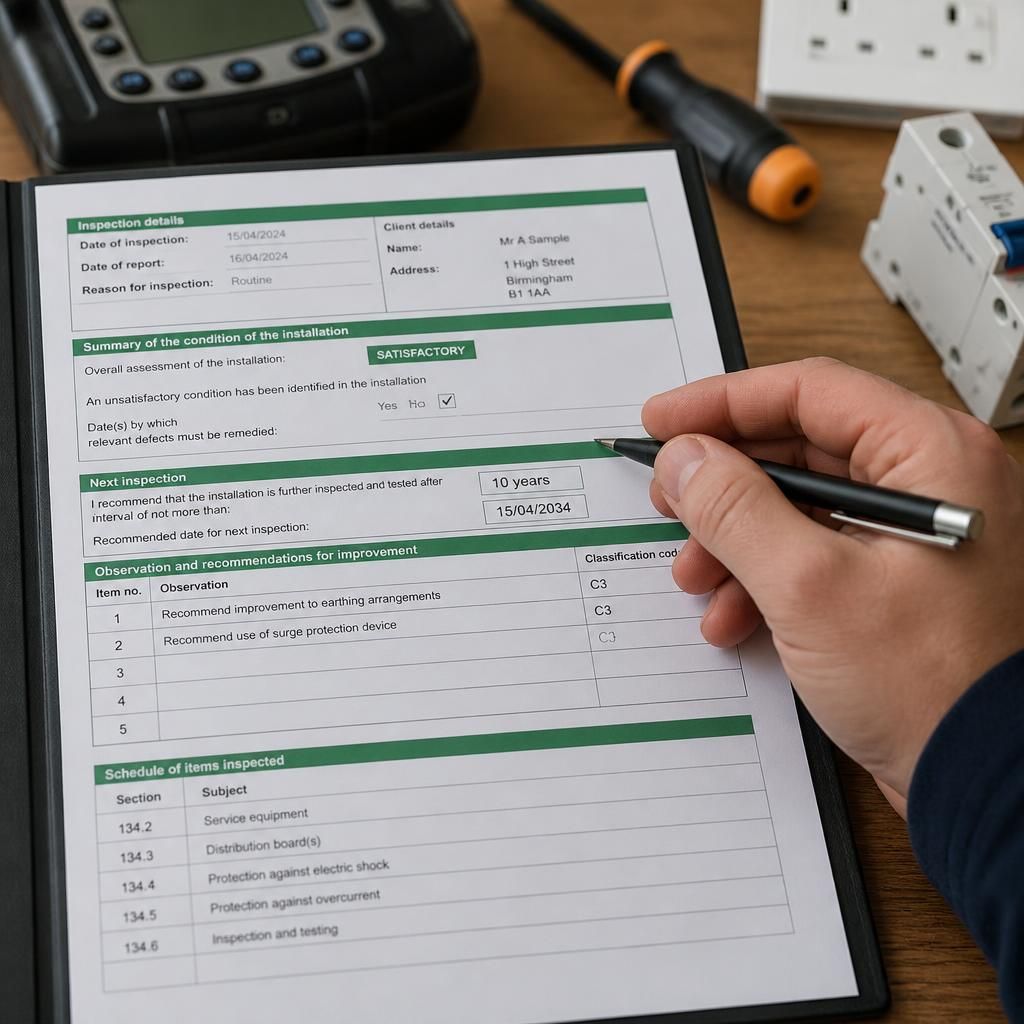
The stated validity of a domestic EICR applies to the fixed electrical installation and areas included in the inspection, rather than acting as blanket approval for every electrical item at the property. Portable appliances, newly added circuits, detached outbuildings or areas that were inaccessible may fall outside the report’s scope. Check the inspection details and any limitations recorded by the electrician before relying on the recommended date. If part of the installation was excluded or has since been altered, that section may need separate assessment even though the original EICR date has not passed.
Arrange your domestic EICR inspection
If your domestic EICR’s recommended inspection date is approaching, contact RJW Electrical to arrange a qualified assessment and receive a no call out fee quote.