
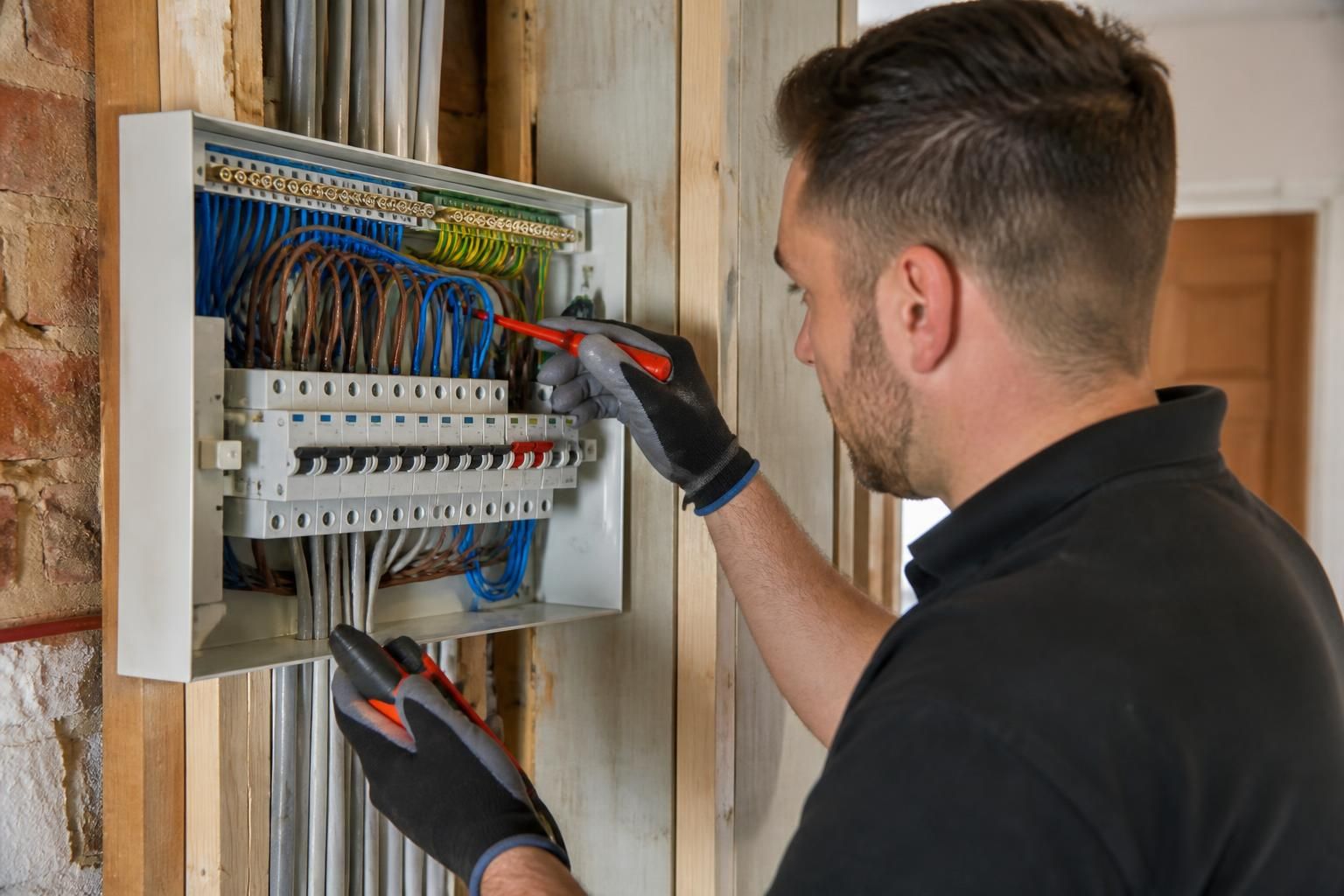
RJW Electrical
What happens if unsafe wiring is found during consumer unit replacement?
If unsafe wiring is found during consumer unit replacement, the work is assessed and any necessary repairs are identified before the new consumer unit is connected. The affected circuits may need remedial work and further testing so the installation can be made safe and compliant with current requirements.
If unsafe wiring is found during a consumer unit replacement, the electrician should not simply connect the new board and leave the defect unresolved. The affected circuit or installation is assessed, made safe where necessary, and any required remedial work is agreed before the replacement can be completed responsibly.
Unsafe wiring can include damaged cables, loose or overheated connections, inadequate earthing or bonding, poor insulation, incorrect polarity, signs of water or heat damage, and circuits that are overloaded or unsuitable for continued use. Some defects are immediately dangerous, while others indicate that repairs are needed before the installation can meet the requirements applying to the work.
- The problem is identified: inspection and testing help establish which circuit is affected, what the defect is and whether it presents an immediate risk.
- The circuit may be isolated: where continued use could be dangerous, the affected circuit may need to remain disconnected until suitable repairs have been completed.
- Remedial work is explained: the electrician should explain what needs correcting, why it is necessary and whether the work is limited to one circuit or affects a larger part of the installation.
- The repair is completed before connection: defective cables, accessories, terminations, protective conductors or other components may need repair or replacement.
- The installation is tested again: testing confirms that the repair and the new consumer unit operate safely together.
The extent of the work depends on the condition and design of the existing installation. A single loose connection or damaged accessory may require a targeted repair. More extensive problems can involve several circuits, concealed cable damage, inadequate earthing or wiring that is unsuitable for the protective devices in the new consumer unit. In those circumstances, part of the installation may need rewiring. A complete house rewire is not automatically required simply because the wiring is old; the decision should be based on its condition, test results and suitability.
An existing circuit does not necessarily have to be brought entirely up to the latest standards just because a new consumer unit is fitted. However, the altered or extended work must comply with the applicable requirements, and the electrician must be satisfied that the existing circuits are safe to connect to the new equipment. Where an issue cannot be corrected as part of the planned replacement, it should be clearly recorded and explained rather than concealed by installing the new board.
Testing may include checks on continuity, insulation resistance, polarity, earthing, fault protection and the operation of residual current devices. The precise tests depend on the installation and the work carried out. If testing produces an unsatisfactory result, further investigation or repair may be needed before the consumer unit can be signed off.
Additional work should be discussed before it proceeds, including the affected circuits, the safety reason for the recommendation and the likely effect on the scope of the project. A no-call-out-fee quote can help separate the original consumer unit work from any remedial work identified during the assessment, although the exact quotation depends on what is found on site.
Once the work has been completed and the results are satisfactory, the electrician should provide the appropriate electrical certification for the installation work. The certificate records the work undertaken and the test results; it is not a substitute for repairing an unsafe circuit. Keep it with the property records, particularly if future alterations, inspections or a property sale are being considered.
The safest approach is therefore to treat an unsafe finding as a necessary stage of the replacement process, not as an optional upgrade. The consumer unit should only be connected when the relevant circuits have been assessed, required defects have been addressed, and testing confirms that the completed installation is safe to use.
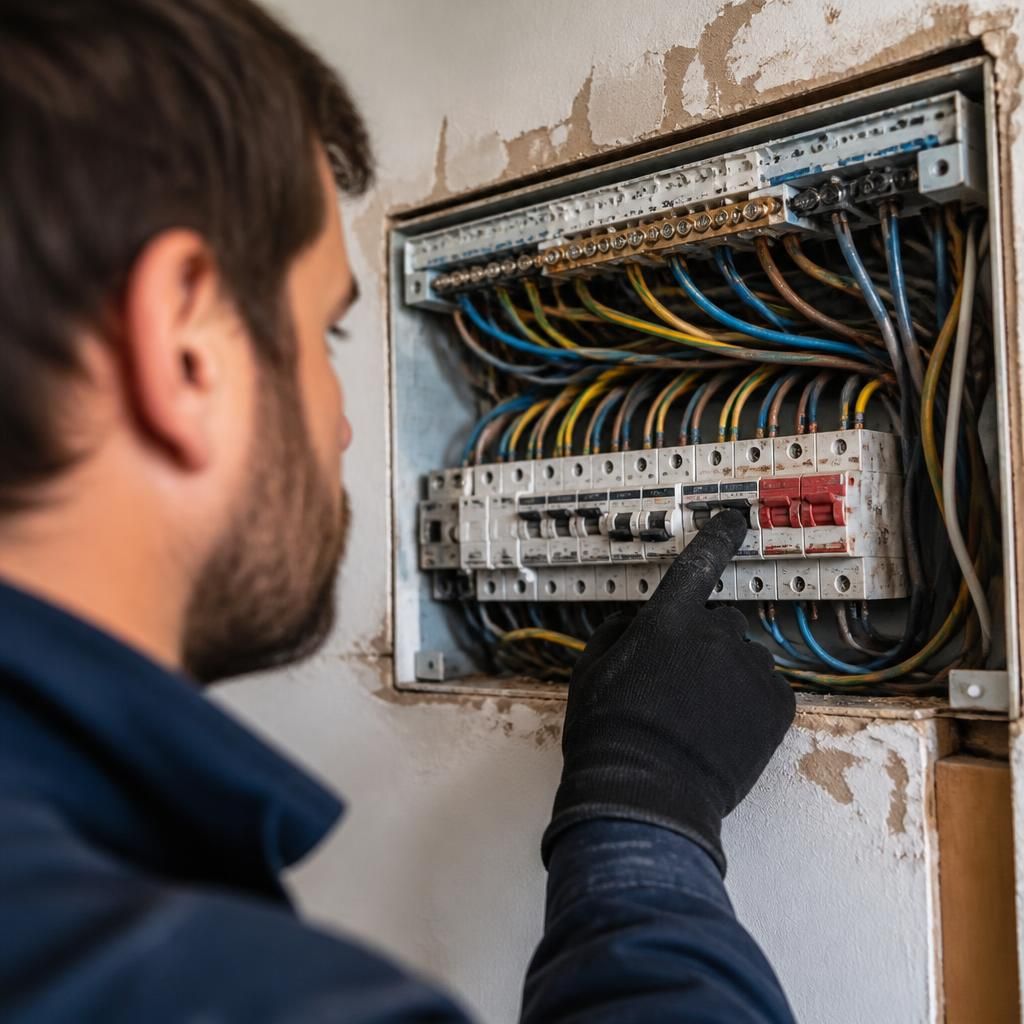
Unsafe wiring discovered during consumer unit replacement can affect more than the electrical components themselves: locating and correcting the defect may require access to parts of the building that were not included in the original plan.
For example, an electrician may need to remove an accessory, lift a floorboard or open a small section of plaster to trace concealed cable damage or inspect an inaccessible connection. The extent of access should be explained before it is carried out, along with whether any building repairs or redecoration are included in the quotation. Electrical testing and repair are separate from making good walls, ceilings or finishes.
- Ask where the defect is located and what access is needed.
- Confirm whether the proposed repair is localised or may reveal further affected wiring.
- Check which parts of the work relate to electrical safety and which relate to reinstatement.
This distinction helps you understand why a consumer unit replacement may become a wider project without assuming that every visible sign of age requires a complete rewire.
Need Advice About Unsafe Wiring During Consumer Unit Replacement?
If you are concerned about the condition of your wiring before a consumer unit replacement, contact RJW Electrical to discuss an electrical assessment and the most appropriate next step for your installation.