
RJW Electrical
What certificate is provided after consumer unit installation?
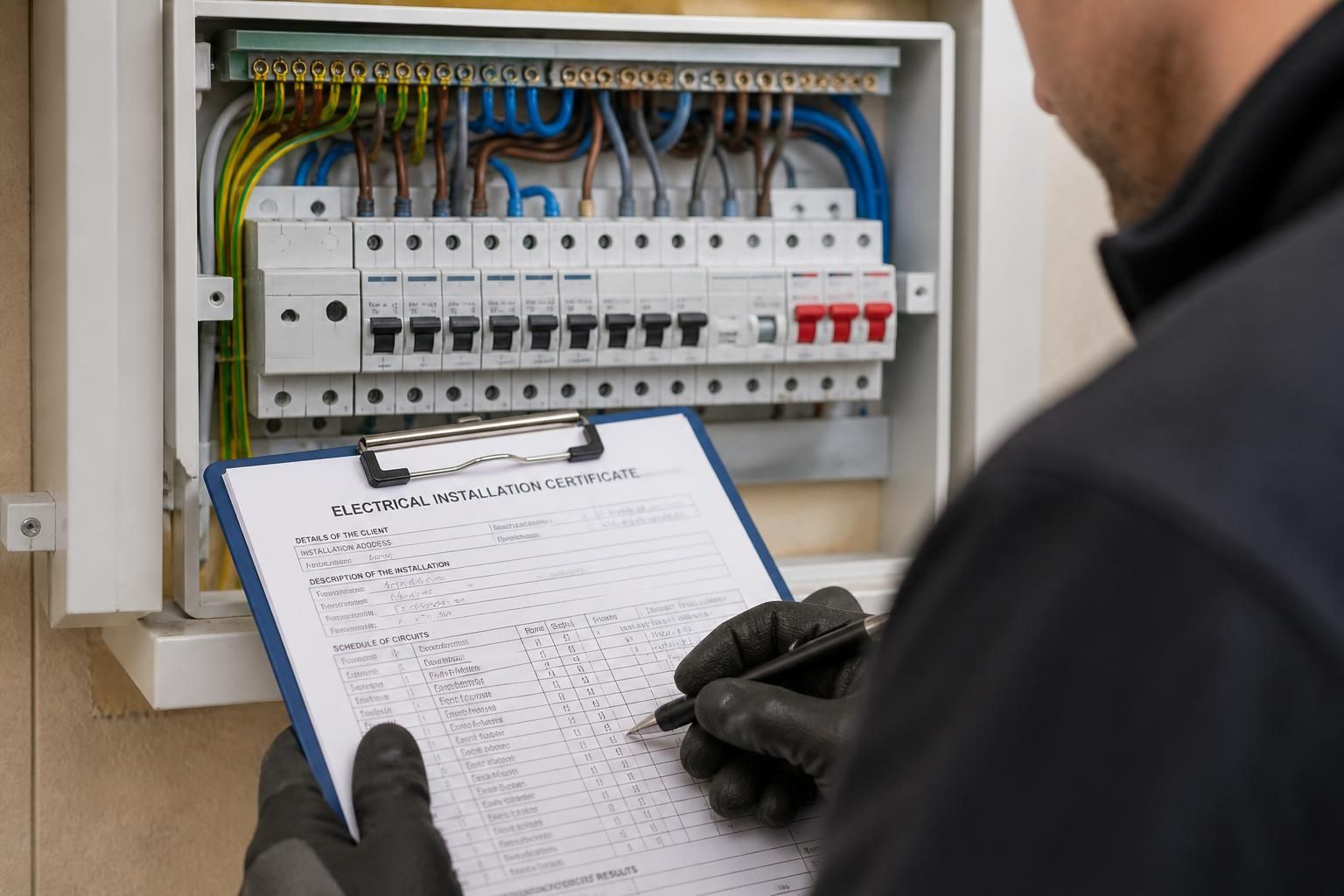
After a consumer unit installation, you should receive an Electrical Installation Certificate (EIC), recording the work completed and the results of the required inspection and testing. Where the installation is notifiable under Building Regulations, a separate Building Regulations compliance certificate should also be provided.
The certificate is the formal record of the consumer unit installation and the inspection and testing carried out afterwards. It should identify the work, the electrical installation tested, the person or business responsible for the work, and the results needed to confirm whether the installation is safe for continued use.
An Electrical Installation Certificate (EIC) will usually include:
- the property address and details of the installation or alteration;
- a description of the work, such as replacement of the consumer unit and associated circuit alterations;
- the earthing and bonding arrangements;
- details of the protective devices fitted, including the circuit-breakers and residual current devices where applicable;
- the schedules of circuits connected to the consumer unit;
- inspection results and electrical test measurements for each relevant circuit;
- the names and signatures of the designer, installer and inspector or tester, where these roles are separately recorded; and
- any limitations that affected the inspection or testing.
The circuit schedule is particularly useful because it links each circuit to its protective device and intended use. It may identify circuits for sockets, lighting, cooking equipment, showers, outbuildings or other fixed appliances. The test results provide evidence that matters such as continuity, insulation resistance, polarity, earth fault loop impedance and operation of protective devices have been considered. The exact tests recorded depend on the work undertaken and the characteristics of the installation.
The certificate should also show whether the installation passed the required inspection and testing or whether defects and further action were identified. A certificate does not mean that every part of an older property has been brought up to current standards. It records the condition and compliance of the work covered by the installation at the time it was inspected. If existing wiring is inaccessible, damaged or outside the agreed scope, this may be recorded as a limitation or observation rather than silently treated as satisfactory.
Any observations should be read carefully. An observation may identify a recommendation, a non-compliance or a potentially dangerous condition. Where unsafe wiring or another defect is found, the installer should explain what it means and whether remedial work is required. The certificate should not be altered to remove an unfavourable result, and a satisfactory document should not be taken as evidence that unrelated circuits were fully inspected.
Keep the certificate with the property's electrical records. It can help with future alterations, fault diagnosis, maintenance planning and questions from a surveyor or prospective buyer. The document should be supplied in a legible written or electronic format, with the schedules and any relevant additional pages included. If the certificate is missing, incomplete or does not describe the work carried out, ask the electrical contractor to clarify the paperwork rather than relying on an informal invoice alone.
For a consumer unit installation carried out by RJW Electrical, the important checks are that the certificate describes the actual work, identifies the circuits affected, includes the relevant test results and records any limitations or observations. A professional quotation should also make clear whether associated repairs, circuit alterations or Building Regulations notification are included, so the documentation matches the agreed scope.
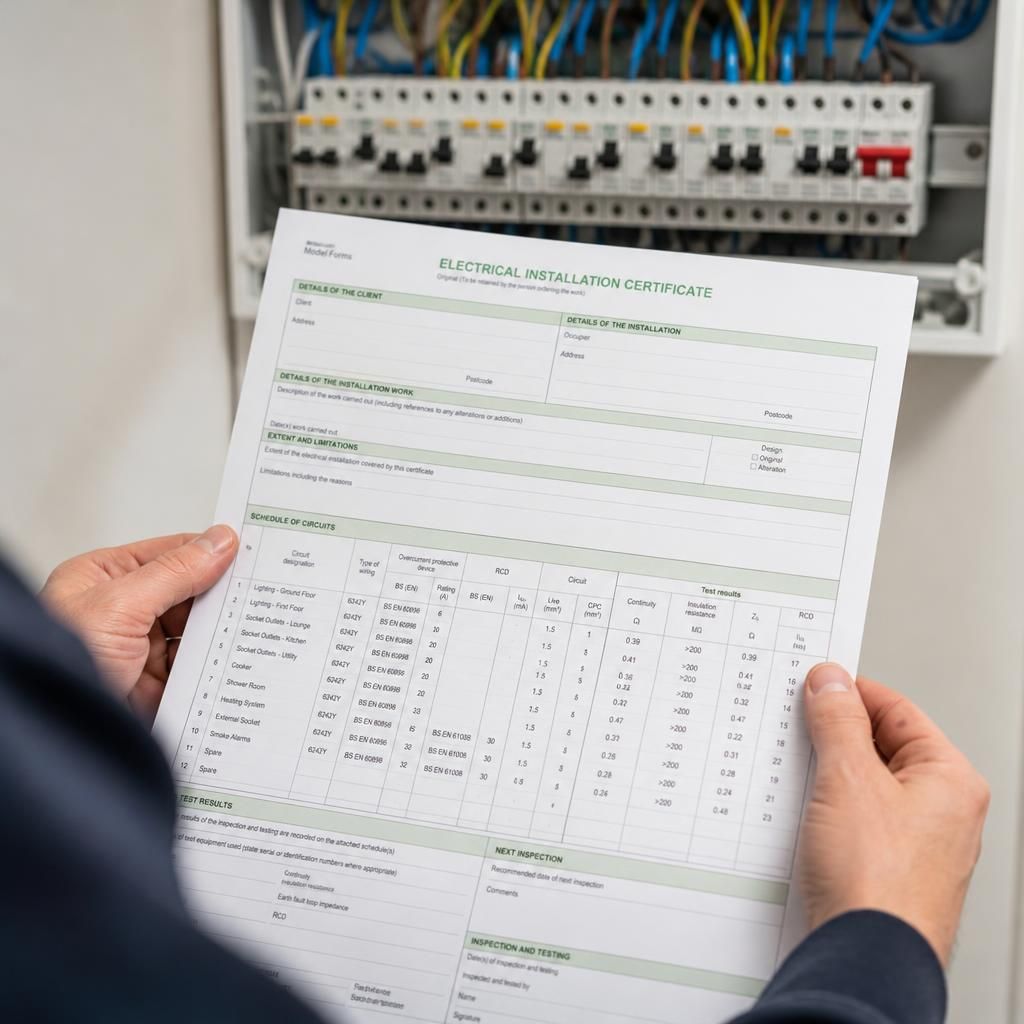
The Building Regulations compliance certificate is separate from the Electrical Installation Certificate (EIC): it confirms that a notifiable consumer unit installation has been reported under the relevant building control requirements, while the EIC records the electrical design, installation and test results.
These documents serve different purposes and should not be treated as alternatives. The EIC provides the technical record for the electrical work. The Building Regulations certificate provides evidence that the required notification process has been completed for the property. Keep both documents together with the home's electrical records.
When the paperwork is issued, check that the property address, date and description of the work are correct. The description should relate to the consumer unit installation and any associated alterations that were included in the agreed scope. If the compliance certificate does not arrive, or its details do not match the installation, contact the contractor responsible for the work and ask for the position to be clarified.
Discuss Your Consumer Unit Installation Certificate
If you need help checking whether your consumer unit paperwork is complete, discuss the installation certificate and any associated notification requirements with RJW Electrical.