

RJW Electrical
How disruptive is a house rewire?
A house rewire is disruptive because cables may need to be accessed beneath floors, within walls and across ceilings, with some rooms affected in stages. The extent depends on the property’s layout, the condition of the existing wiring and how accessible the cable routes are; careful planning can help keep the work and necessary making-good to a minimum.
A house rewire is usually a staged building project rather than a single electrical visit. The disruption comes from gaining access to cable routes, removing obsolete wiring, installing new circuits and then making good the areas opened up. How intrusive it feels depends on whether the work is carried out throughout the property or limited to specific circuits and rooms.
Before work starts, the electrician should assess the existing installation and agree the scope with you. This normally includes identifying the circuits to be replaced, locating the consumer unit, considering the position of switches and sockets, and planning routes for cables. A clear plan helps avoid unnecessary access and makes it easier to decide which rooms can remain in use while others are being worked on.
- Furniture and belongings: Furniture may need to be moved away from walls, floors or ceilings where access is required. Fragile or valuable items should be removed from the work area, and cupboards or storage spaces may need to be emptied if cables pass through them.
- Access to rooms: Rooms are often dealt with in sections. Floor coverings, floorboards, skirting boards, boxing-in or parts of plasterboard may need to be lifted or opened, depending on the construction of the property and the chosen cable routes.
- Dust and debris: Chasing walls, drilling and lifting boards can create dust and small amounts of debris. Dust sheets and suitable protection can help contain this, but rewiring is not generally a clean process. The affected areas should be kept clear so the electrical work can be completed safely.
- Loss of electrical supply: Circuits must be isolated while work is being carried out. This means there may be periods when lighting, sockets or particular appliances cannot be used. The electrician should explain which supplies will be unavailable and when, so essential arrangements can be made.
- Making good: Electrical work and building repairs are separate stages. Cable chases, holes and lifted surfaces may require filling, plastering, painting, flooring repairs or redecoration after the installation. The extent of this work depends on the access method and the condition of the surfaces.
In an occupied home, the least disruptive approach is usually to agree a sequence that keeps unaffected rooms usable wherever practical. Bedrooms, living areas, kitchens and circulation routes may be tackled in an order that limits how much of the property is inaccessible at once. This does not remove the disruption, but it can make the work easier to manage. Households should also plan for periods without lighting or power and consider the needs of children, older people, pets and anyone working from home.
Properties that are empty or undergoing wider renovation can be simpler to rewire because furniture and floor coverings have already been removed, and walls or ceilings may be accessible before decoration is completed. In a finished home, retaining existing finishes may reduce some disturbance but can restrict cable routes. The electrician will need to balance accessibility, safety, the condition of the building and the desired positions of switches and sockets.
It is important not to confuse an electrical rewire with cosmetic work. An electrician can install and test the wiring, but plaster repairs, decorating, joinery and flooring may involve separate trades unless these tasks have been specifically included in the agreed scope. Ask what protection is used, which areas need to be cleared, what making-good is included and how the property will be left at each stage.
Some signs can indicate that postponing the work may create greater practical problems. Burning smells, scorch marks, buzzing, damaged accessories, repeated fuse or breaker operation and cables with deteriorated insulation should be reported to a qualified electrician. Do not remove covers or attempt to investigate live electrical equipment yourself.
Once the installation is complete, the new circuits should be inspected and tested in accordance with the applicable requirements. The results and any relevant electrical certification should be explained and supplied for the completed work. Although a full rewire involves disruption, informed planning, a room-by-room sequence and agreement about access and making good allow you to prepare properly and understand what the project involves before it begins.
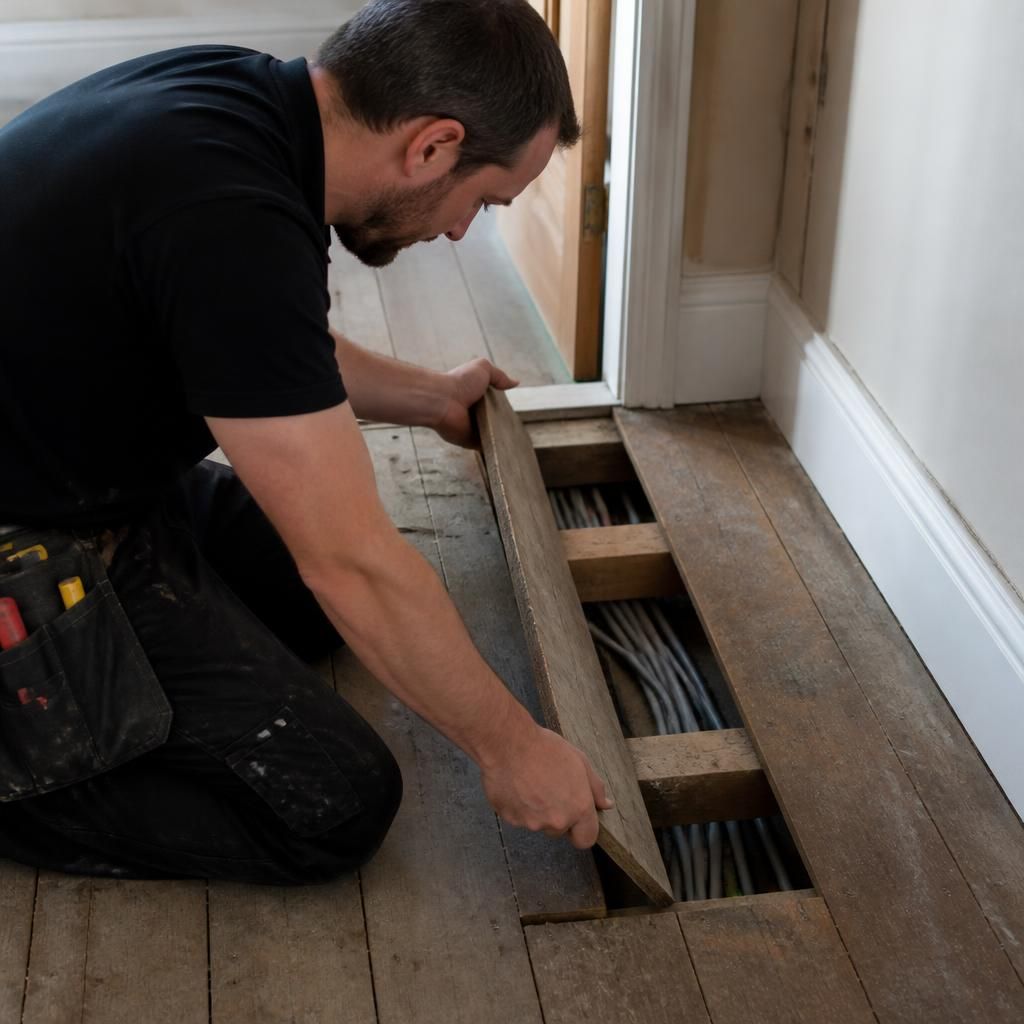
The installation method has a direct effect on how disruptive a house rewire is. Concealed wiring usually gives a neater finished appearance, but may require walls, ceilings or floors to be opened for cable access. Surface-mounted cable or trunking can reduce the need for chasing and lifting surfaces, although it remains visible and may affect the appearance of the room.
The most suitable approach depends on the property’s construction, the condition of existing finishes and the required cable routes. In some areas, cables may be accessible beneath floorboards or through roof spaces; elsewhere, limited opening-up may be unavoidable. Discussing these alternatives before work begins helps you weigh the visual result against the amount of disturbance and repair involved.
Discuss Your House Rewire Requirements
Contact RJW Electrical to discuss your house rewire requirements and request a clear, no-obligation quote based on your property and proposed scope of work.