
RJW Electrical
How can I prepare my home for consumer unit installation?
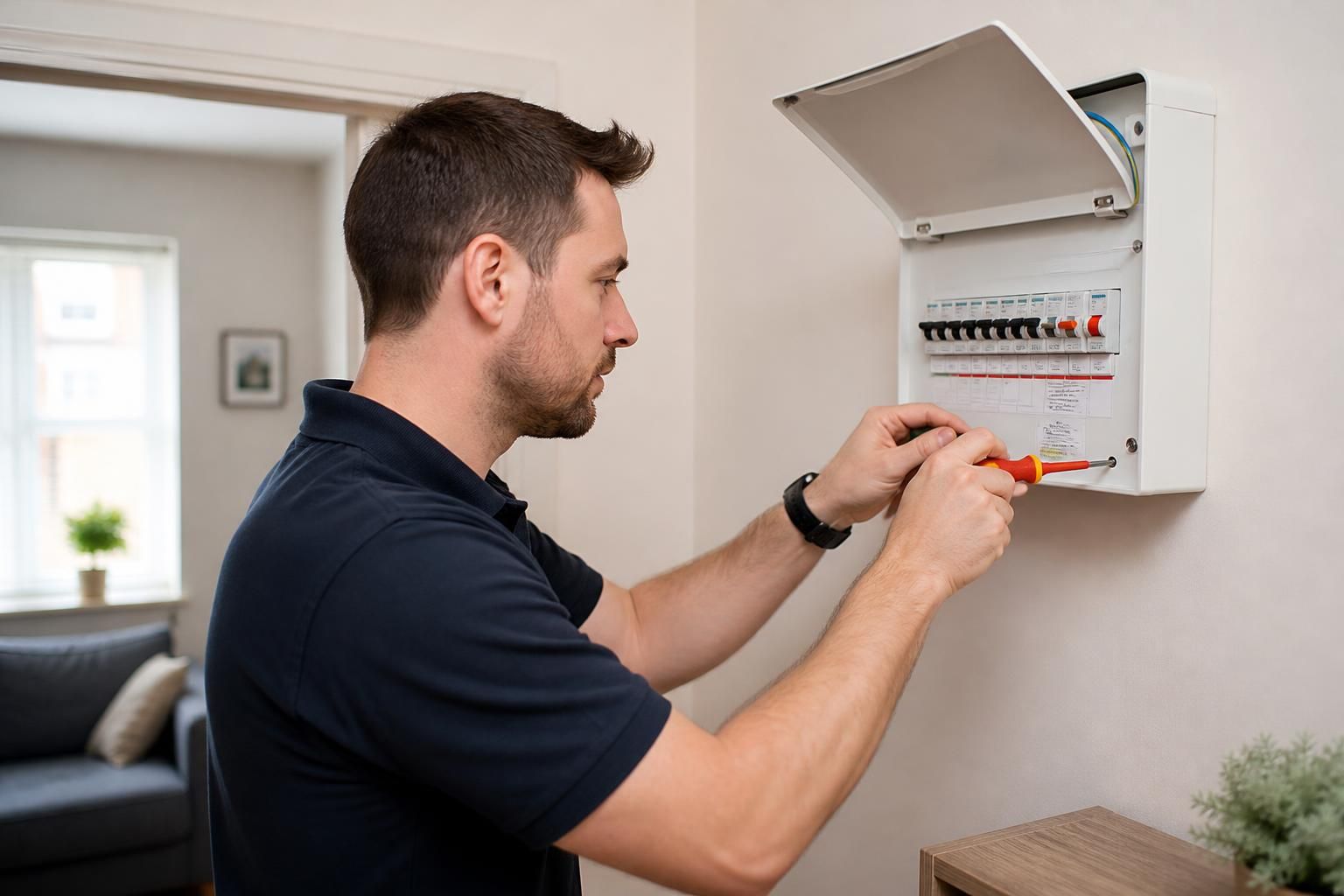
Prepare your home by clearing unobstructed access to the existing consumer unit, removing items stored nearby and securing pets or children away from the work area. Plan for the electricity to be switched off during the installation, and ensure essential devices such as computers, alarms or medical equipment are safely shut down or supported as appropriate.
Prepare for consumer unit installation by providing accurate information about your electrical system, confirming which circuits and equipment must remain operational, and making practical arrangements for the work. The electrician will then assess the existing installation, explain any limitations and confirm whether additional work is needed before the new consumer unit can be fitted.
Before the visit, gather relevant information
- Locate any electrical installation certificates, previous inspection reports or records of earlier alterations.
- Make a note of recurring problems, such as tripping protective devices, flickering lights, damaged accessories, overheating or unexplained power loss.
- Tell the electrician about alterations or additions that may not be obvious, including extensions, converted rooms, outbuildings, electric showers, hot tubs, solar photovoltaic systems, battery storage or electric vehicle charging equipment.
- Identify any circuits that serve specialist equipment so they can be checked and labelled correctly.
Understand what the installation may involve
A consumer unit replacement is not always a simple like-for-like exchange. The installer may need to verify the earthing arrangement, main bonding, cable condition, circuit protection and the suitability of the existing wiring. If the installation has faults or does not meet current requirements, remedial work may be recommended before or alongside the consumer unit installation.
Ask for the proposed scope of work to be explained in advance. This should include the type of protective devices being considered, whether the existing enclosure will be removed, whether circuits will be tested individually and whether any additional materials or remedial work could be required. A quotation should distinguish the planned installation from work that can only be confirmed after testing.
Make practical arrangements inside the property
- Tell the electrician about rooms, cupboards or areas that may need to be accessed to trace cables, inspect accessories or test circuits.
- Remove fragile items from locations where testing equipment or tools may be used, particularly near switches, sockets and distribution equipment.
- Identify the locations of the electricity meter, incoming supply equipment and any separate consumer units serving extensions or outbuildings.
- Inform other occupants, tenants, staff or contractors who may be affected by the installation and testing process.
- Keep manufacturer instructions or operating information available for equipment connected to dedicated circuits.
Check arrangements for rented or managed properties
Tenants should obtain the required permission from the landlord or managing agent before electrical work begins. In a commercial or shared property, the responsible person may also need to coordinate access, notify occupants and consider whether the work affects fire alarm systems, security equipment, communal services or business-critical appliances.
Plan for testing and documentation
Installation is followed by inspection and testing of the relevant circuits. Some equipment may need to be reconfigured or have its settings checked afterwards, so keep access to instruction manuals and contact details for specialist contractors where applicable. At completion, retain the electrical installation certificate and any schedules, test results or recommendations supplied for the property. These records can assist with future maintenance, alterations and property transactions.
Do not attempt to disconnect circuits, remove the existing consumer unit or carry out preparatory electrical work yourself. If you are unsure whether the installation has separate supplies, unusual wiring or previous alterations, tell the electrician before work starts. A properly qualified and insured installer can establish what preparation is necessary and identify safety issues that may not be visible from the consumer unit alone.
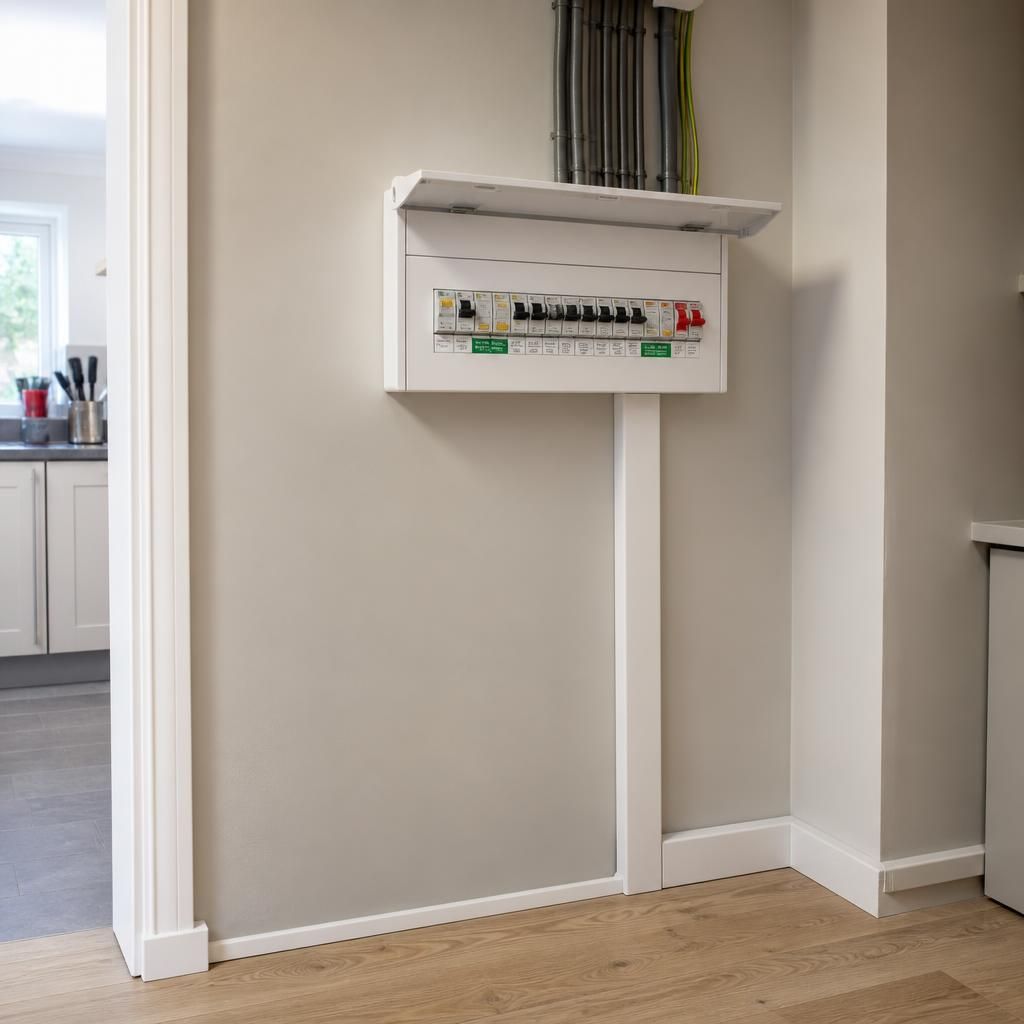
Prepare a restart checklist for equipment that may be affected when the electricity supply is isolated. A consumer unit installation can interrupt power to fixed appliances and connected systems, even when the work is limited to the distribution board.
- Record important settings for heating controls, alarms, network equipment and other programmable devices.
- Check whether any appliance requires a specific start-up sequence after the supply is restored.
- Keep access details or reset instructions available for systems that may need attention afterwards.
- After testing is complete, check that essential equipment has restarted correctly and that clocks, timers and programmed settings remain accurate.
This preparation helps distinguish a normal restart from a fault requiring further investigation. Do not reset protective devices repeatedly or reconnect equipment that shows signs of damage, overheating or abnormal operation; report the issue to the electrician so it can be assessed safely.
Discuss preparing your home for consumer unit installation
If you are planning a consumer unit installation, contact RJW Electrical to discuss the property and request a clear quotation for the required work. Their qualified electricians can explain the preparation needed before installation and testing begins.