
RJW Electrical
When does a commercial property need an electrical installation condition report?
A commercial property needs an Electrical Installation Condition Report (EICR) when its electrical installation requires a documented assessment of safety, particularly where age, use, condition, damage, alterations or a change of occupancy increases risk. Although there is no single interval that applies to every commercial premises, inspections should be scheduled through a risk-based maintenance plan and completed before relevant handovers, leases or significant changes to the installation.
A commercial electrical installation condition report (EICR) is needed when the installation requires a formal assessment of its safety and continued suitability. In commercial premises, the duty is generally to maintain electrical systems so far as is reasonably practicable under the Electricity at Work Regulations 1989; the law does not prescribe one universal EICR interval for every type of business. The appropriate timing depends on the building, installation, equipment, environment and way the premises are used.
An EICR should be considered before a property is occupied, leased, sold or handed over if there is no reliable record of the installation’s condition. It is also appropriate after a prolonged period of vacancy, following significant alterations, or where responsibility for electrical safety is transferring to a new owner, landlord, tenant or facilities team. A current report gives the responsible person an evidence-based starting point for ongoing maintenance.
Commercial premises commonly need an inspection where:
- the wiring, accessories or distribution equipment are ageing or their installation date is unknown;
- there has been a change of use, such as an office becoming a workshop, retail unit, kitchen or industrial space;
- new machinery, high-load equipment, air-conditioning, data systems or electric vehicle charging has been added;
- the installation has been extended, altered, damaged, overloaded or exposed to heat, moisture, dust or chemicals;
- fuses are blowing, circuit-breakers are tripping, lights are flickering, sockets are overheating or there are signs of burning or impact damage;
- previous inspection records are missing, incomplete or identify defects that have not been confirmed as corrected; or
- the premises has a higher-risk environment, frequent public access, vulnerable occupants or equipment that is particularly dependent on a safe electrical supply.
The inspection interval should be risk-based. A competent electrical professional should consider the type of premises, the age and design of the installation, the intensity of use, environmental conditions, previous report findings and the effectiveness of existing maintenance. A relatively stable office installation may justify a different review cycle from a workshop, commercial kitchen, agricultural setting, plant room or premises containing significant three-phase equipment. The recommended date on the report should be treated as part of the site’s planned maintenance arrangements, not as a substitute for acting on defects between inspections.
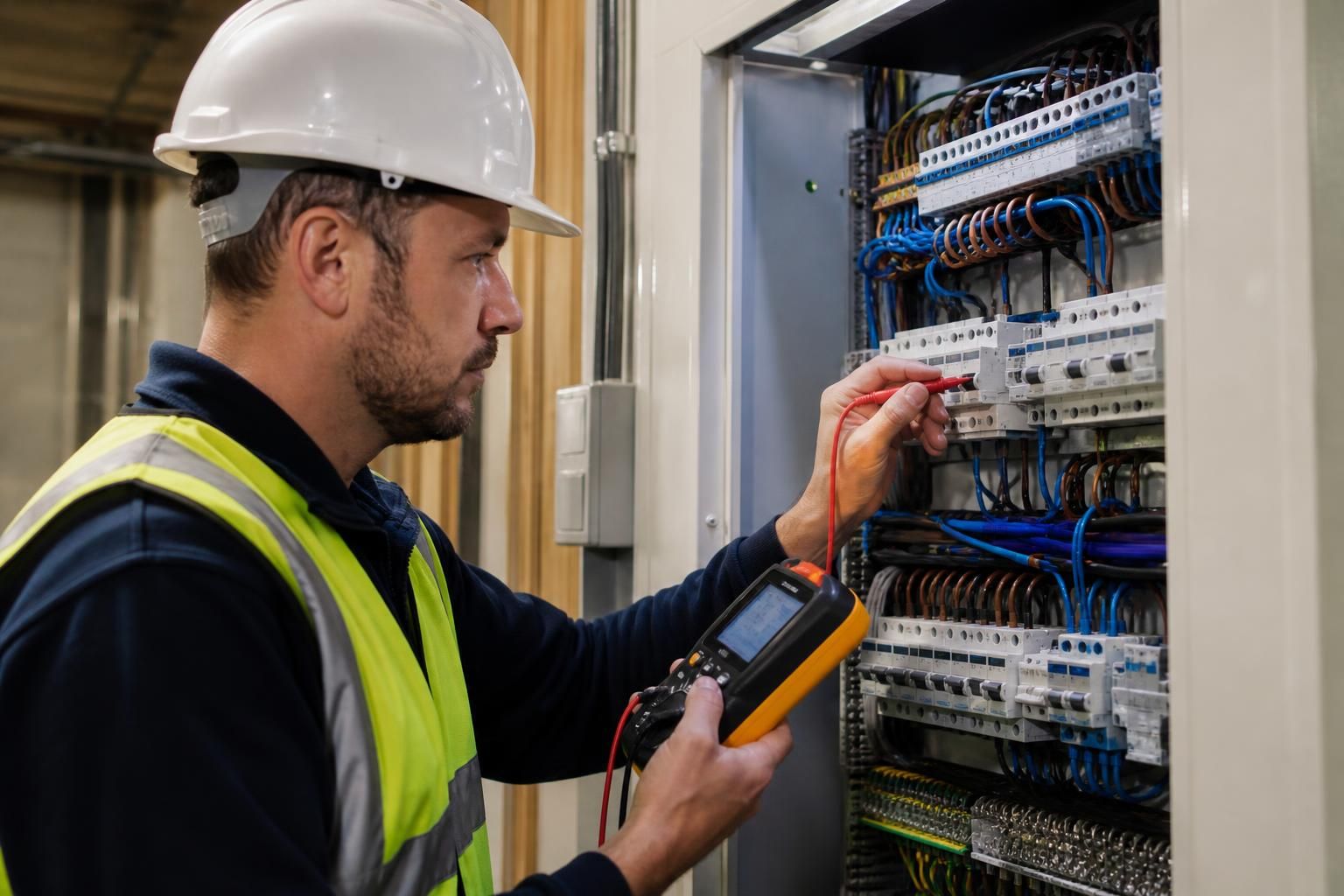
An EICR is not the same as a visual walk-round or a certificate for one new circuit. It involves inspecting accessible parts of the fixed installation and carrying out appropriate tests, which can include checks on protective conductors, insulation, polarity, automatic disconnection, residual current protection and the condition of distribution boards and accessories. The extent of the inspection should be agreed with the person responsible for the premises, particularly where equipment cannot be isolated or areas are inaccessible.
The report records observations using standard classifications:
- C1: danger present, requiring immediate action;
- C2: potentially dangerous, requiring urgent remedial action;
- C3: improvement recommended, but not normally indicating immediate danger; and
- FI: further investigation required without undue delay.
A satisfactory report does not mean that no improvement is possible, and an unsatisfactory report does not necessarily mean that the whole installation must be replaced. The responsible person should review each observation, prioritise any C1, C2 or FI items, and obtain suitable remedial work or further investigation. Once work is complete, the relevant electrical certification and supporting records should be retained with the EICR. A C3 observation can be considered within the property’s improvement plan, particularly where it relates to changes in current standards rather than an immediate safety defect.
Commercial premises should also maintain records of alterations, test results, previous defects and completed remedial work. These records help demonstrate that the installation is being managed, support future inspections and identify recurring faults. An EICR does not replace routine user checks, planned maintenance, portable appliance arrangements where applicable, emergency lighting inspections, fire alarm testing or specialist checks for equipment and systems outside the fixed electrical installation.
The person in control of an electrical system should arrange an EICR through a suitably competent electrical contractor and ensure that the inspection reflects the installation’s actual use. RJW Electrical can advise commercial clients on the scope of an inspection, record the condition of the installation and identify any remedial work that may be needed, with quotations provided without a call-out fee.

A recent EICR is not automatically suitable for every future occupier or business activity. The report applies to the fixed installation, areas and conditions assessed on the inspection date. If the premises changes hands, the electrical demand increases or the way rooms are used changes, the responsible person should review whether the existing report still reflects the current risk. This is especially important where new equipment, altered working practices or restricted access means that parts of the installation were not assessed in the same circumstances.
When reviewing an EICR, check that the premises details, inspection scope, limitations and recommended actions are clear. Keeping this information with lease, facilities and alteration records helps demonstrate why the report was commissioned and whether a further assessment is needed before the property’s use changes again.
Discuss your commercial EICR requirements
Discuss your commercial EICR requirements with RJW Electrical to clarify the inspection scope and any remedial work that may be needed. Request a quotation without a call-out fee.