
RJW Electrical
What testing should a commercial electrical installation include before handover?
Before handover, a commercial electrical installation should undergo a documented inspection and a series of tests covering wiring integrity, continuity, insulation resistance, polarity, earthing, fault-loop impedance, RCD operation and the function of installed equipment. The results should be recorded on the appropriate electrical certificates, with any defects corrected and the completed installation explained to the client.
Pre-handover testing is a staged verification process that confirms the new commercial electrical work has been installed as designed, is safe to energise and operate, and is supported by the records needed for future inspection and maintenance. It should cover the installation itself, its connection to existing services, any project-specific systems and the information passed to the building owner or facilities team.
Start with the approved design and project scope. The tester should compare the completed work with the electrical drawings, specifications, schedules and any agreed variations. This helps identify changes made during construction that have not been reflected in the documentation. The review should consider circuit arrangements, equipment ratings, containment, distribution board references, isolation points and the intended use of each area.
Where new work connects to an existing installation, the interface also needs attention. The condition and suitability of the existing equipment may affect the safety of the new circuits. For example, the capacity of the supply, protective devices, earthing arrangements and available space within distribution equipment should be considered rather than treating the new work in isolation.
Inspection should take place before concealment where possible. A visual review can identify issues that electrical measurements alone may not reveal. Areas to check include:
- the routing, support and protection of cables and containment;
- the suitability of equipment for its environment, including areas exposed to moisture, dust, heat or mechanical damage;
- the condition of enclosures, covers, glands, trunking and cable entries;
- the identification of circuits, isolators, distribution boards and protective devices;
- the separation of power, data, fire and other services where required;
- access for operation, isolation, inspection and future maintenance; and
- the presence of required barriers, blanking plates and protection against contact with live parts.
The inspection should also check that equipment has been installed in accordance with its instructions and the project specification. Any damage caused during other construction work should be recorded and addressed before the installation is accepted.
Testing should be carried out in a planned sequence. The installation may need to be safely isolated for some checks, while others require controlled energisation. The person carrying out the work should use suitable test equipment, follow the relevant testing procedure and record results against identifiable circuits or items of equipment. If a result is unexpected, the cause should be investigated rather than relying on an overall pass or fail statement.
Some commercial projects also require operational or functional checks in addition to electrical safety tests. These may include:
- operation of contactors, timers, sensors and control panels;
- switching arrangements for lighting and practical systems;
- automatic changeover or standby supply arrangements, where included in the project;
- interlocking and emergency-stop functions for connected equipment;
- operation of socket outlets, fixed appliances and dedicated supplies; and
- integration with building management or other control systems, where this forms part of the electrical scope.
Specialist installations should be checked against their own design requirements and relevant standards. For example, emergency lighting, fire alarm supplies, security systems, access control, data-related power supplies and electric vehicle charging equipment may each require additional commissioning records or specialist verification where they are included in the project. These checks should not be assumed to be covered by the basic electrical installation certificate alone.
The handover information should be usable, not merely complete. A commercial client will normally need a coherent record showing what has been installed, how it was tested and how it should be operated and maintained. Depending on the project, the handover pack may include:
- electrical installation certification and schedules;
- test results identified by circuit, board or item of equipment;
- updated drawings, circuit charts and distribution board schedules;
- records of approved deviations or changes from the original design;
- manufacturer instructions and maintenance requirements for installed equipment;
- commissioning records for controls and specialist systems; and
- details of outstanding items, restrictions or recommended follow-up work.
Labels and schedules should agree with the installation on site. Inconsistent circuit references can create avoidable risks during later isolation or maintenance, so they should be corrected before handover rather than left for the facilities team to resolve.
Any defects should be classified and dealt with according to their significance. A minor documentation issue is not equivalent to an unsafe installation condition, and neither should be obscured by a general statement that testing has been completed. Where remedial work is undertaken, the affected checks may need to be repeated and the final records updated.
For a commercial project, the most useful handover is therefore a controlled process involving inspection, measurement, functional commissioning, document review and confirmation that outstanding issues have been closed or clearly recorded. RJW Electrical can provide guidance on the testing and certification requirements for commercial installations across its Midlands service area, including Sutton Coldfield, Streetly, Walmley, Erdington, Lichfield, Aldridge, Walsall and Shenstone.
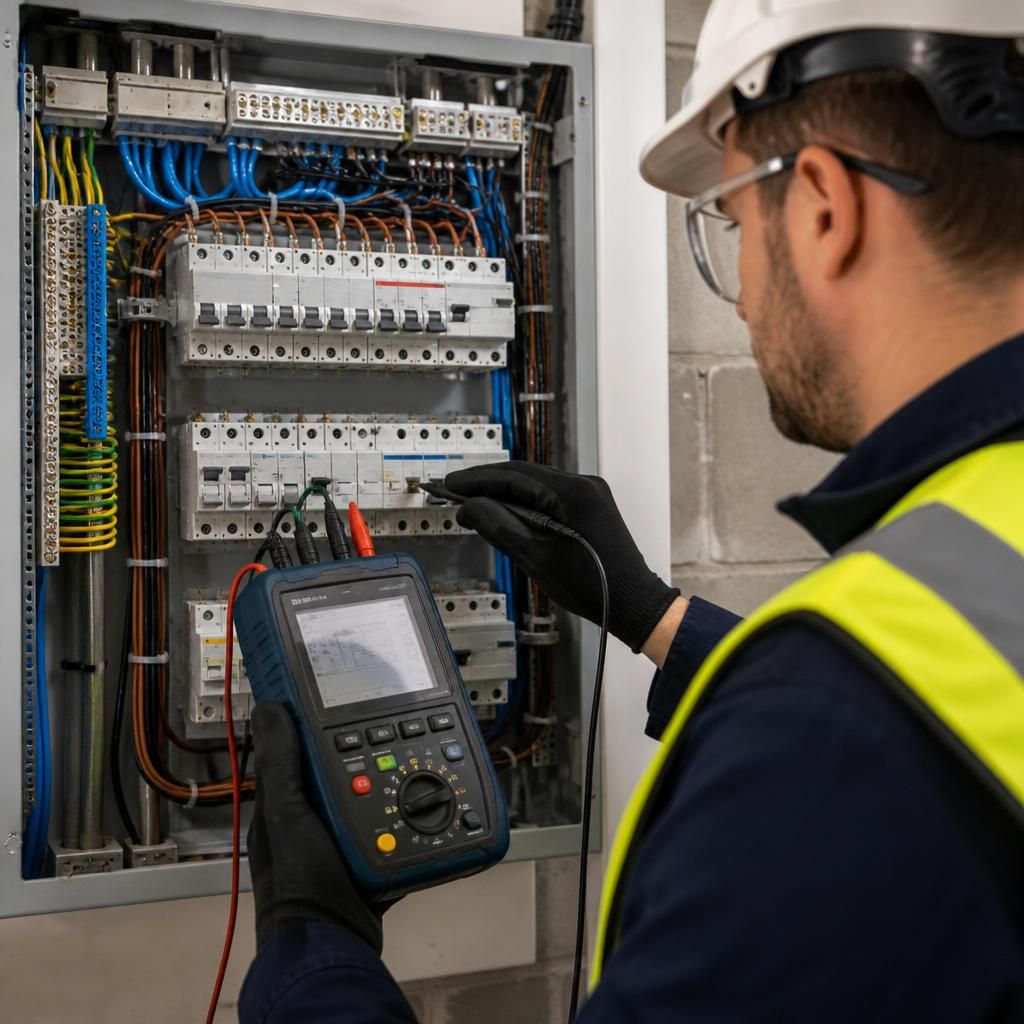
A key part of pre-handover testing is verifying that each protective device is suitable for the circuit it controls and correctly coordinated with the connected equipment. This includes checking the device rating, disconnection performance and, where applicable, the settings of adjustable breakers or residual current devices.
On larger commercial installations, the arrangement should also be reviewed for coordination between upstream and downstream protection. A fault should be cleared by the appropriate device without unnecessarily disconnecting unrelated areas of the building. Final device settings and any relevant test results should be recorded in the handover information so that future maintenance staff can understand the protection provided and reinstate settings correctly after work.
Discuss your commercial pre-handover testing requirements
Discuss your commercial pre-handover testing requirements with RJW Electrical to clarify the appropriate inspection, certification and commissioning scope for your project. Sharing the project drawings, specifications and details of any specialist systems will help establish what needs to be checked before handover.