

RJW Electrical
What should a commercial electrical contractor include in a project quotation?
A commercial electrical project quotation should define the work included, itemise labour and materials, state the total cost and payment terms, and identify any assumptions, exclusions or potential variations. It should also set out the proposed timescale, relevant testing and certification, responsibilities for site access and other trades, and the terms covering remedial work or guarantees.
A commercial electrical project quotation should provide enough technical and commercial information for the client to understand exactly what is being purchased and to compare proposals on a like-for-like basis. In addition to the headline price, it should record the design basis, site information, specification, responsibilities, compliance requirements and any matters that could affect the final cost.
1. Project identification and quotation status
The document should identify the client, site, relevant building or work area, quotation reference and date. It should also state whether it is a firm quotation, budget estimate or tender submission. A quotation should include a validity period so the client knows how long the stated commercial terms are intended to apply, particularly where material prices or subcontractor costs may change.
2. Design basis and technical specification
A sound quotation explains the basis on which the electrical design has been prepared. This may include:
- the intended use of the premises and any known changes to occupancy or equipment;
- the expected electrical load and available supply capacity;
- the number and type of outlets, circuits, luminaires, controls and fixed equipment connections;
- the proposed distribution arrangement, containment and cable installation methods;
- requirements for emergency lighting, fire alarm interfaces, data cabling, access control or other specialist systems where applicable; and
- the drawings, schedules, surveys and client specifications used to prepare the proposal.
This information makes it easier to identify whether two quotations are genuinely comparable. A lower price may simply reflect fewer outlets, a different containment method or the omission of equipment connections.
3. Site conditions and information still required
The quotation should identify matters that have not been confirmed during a survey. Examples include the condition and capacity of the existing supply, the route available for new cables, access above ceilings or within service risers, the presence of asbestos-containing materials, and the suitability of existing earthing and bonding arrangements.
Where the contractor has been unable to inspect concealed areas or existing equipment, that limitation should be recorded clearly. The document can then explain what further survey, investigation or client information is needed before the design or price can be finalised.
4. Inclusions beyond the visible electrical equipment
Commercial electrical work often involves supporting activities that are easy to overlook when comparing prices. The quotation should state whether it includes items such as:
- cable containment, supports, fixings and fire-stopping;
- isolation, reconnection or adjustment of existing circuits;
- lifting equipment, access equipment or specialist installation tools;
- labelling, circuit schedules and updates to drawings;
- removal and lawful disposal of redundant electrical materials;
- builders' work, drilling, chasing, core drilling and making good; and
- coordination with the distribution network operator, landlord, managing agent or other appointed specialists where relevant.
Making good is particularly important in occupied or finished premises. The quotation should explain whether surfaces will be left ready for a separate decorating contractor or whether reinstatement is included to a defined standard.
5. Compliance and project documentation
The proposal should identify the standards and statutory requirements relevant to the installation, rather than relying on a general statement that the work will be compliant. It should also distinguish between the contractor's responsibilities and any duties retained by the principal contractor, client or building operator.
For larger projects, the quotation may need to refer to construction-phase documentation, risk assessments, method statements, permit systems, site inductions and coordination with the principal contractor. If the work affects fire compartments, escape routes, emergency systems or other safety-critical services, the quotation should explain how interfaces will be managed and what information will be supplied at handover.
6. Commercial assumptions and cost risks
Instead of hiding uncertainty within a single price, a well-prepared quotation identifies provisional sums, allowances and items dependent on third-party information. It should explain what could cause these allowances to change, such as an inadequate incoming supply, inaccessible cable routes, defective existing equipment or a requirement for additional structural work.
The document should also state whether materials are based on a particular specification, whether equivalent alternatives require approval, and how client-requested substitutions will be assessed. This gives the client a clear record of what was priced and reduces disagreement when the project develops.
7. Programme interfaces and client responsibilities
Although the quotation need not provide a detailed construction programme, it should identify dependencies that may affect delivery. These can include possession of work areas, approved drawings, isolation arrangements, delivery routes, welfare facilities, coordination with other trades and the availability of permanent power for commissioning.
For a business operating from the premises, it is also useful to state any expected restrictions on access, noise, dust, shutdowns or work in sensitive areas. The client can then confirm that the proposed method is compatible with its own operations before accepting the quotation.
8. How to review competing quotations
When comparing commercial electrical quotations, check that each one is based on the same drawings and specification. Ask for clarification where a proposal uses broad wording such as “complete installation” without describing the equipment, quantities or installation method. Differences in containment, controls, fire-stopping, making good, documentation and coordination can materially affect the overall value even when the headline prices appear similar.
A quotation should leave a clear audit trail from the client's brief to the proposed work. If important design information is missing, or if responsibilities are not allocated, the client should resolve those points in writing before appointing a contractor.
RJW Electrical approaches commercial quotations by considering the practical installation requirements as well as the visible items listed in a schedule. For clients assessing a proposal, the key test is whether the document defines the technical basis, identifies uncertainty and allocates responsibility clearly enough for the work to proceed without relying on assumptions.
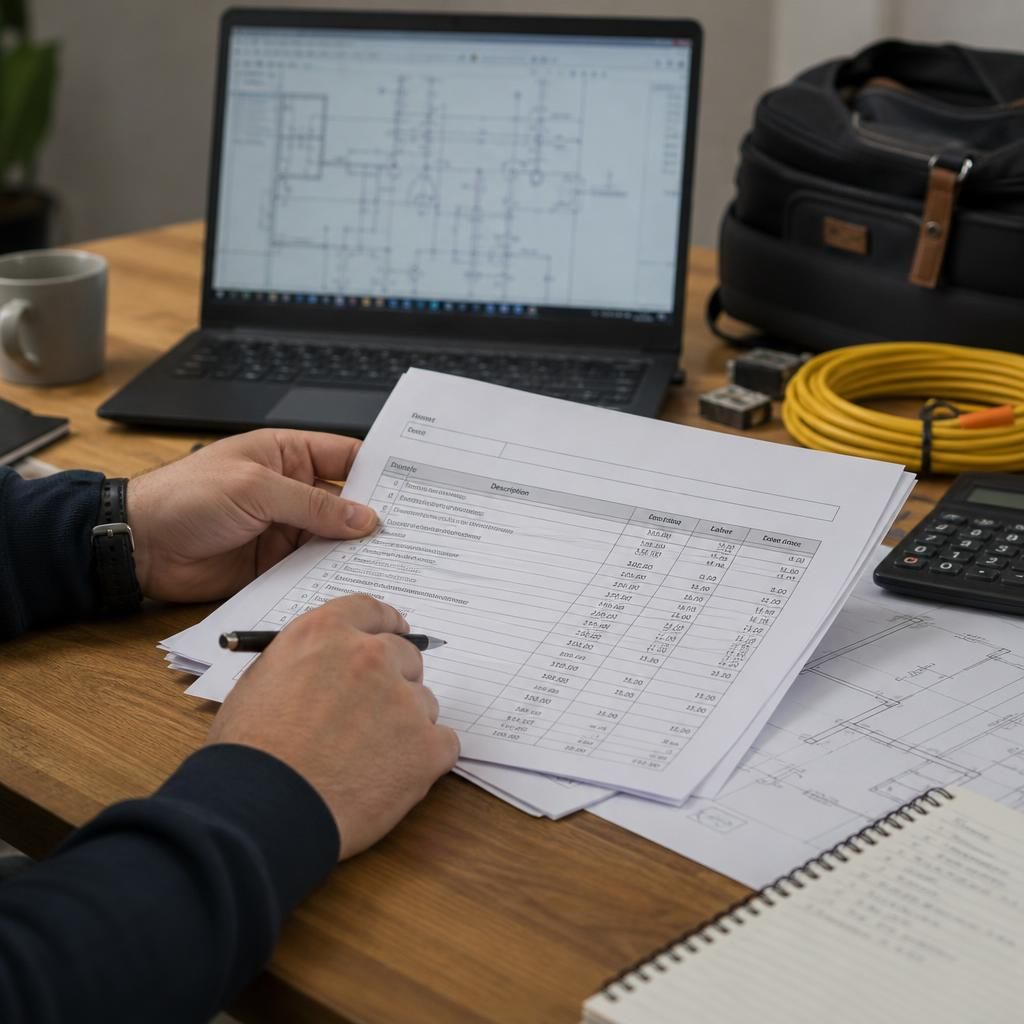
A commercial electrical quotation should explain how the quoted price will be invoiced, not just state a total figure. It should identify whether VAT is included or payable separately, when invoices will be issued, and which project stages trigger payment.
- deposit or mobilisation payment, if applicable;
- interim payments linked to agreed stages of the work;
- the payment point for approved variations or additional work; and
- the treatment of retention, final account adjustments and supplied materials.
These details allow the client to match invoices against progress and distinguish the original contract value from later approved changes. Any cancellation charges, credit terms or requirements for written approval before chargeable additional work should also be stated clearly in the quotation’s commercial conditions.
Discuss your commercial electrical project quotation
Discuss your commercial electrical project quotation with RJW Electrical to clarify the proposed scope, assumptions and documentation before appointing a contractor.