
RJW Electrical
What is involved in a three-phase meter installation?
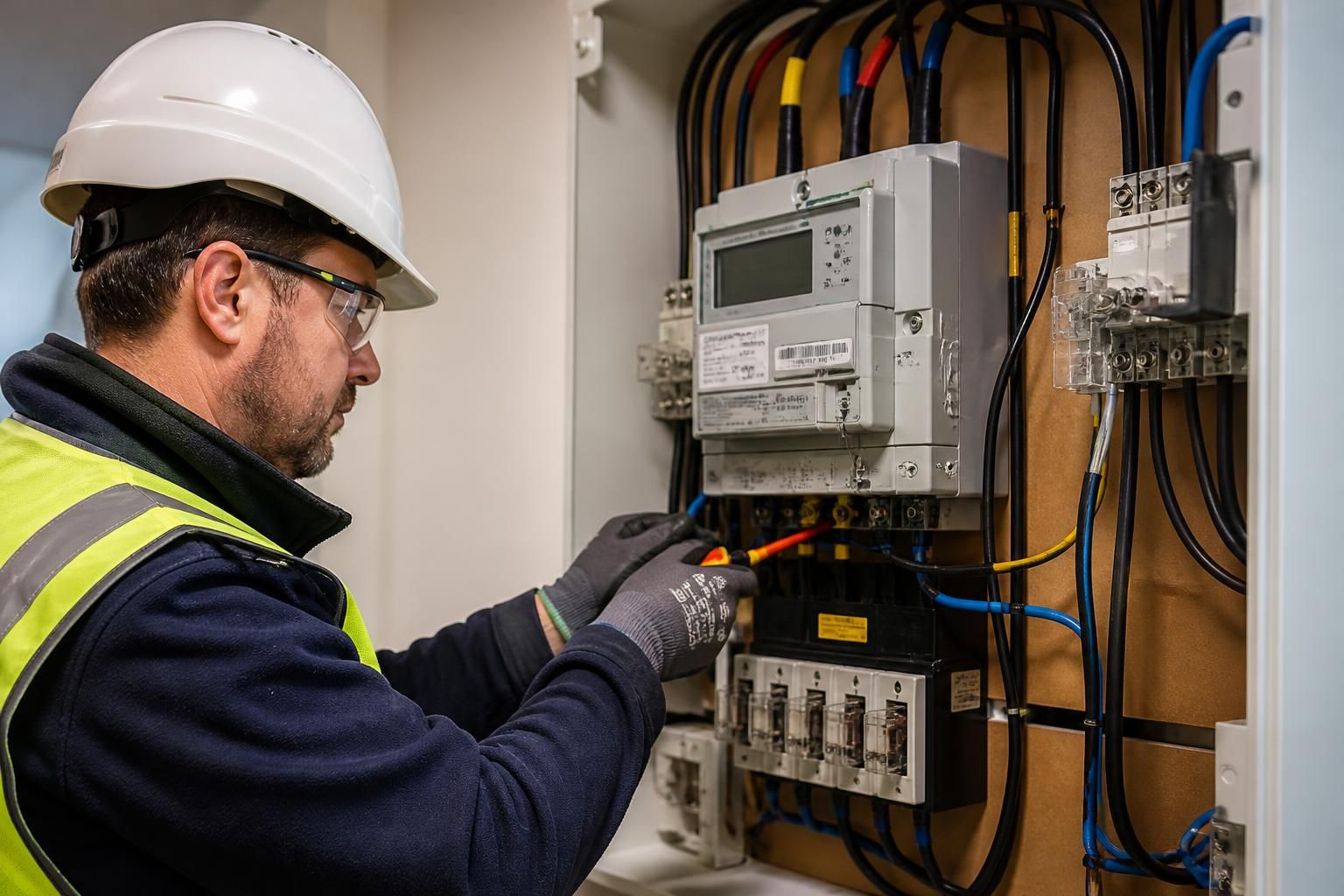
A three-phase meter installation involves assessing the electrical demand, confirming the incoming supply and meter arrangement, and planning suitable equipment and cable routes. A qualified electrician then installs or adapts the meter connections, carries out the required testing, and coordinates safe connection and commissioning with the relevant electricity network or metering provider.
A three-phase meter installation is the process of connecting a meter to three separate live phases and a neutral conductor so that electricity consumption can be measured across a three-phase supply. The work must match the meter to the supply arrangement, the site’s maximum demand and the requirements of the electricity supplier and network operator.
The first consideration is whether the property already has a suitable three-phase service or needs a change from single phase to three phase. A three-phase meter cannot be installed correctly unless the incoming supply, service head, cut-out, earthing arrangement and available capacity are suitable. Where the supply itself needs altering, the network operator may need to carry out part of the work before the metering equipment can be connected.
The installation normally involves the following stages:
- Reviewing the electrical requirements: The expected demand is considered, including motors, heating equipment, machinery, compressors, EV charging equipment or other higher-load systems. The likely operating pattern matters because the installation must remain suitable when several loads run at the same time.
- Checking the supply arrangement: The electrician confirms the presence and identification of the three phases, neutral and protective conductors. The available capacity, earthing method and position of the existing equipment are also relevant to the proposed meter arrangement.
- Confirming the metering method: Smaller supplies may use a meter connected directly into the circuit. Higher-current installations may require current transformers, which measure the current flowing through the main conductors without passing the full load through the meter itself. The correct arrangement depends on the supply and the metering provider’s requirements.
- Preparing the meter position: The meter board, enclosure, cable entries and working space must be suitable. Equipment may need to be rearranged if the existing position does not provide adequate access, protection or separation between supply, metering and customer-owned installation equipment.
- Making the connections: The three phases must be connected in the correct sequence, together with the neutral and associated conductors. Connections need to be secure, correctly sized and protected against accidental contact. Phase identification is particularly important because reversing the sequence can affect the rotation of three-phase motors.
- Completing checks and commissioning: Electrical checks confirm that the installation is correctly connected and safe to energise. The arrangement is then commissioned in accordance with the relevant roles of the electrician, electricity supplier, meter operator and network operator. Metering equipment may be sealed once the authorised connection process is complete.
Phase sequence is an important difference between a three-phase and single-phase meter installation. A single-phase supply has one live phase, whereas a three-phase supply has three live phases separated by an electrical angle. If the order of those phases is incorrect, motors can run in the wrong direction. This can damage machinery or create a safety risk, so phase rotation should be checked wherever the installation supplies rotating equipment.
The meter itself may be installed as part of a new connection, a supply upgrade or a replacement of existing metering equipment. A replacement is not necessarily a straightforward exchange: the incoming conductors, meter tails, main switchgear, distribution equipment and load characteristics may all need to be considered. If the consumer unit or distribution board is not suitable for the new arrangement, additional electrical work may be required before the meter can be put into service.
For commercial and industrial premises, the meter installation may also need to accommodate multiple distribution boards, sub-meters or separately monitored areas. Sub-metering can help distinguish consumption between tenants, departments or pieces of equipment, but it does not replace the main supply meter. Each meter must be connected and labelled so that the measured circuit is clear and the readings can be interpreted correctly.
Safe isolation is essential during the work. Three-phase equipment presents more than one live source, and isolating one phase does not necessarily make the whole installation safe. The electrician must identify all relevant sources, prevent inadvertent reconnection and verify that the conductors are dead before working on them. Once the work is complete, covers, barriers and labels should be reinstated so that the equipment remains safe for users and future maintenance.
The final documentation should identify the equipment installed, the circuits or loads supplied and any limitations or follow-on requirements. Depending on the nature of the work, records may include test results, circuit information and details needed by the supplier or network operator. Keeping these records is useful when the premises are altered later, particularly if additional three-phase loads or control equipment are added.
A suitable three-phase meter installation therefore depends on more than the physical fitting of a meter. The supply arrangement, metering method, phase sequence, protective equipment, ownership boundaries and commissioning procedure all need to align. A qualified electrical contractor can establish which work falls to the customer, the electricity supplier, the meter operator or the network operator before the installation proceeds.
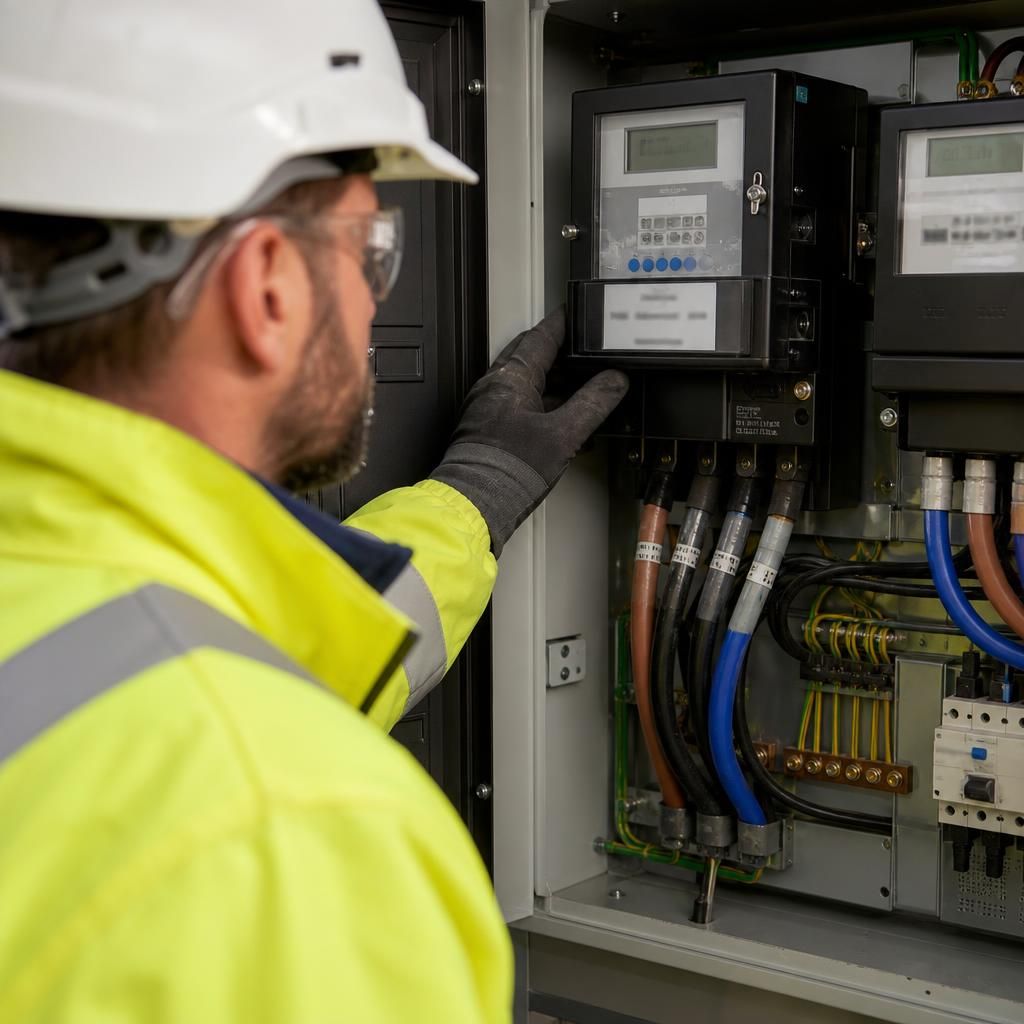
Where a property has solar generation, battery storage or another form of on-site generation, a three-phase meter installation may need to record electricity flowing in both directions. The metering arrangement must distinguish electricity imported from the network from electricity exported to it, with the configuration agreed with the relevant supplier and network operator.
This adds an extra planning check to the installation. The electrician needs to understand how the generation equipment connects to the three-phase distribution system, which circuits it supplies and whether existing monitoring equipment remains suitable. Incorrectly configured metering can produce unreliable readings, so the import and export functions should be verified during commissioning and recorded in the installation documentation.
Discuss your three-phase meter installation
If you are assessing whether your premises are suitable for a three-phase meter, discuss the proposed load, supply arrangement and metering requirements with RJW Electrical Ltd. The team can help identify the information needed before work is arranged and provide a quote with no call-out fee.