
RJW Electrical
What information helps diagnose an intermittent electrical fault?
Useful information includes exactly what happens, which circuits or equipment are affected, when the fault occurs, how often it repeats and whether anything triggers or clears it. Details such as tripped protective devices, flickering, burning smells, recent electrical work, weather conditions and any temporary resets can help an electrician narrow down an intermittent fault safely.
Diagnosis improves when an electrician can compare the fault with the installation’s design, connected equipment and physical evidence. The most useful supporting information is the equipment involved, the circuit arrangement, the protective devices fitted, the conditions under which the installation is being used and any records or photographs that show what changed.
Details about the connected equipment can help separate an appliance fault from a wiring fault. Record the make and model of equipment involved, its approximate age, electrical rating and how it is connected. Note whether it has a plug, fused connection unit, isolator, control panel, timer, sensor or other local control. For commercial premises, include details of machinery, servers, refrigeration, heating controls, pumps and other equipment that may start automatically or operate in cycles.
It is also useful to explain what the equipment was doing immediately before the problem became apparent. For example, a motor may have been starting, a heater may have been switching on, or several items may have been operating together. This does not prove the cause, but it helps an electrician consider inrush current, overload, earth leakage, control faults and heat-related connection problems.
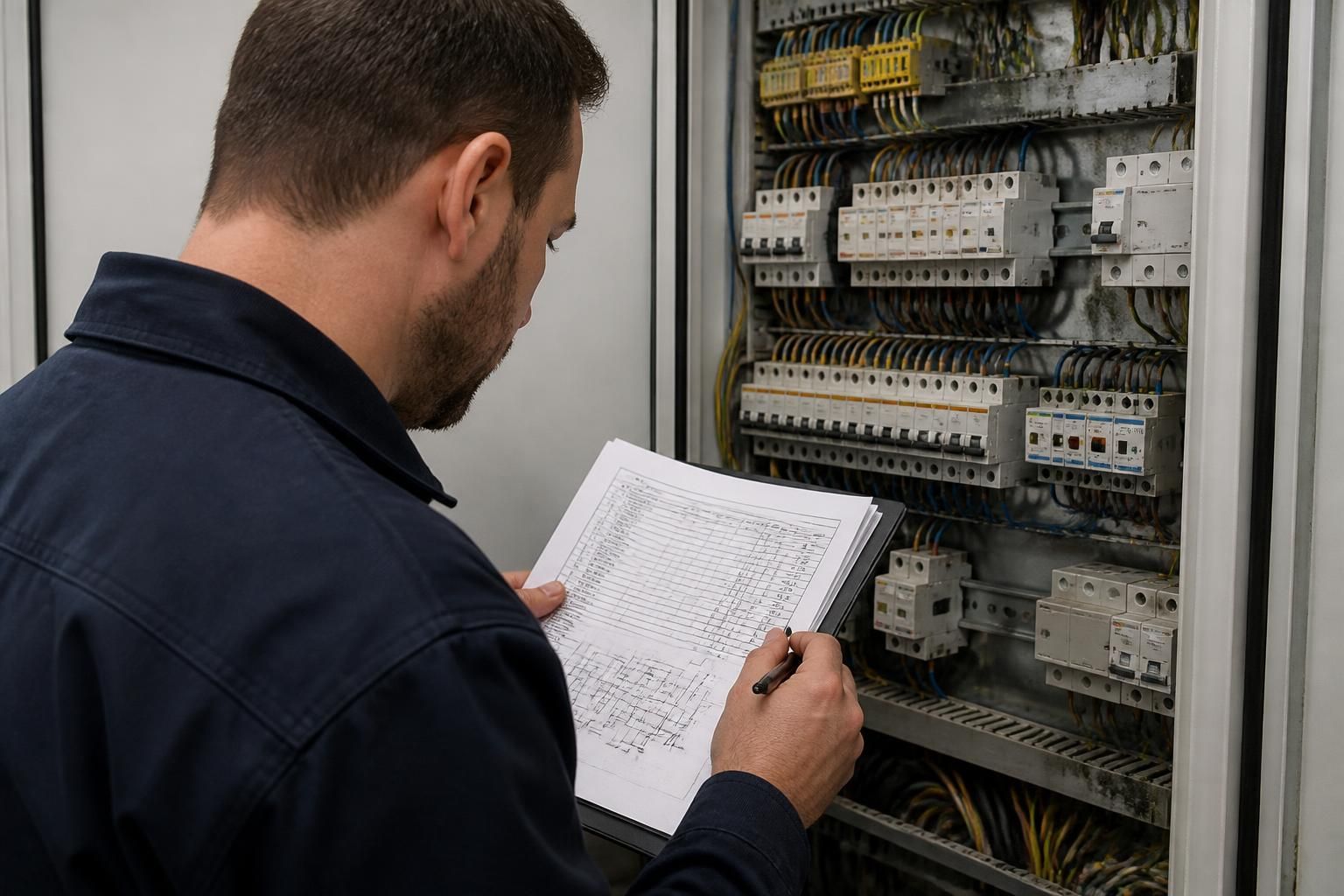
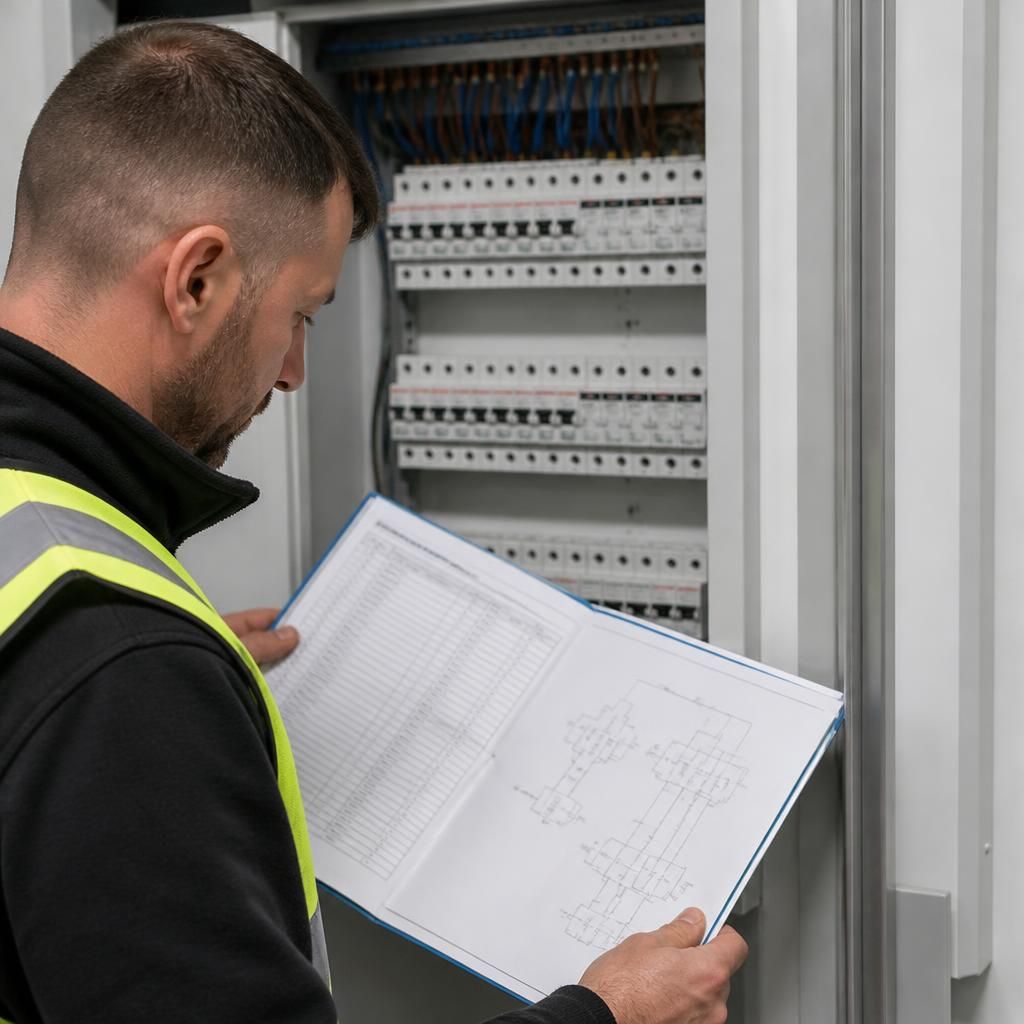
Installation information is particularly valuable where drawings or records are available. Provide distribution-board schedules, circuit charts, previous inspection reports, test certificates, equipment manuals and details of any known alterations. Accurate labels showing which protective device supplies each point can save investigative time and reduce the risk of testing the wrong part of an installation. In a commercial building, photographs of the relevant distribution board and a simple plan showing equipment locations can also help establish the system layout.
Photographs should be taken only from a safe position, without removing covers or exposing conductors. Useful images may show warning indicators, damaged accessories, discoloured enclosures, melted insulation or the position of controls. A photograph cannot replace electrical testing, particularly because a loose termination, deteriorated insulation or a failing protective device may look normal externally.
Operational records can reveal patterns that are difficult to identify from memory. A simple log may include:
- the equipment in use and its operating state;
- the protective device or warning indication involved, if it can be identified safely;
- whether the problem affected one item or several items;
- any unusual noise, odour, heat or visible change;
- what was done before the installation returned to service; and
- the names of staff or occupants who observed the event.
For businesses, retain information from building management systems, machine controllers, alarm panels or uninterruptible power supplies where relevant. Event logs, alarm codes and time-stamped records can help correlate an electrical fault with a particular operating sequence. Maintenance records may also show whether the same equipment has generated earlier warnings or required repeated attention.
An electrician will normally use this information to plan safe diagnostic tests rather than relying on repeated resets. Depending on the initial assessment, testing may include voltage measurements, continuity checks, insulation resistance, polarity and protective-conductor tests, earth-fault loop measurements, RCD checks, thermal inspection and examination of terminations. Some tests must be completed with equipment isolated or disconnected, while others require controlled operation under competent supervision.
Intermittent faults can be difficult to reproduce, so the absence of a fault during a visit does not establish that the installation is safe. Test results should be considered alongside the installation’s age, design, loading, protective-device characteristics and the condition of accessories and connections. A fault-finding report should distinguish confirmed findings from possible causes and should record any limitations, such as a fault not being present during testing.
Do not remove covers, probe live parts, bypass protective devices or continue resetting a device that trips repeatedly. Burning, overheating, arcing, exposed conductors or a smell of damaged insulation should be treated as reasons to stop using the affected equipment and obtain competent electrical advice. Clear observations, relevant records and safe photographs give an electrician better evidence while avoiding actions that could worsen the fault or create additional risk.
A useful way to diagnose an intermittent electrical fault is to establish whether the symptom follows the equipment or remains at the same connection point. If the same item behaves normally elsewhere but another item develops a problem at the original point, the supply, accessory or local wiring may need investigation. If the problem follows the item, the equipment or its connecting lead becomes more relevant.
Record these observations without moving plugs, disconnecting fixed wiring or carrying out live tests. Note which nearby points continue to work and whether the symptom affects the equipment itself, its controls or the supply to it. This comparison helps an electrician narrow the investigation while keeping the installation undisturbed and preserving useful evidence.
Get advice on an intermittent electrical fault
If an intermittent electrical fault remains unresolved, contact RJW Electrical to discuss the symptoms and arrange competent fault-finding advice. A no call out fee quote can be provided before proceeding.