
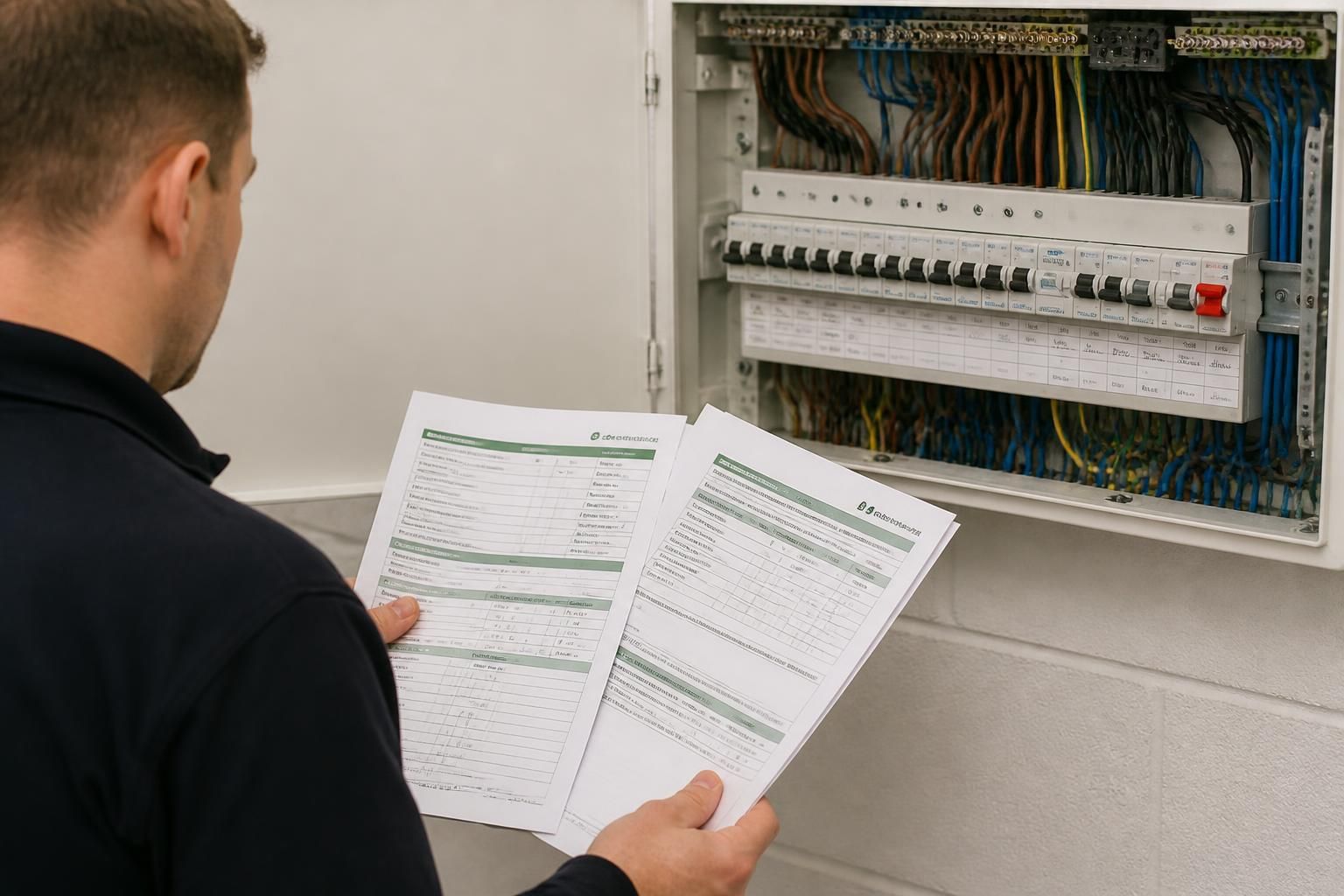
RJW Electrical
What records should accompany a completed electrical installation?
A completed electrical installation should be accompanied by the appropriate electrical certificate, supported by schedules of work and inspection and test results. Where relevant, the record should also include design or as-installed information, details of any limitations, and evidence of Building Regulations notification.
The records for a completed electrical installation should provide a permanent, understandable account of what was installed, how it was inspected and tested, and whether the work complies with the relevant requirements of BS 7671. The exact documents depend on the type and extent of the work, but a complete handover normally includes the appropriate certificate, inspection and test schedules, and any supporting information needed to operate, maintain or alter the installation safely.
Electrical Installation Certificate
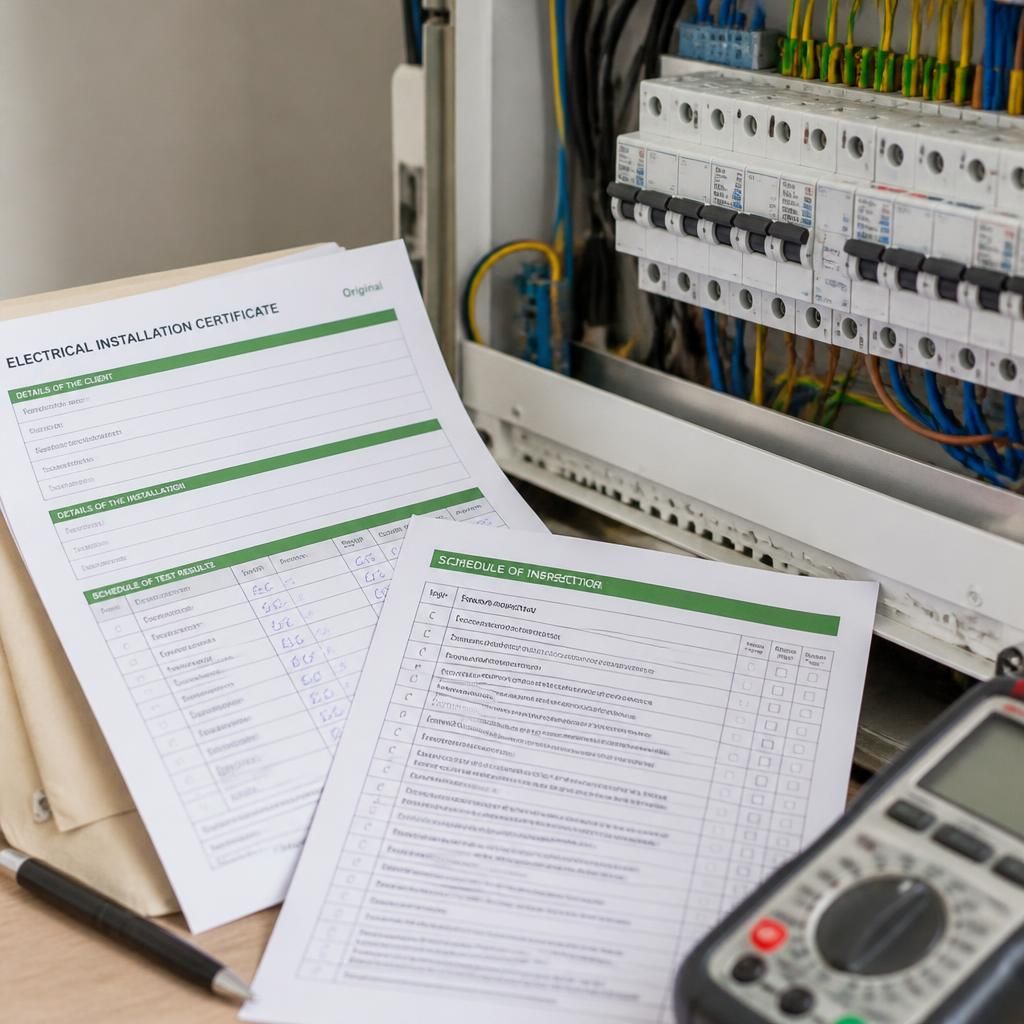
For a new installation, or an alteration that requires design, construction and inspection, the main document is an Electrical Installation Certificate (EIC). It identifies the client, premises, extent of the work and the person or organisation responsible for the design, construction and inspection and testing. The certificate should be completed and signed by the relevant competent persons rather than being treated as a generic statement that the work is satisfactory.
An EIC normally accompanies:
- A schedule of inspections, confirming that relevant parts of the installation were checked during or after the work. This can include protective measures, connections, cable routing, switchgear, earthing and the condition of accessories.
- A schedule of test results, recording measured results for the circuits tested. Depending on the installation, this may include continuity of protective conductors, insulation resistance, polarity, earth fault loop impedance and operation of residual current devices.
- Details of the installation covered, such as the distribution board, circuit references, protective devices, cable sizes and the areas or equipment supplied.
The schedules are important because the certificate alone does not show the technical evidence behind the conclusion. Results should be attributable to the relevant circuit or item of equipment, with any applicable test conditions or limitations made clear. A result that cannot be obtained should not simply be left unexplained; the record should state the reason and identify any further action required.
Minor Electrical Installation Works Certificate
A smaller addition or alteration that does not involve a full design may be covered by a Minor Electrical Installation Works Certificate. This is not an abbreviated version of an EIC for every situation. The person responsible for the work must determine whether the scope is suitable for a minor works certificate. The document should still identify the work undertaken and include the relevant inspection and test results, including confirmation that the circuit and protective measures are suitable for the alteration.
Design and as-installed information
Where the installation was designed specifically for the premises, the handover file may also include design information. Examples include circuit schedules, distribution-board details, load information, protective-device selections, earthing arrangements and calculations where these are needed to understand the design. If the installation changed during construction, the final record should reflect the work that is actually present rather than an earlier proposal.
For larger commercial installations, as-installed drawings, cable routes, equipment schedules and operation and maintenance information can be particularly useful. These records help a facilities team identify isolation points, arrange future inspection and testing, and prevent later alterations from being made without understanding the existing arrangement. They should be updated when material changes are made.
Building Regulations and related certificates
Some domestic electrical work falls within the electrical safety requirements of the Building Regulations. Where notification applies, the completion documentation should include evidence that the work has been notified through the appropriate route and that the relevant compliance certificate has been issued. This is separate from the BS 7671 electrical certificate, although both documents may relate to the same project.
Additional documents may be needed where the project includes specialist systems or equipment. Depending on the scope, these could include commissioning records, emergency lighting test information, fire alarm documentation, inspection records for protective devices, or manufacturer instructions supplied with installed equipment. Such documents should identify what was tested or commissioned and any inspection regime that the owner needs to follow.
Information that should be explained at handover
Records are more useful when the person responsible for the premises is told about any limitations, outstanding items or restrictions on use. The handover should also make clear:
- which circuits or equipment were included in the work;
- where the main switch, distribution boards, isolators and emergency controls are located;
- which protective devices serve each circuit;
- whether any existing parts of the installation were outside the scope of the work;
- whether remedial work, further investigation or periodic inspection is recommended; and
- which operating, maintenance and safety instructions should be retained.
An electrical installation certificate records the condition and compliance of the work at the time it was completed; it is not a lifetime guarantee or a replacement for future inspection. The owner or dutyholder should retain the documentation with the property’s maintenance records and provide it to anyone carrying out later alterations or inspections. If paperwork is missing, an electrician may need to inspect and test the installation before its condition can be properly assessed. An EICR can report the installation’s condition at the time of that later inspection, but it does not recreate the original installation certificate or prove how the work was designed.
Records should be handed to the person responsible for the premises, not left only with the installer. For commercial properties, this may be the facilities manager, landlord or dutyholder; for a home, it is usually the owner or occupier. The recipient should know which documents relate to the completed installation and where the controlled copy is kept.
A practical handover check is to compare the certificate and schedules with the labels and circuit information at the distribution board. Any mismatch in circuit references, equipment descriptions or the stated extent of work should be clarified before the records are filed. Keeping a clear electronic copy alongside the property’s maintenance records can also make the information easier to provide during future inspections, alterations or changes of occupancy.
Need advice on your electrical installation records?
If you are unsure whether the records for a completed electrical installation are complete, contact RJW Electrical to discuss what documentation is available and what may still be required. The team can provide advice and a no call out fee quote for any necessary inspection or remedial work.