
RJW Electrical
What happens if a commercial electrical inspection identifies a serious fault?
A serious fault means the affected electrical equipment or circuit may need to be isolated until its risk has been assessed and controlled. The inspection report should explain the defect, its significance and recommended remedial work, allowing the responsible person to arrange repairs and retain evidence that the issue has been addressed.
A serious fault identified during a commercial electrical inspection should be assessed, controlled and rectified before the affected installation is returned to normal use. The precise response depends on the danger presented, the equipment or circuit involved and whether a safe alternative is available.
Understanding the inspection code
Commercial electrical inspection reports commonly use observations to indicate the severity of a defect:
- C1 – danger present: there is an immediate risk of injury, electric shock or fire. The affected equipment or circuit normally requires immediate action, which may include disconnection or isolation by a competent person.
- C2 – potentially dangerous: the defect could become dangerous under foreseeable conditions. Remedial work should be treated as a priority rather than left as routine maintenance.
- FI – further investigation required: the inspector cannot safely establish the full extent or cause of a problem without additional investigation. This code is not, by itself, a declaration that the installation is dangerous, but it should not be ignored.
- C3 – improvement recommended: the condition does not generally present immediate danger, but bringing it up to current standards may improve safety or compliance. A C3 is different from a serious fault requiring urgent isolation.
The report should identify the affected circuit, distribution board, item of equipment or area, explain the observed defect and state the recommended action. A responsible person should check that the description is sufficiently specific for the remedial contractor to locate and address the problem.
What happens immediately?
- The responsible person should review the finding with the inspecting electrician and establish what is affected.
- Any equipment presenting an immediate danger should be taken out of service. Isolation should be carried out safely by a suitably competent person, with appropriate precautions to prevent inadvertent reconnection.
- People who may use the affected area or equipment should be informed of the restriction. Warning notices, locked-off controls or other controls may be needed where there is a risk that someone could restore power or use defective equipment.
- Where the fault affects an essential function, such as fire detection, emergency lighting, access control or critical plant, alternative safety arrangements may be required while repairs are pending.
- A qualified electrical contractor should investigate the cause, define the remedial work and confirm whether further testing is necessary.
Isolation does not always mean shutting down the whole premises. In many cases, the risk can be contained to a particular circuit or item. However, a fault in a main switchboard, earthing arrangement, supply cable or other shared part of the installation may affect several areas and require a wider shutdown. The decision should be based on test results and risk, not on convenience.
Remedial work and verification
Repairs may involve replacing damaged accessories, correcting protective-device arrangements, repairing wiring, improving earthing and bonding, removing overloaded equipment or resolving faults in distribution equipment. The work should address the underlying cause rather than simply reset a tripped device or replace a visible component.
After the work, the repaired circuit or equipment should be inspected and tested to confirm that it is safe to energise. If the repair changes the installation or forms part of an alteration, the contractor should provide suitable electrical documentation, such as test results, a minor works certificate or an electrical installation certificate where applicable. The inspection report should also be updated or accompanied by evidence showing which observations have been dealt with.
Business responsibilities
The person responsible for the premises should retain the inspection report, remedial certificates, test results and records of any temporary controls. These documents help demonstrate what was found, what decisions were made and how the risk was managed. They can also support communication with a landlord, insurer, facilities manager or enforcing authority where relevant.
It is important not to treat a passed repair or the restoration of power as proof that every issue on the original report has been resolved. Each observation should be matched against the completed work, and any limitation or outstanding recommendation should be recorded clearly.
RJW Electrical can help commercial clients interpret inspection findings, investigate faults and carry out appropriate remedial electrical work. With experience in commercial installations and testing, the focus is on identifying the affected part of the system, applying proportionate safety controls and providing the documentation needed after the work is complete.
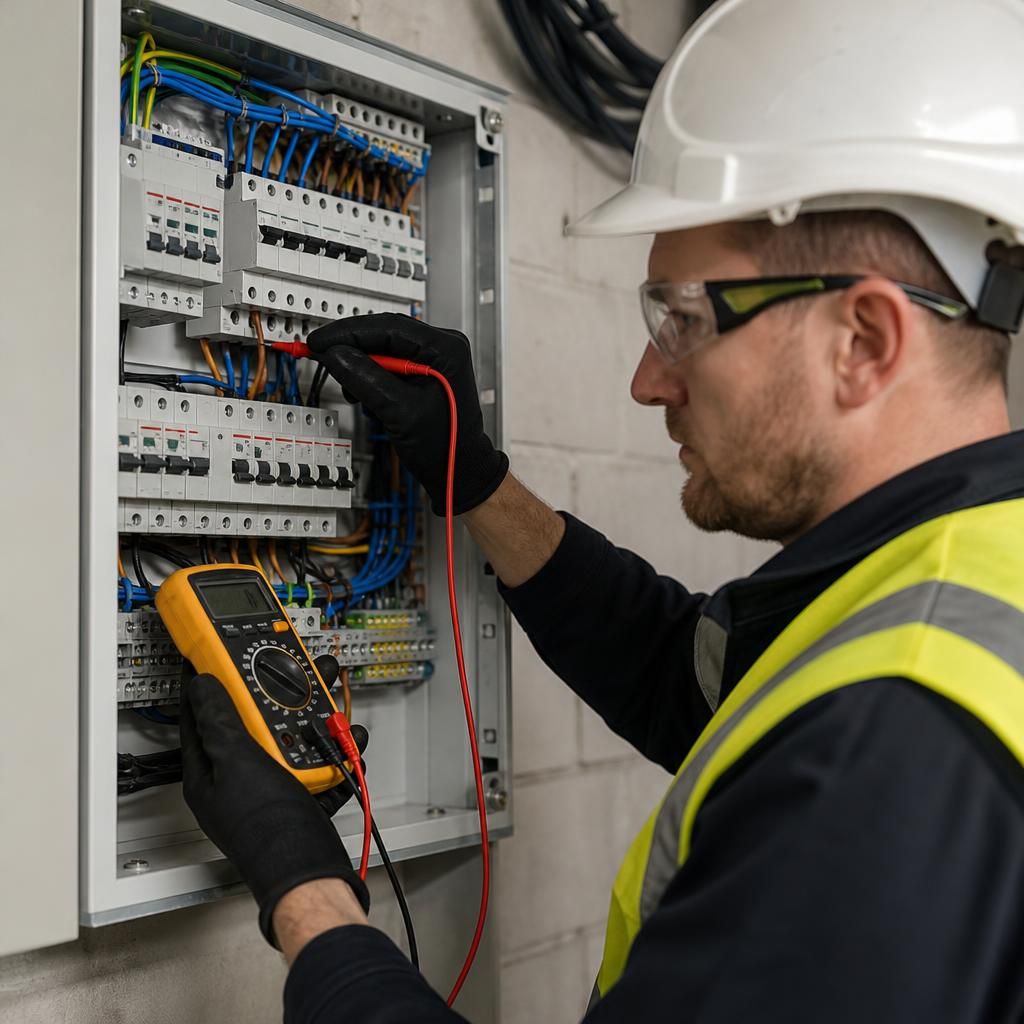
A serious fault should be treated as a risk-control decision, not simply a repair instruction. Before authorising remedial work, the person responsible for the premises should establish exactly which asset or circuit is affected, what conditions could make the defect hazardous and whether any temporary restriction is required.
- Ask the electrician to distinguish the confirmed defect from any assumptions that still require investigation.
- Check whether the proposed repair addresses the cause of the fault or only its visible symptom.
- Confirm whether the work will affect connected equipment, tenants, staff or business-critical systems.
- Agree what evidence will demonstrate that the affected installation is suitable for return to service.
This approach helps the business make a proportionate decision and avoids treating a temporary loss of power, a reset device or a cosmetic replacement as proof that the underlying electrical risk has been removed.
Discuss a Serious Fault Found During Your Commercial Inspection
Discuss the inspection findings with RJW Electrical to clarify the risk, determine the appropriate remedial work and plan the required verification. Share the relevant report details so the affected circuit or equipment can be assessed properly.